
Newmont's Ghana Gold Pour: A Strategic Milestone for Sustainable Gold Growth
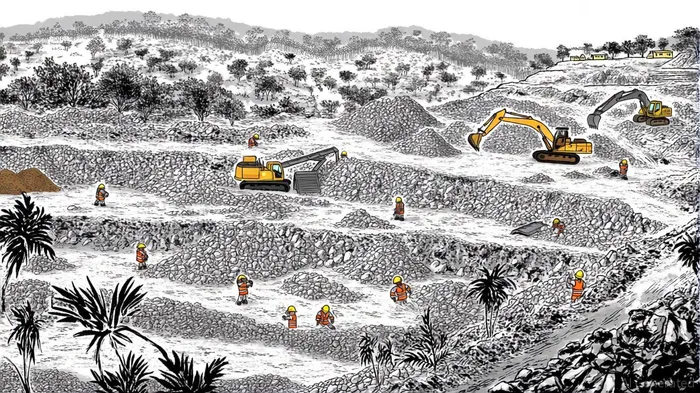
The recent achievement of the first gold pour at Newmont's Ahafo North Project in Ghana marks a pivotal moment in the company's strategic expansion into emerging markets. This milestone, occurring on September 19, 2025, underscores Newmont's commitment to balancing resource extraction with sustainable development, a critical factor in an industry increasingly scrutinized for its environmental and social impacts[1]. As global demand for gold continues to rise—driven by both industrial applications and investment demand—Newmont's ability to operationalize high-grade, long-life projects like Ahafo North positions it as a leader in the transition toward responsible mining[3].
Operational Progress and Economic Impact
The Ahafo North Project, located in Ghana's Ashanti Region, is one of the most promising gold deposits in West Africa[4]. With commercial production anticipated in Q4 2025, the project is projected to deliver 275,000 to 325,000 ounces of gold annually over a 13-year mine life[1]. This output will significantly bolster Newmont's production in Ghana, where it already operates the Ahafo mine, and extend the district's operational lifespan beyond 2050[1].
The project's development has also generated substantial economic value for Ghana. During construction, it created 4,500 contracted jobs, and once fully operational, it will sustain 560 permanent and 1,000 contracted roles[2]. These figures highlight Newmont's role in fostering local employment and skill development, aligning with its broader strategy to create shared value with host communities. Additionally, the project will contribute to Ghana's economy through royalties, taxes, and investments in local infrastructure, such as roads and healthcare facilities[1].
Sustainability and ESG Leadership
Newmont's Ahafo North Project is not merely a commercial endeavor but a testament to the company's ESG-driven approach. The project adheres to international environmental, social, and governance (ESG) standards, including commitments to gender equality, community engagement, and workforce development[5]. For instance, Charles Bissue, General Manager of Ahafo North, emphasized the project's focus on “inclusive workforce development” and partnerships with local stakeholders to ensure long-term benefits[3].
This alignment with ESG principles is critical in an era where investors increasingly prioritize sustainability. Over 70% of mining investors now consider ESG factors central to their 2025 investment decisions[2]. Newmont's 2025 ESG strategy—featuring a net-zero carbon emissions target by 2035 and 100% external ESG assurance across all sites—positions it ahead of industry peers[2]. By comparison, the industry average for external ESG assurance stands at 54%, underscoring Newmont's leadership in transparency and accountability[2].
Strategic Vision and Competitive Positioning
Newmont's Ghana expansion is part of a broader 2025 strategic vision to strengthen its position as the world's most valued mining company[5]. Key priorities include cost optimization through automation, which aims to reduce all-in sustaining costs to $1,150/oz by Q3 2025, and the adoption of renewable energy to cut scope 1&2 emissions by 30%[5]. These initiatives are designed to enhance operational efficiency while addressing climate-related risks—a growing concern for both regulators and investors.
Newmont's scale further reinforces its competitive edge. As the world's largest gold producer, with 6.2M oz of annual output and 94M oz of proven reserves, the company is well-positioned to capitalize on rising gold prices and geopolitical uncertainties[5]. The Ahafo North Project, with its high-grade deposits and extended mine life, complements this portfolio by diversifying production and mitigating the volatility inherent in emerging markets.
Conclusion: A Model for Sustainable Growth
Newmont's Ahafo North Project exemplifies how strategic investments in emerging markets can drive both economic and environmental value. By combining operational excellence with a robust ESG framework, the company is setting a precedent for sustainable resource development in regions where mining often faces reputational challenges. For investors, the project represents a compelling opportunity to align capital with long-term value creation, particularly as global demand for gold and ESG-compliant assets converges.
As the gold industry navigates a complex landscape of rising costs, regulatory scrutiny, and climate pressures, Newmont's Ghana initiative demonstrates that growth and sustainability are not mutually exclusive. Instead, they can be symbiotic forces that redefine the future of mining.





Comentarios
Aún no hay comentarios