
Nevada Lithium's Strategic Move to Strengthen Market Presence
In the rapidly evolving critical minerals sector, Nevada Lithium (TSXV: NVL) has emerged as a standout player, leveraging a multifaceted investor relations (IR) strategy to amplify its market presence and attract institutional interest. With the global demand for lithium projected to surge as the clean energy transition accelerates, the company's focus on transparency, strategic partnerships, and economic clarity has positioned it as a key contender in the U.S. lithium landscape.
A Robust Economic Foundation
At the core of Nevada Lithium's IR strategy is its recent Preliminary Economic Assessment (PEA) for the Bonnie Claire Lithium Project, which has delivered compelling metrics. According to a report by GlobeNewswire, the project is projected to generate a staggering $6.83 billion after-tax net present value (NPV) at an 8% discount rate, alongside a 32.3% after-tax internal rate of return (IRR) and a 2.8-year capital payback period[2]. These figures underscore the project's economic viability, with an annual production capacity of 62,354 tonnes of lithium carbonate and 129,533 tonnes of boric acid over a 61-year mine life[3]. Such data not only validates the project's scalability but also aligns with institutional investor priorities for long-term, high-margin assets.
Strategic Positioning in Nevada's Lithium Ecosystem
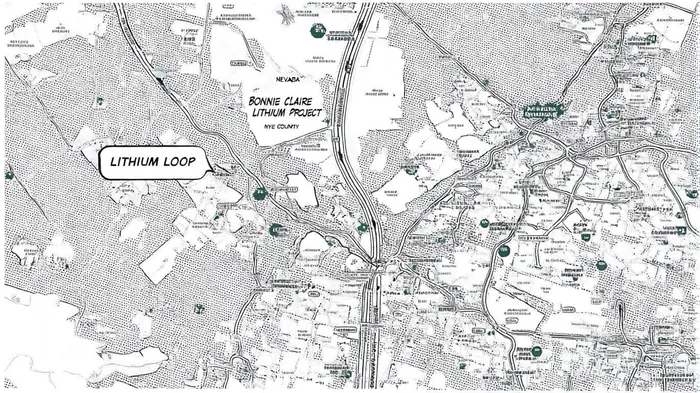
Nevada's unique position as the only U.S. state with a complete "Lithium Loop"-spanning mining, processing, battery manufacturing, and recycling-has been a critical enabler for Nevada Lithium. As highlighted in the Governor's Office of Economic Development (GOED) press release, the 2025 Governor's Lithium Summit emphasized Nevada's jurisdictional advantages, including tax incentives under the newly enacted US HR1 ("One Big Beautiful Bill Act")[4]. This strategic alignment with state-level initiatives has amplified Nevada Lithium's appeal to investors seeking secure, domestic supply chains.
Investor Engagement and Transparency
Nevada Lithium has prioritized transparency through a series of high-impact IR activities. The company has hosted webinars, participated in industry summits such as the Nevada Lithium Summit and the Fastmarkets European Battery Raw Materials Conference, and filed detailed technical reports on SEDAR+[1]. Notably, the company recently engaged Epstein Research for a four-month IR campaign, allocating $10,000 to produce articles, social media commentary, and market awareness initiatives[2]. These efforts have not only enhanced visibility but also fostered trust among institutional stakeholders, who increasingly demand rigorous due diligence in ESG-aligned investments.
Collaborative Ecosystem Building
The company's partnerships with entities like the Nevada Strategic Growth Initiative (NSGI), the Nevada Battery Coalition, and the University of Nevada, Reno further reinforce its credibility. The 2025 Elements of Change Forum, organized by NSGI, served as a platform for high-impact networking between investors, manufacturers, and academia[3]. Additionally, academic collaborations, such as the University of Nevada, Reno's memorandum of understanding with Quebec's Vallée de la Transition Énergétique, highlight the state's commitment to innovation in critical minerals[5]. These alliances create a robust ecosystem that mitigates supply chain risks and accelerates commercialization timelines.
Institutional Interest and Future Outlook
The cumulative effect of these strategies is evident in the growing institutional interest in Nevada Lithium. The project's phased development approach, coupled with Nevada's jurisdictional strengths, has attracted attention from investors seeking exposure to the U.S. critical minerals boom. As stated by the company's CEO, the focus on ore beneficiation and critical mineral co-production aims to further optimize the project's economics[3]. With the global lithium market expected to expand significantly in the coming decade, Nevada Lithium's strategic IR playbook positions it to capitalize on this growth while addressing institutional concerns around sustainability and geopolitical risk.







Comentarios
Aún no hay comentarios