
NeuroPace's Strategic Position in the Evolving Epilepsy Treatment Landscape: Leveraging Brain-Responsive Neurotechnology for Growth
The epilepsy treatment market is undergoing a transformative shift, driven by advancements in neurotechnology and a growing emphasis on personalized, data-driven therapies. At the forefront of this evolution is NeuroPaceNPCE--, a medical device innovator whose RNS System has redefined the treatment paradigm for drug-resistant epilepsy. By capitalizing on its proprietary brain-responsive neurostimulation platform and integrating AI-driven tools, NeuroPace is not only securing a leadership position in a high-growth sector but also addressing unmet clinical needs with a durable competitive edge.
Financial Momentum and Strategic Refinement
NeuroPace's financial performance in 2025 underscores its accelerating market traction. The company reported Q3 2025 revenue of $27.4 million, a 30% year-over-year increase, with its RNS System accounting for $22.6 million (82% of total revenue) and growing at 31% annually. This growth has prompted an upward revision of full-year 2025 revenue guidance to $97–98 million, supported by gross margins projected to reach 76–77%-a testament to the high-margin profile of the RNS System and operational efficiencies.
A key strategic move has been the phase-out of lower-margin SEEG products, allowing NeuroPace to sharpen its focus on the RNS System and AI-enabled innovations. This refocusing aligns with broader industry trends favoring minimally invasive, precision-driven therapies, positioning the company to capture a larger share of the epilepsy treatment device market, which is forecasted to reach $4 billion by 2033.
Clinical Differentiation and Technological Leadership
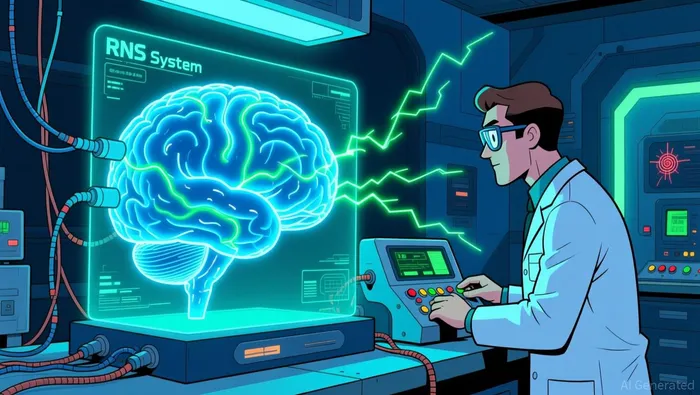
The RNS System's clinical efficacy sets NeuroPace apart in a competitive landscape dominated by traditional neurostimulation therapies like vagus nerve stimulation (VNS) and deep brain stimulation (DBS). According to a report by TouchNeurology, the RNS System achieves a median seizure reduction of 75% over nine years, outperforming VNS's 44% reduction over three years. This durability is attributed to its responsive design, which delivers targeted stimulation only when abnormal brain activity is detected, unlike non-responsive therapies that rely on continuous stimulation.
Preliminary data from the NAUTILUS trial further strengthens NeuroPace's pipeline. The study demonstrated a 79% median reduction in generalized tonic-clonic (GTC) seizures at 12 months for patients with idiopathic generalized epilepsy (IGE), a population historically underserved by existing treatments. These results position the company to seek FDA approval for IGE indication expansion via a PMA supplement by year-end 2025, a move that could significantly broaden its addressable market.
AI-Driven Innovation and Operational Efficiency
NeuroPace's integration of artificial intelligence into its platform represents a critical innovation vector. The recently launched SeizureID™ tool, an AI-powered algorithm, streamlines the interpretation of intracranial EEG (iEEG) data, enabling clinicians to identify seizure patterns and optimize RNS therapy programming. While direct comparisons with other AI-driven epilepsy monitoring systems remain limited, the tool's ability to reduce diagnostic time and improve treatment confidence aligns with industry demands for efficiency in complex neurological care.
This AI-first approach is complemented by NeuroPace's commitment to refining its operational model. By leveraging improved manufacturing efficiencies and focusing on high-margin products, the company has demonstrated a disciplined path to profitability. For instance, its 2025 gross margin guidance of 76–77% reflects both the RNS System's premium pricing and cost reductions achieved through process optimization.
Competitive Positioning and Long-Term Growth Catalysts
NeuroPace's leadership in responsive neurostimulation creates a formidable moat against competitors like Medtronic and Cyberonics. While DBS and VNS remain relevant, their non-responsive nature and lower efficacy rates analyses limit their long-term potential. Moreover, emerging less-invasive technologies such as transcranial direct current stimulation (tDCS) and stereoelectroencephalography (SEEG)-guided interventions, though promising, lack the clinical validation and regulatory clarity that NeuroPace's RNS System has achieved according to practical neurology analysis.
Looking ahead, the company's growth trajectory is anchored by three key initiatives:
1. IGE Indication Expansion: Finalizing the PMA supplement for IGE could unlock a new patient population and drive revenue diversification.
2. Pediatric Market Entry: Expanding the RNS System's use in pediatric epilepsy-a segment with limited treatment options-could further differentiate NeuroPace according to investing.com analysis.
3. AI-Enabled Software Launches: Tools like SeizureID™ and future AI-driven enhancements are expected to improve clinical outcomes while reducing healthcare system costs.
Conclusion
NeuroPace's strategic alignment with the twin forces of technological innovation and clinical excellence positions it as a pivotal player in the epilepsy treatment sector. With a robust financial model, a differentiated product portfolio, and a clear roadmap for expanding indications and AI integration, the company is well-placed to capitalize on the $4 billion market opportunity by 2033 according to market analysis. For investors, NeuroPace exemplifies the intersection of medical innovation and scalable growth-a rare combination in the high-stakes world of neurotechnology.





Comentarios
Aún no hay comentarios