
Neurocrine Biosciences' Osavampator: A Game-Changer in MDD or a High-Stakes Bet?
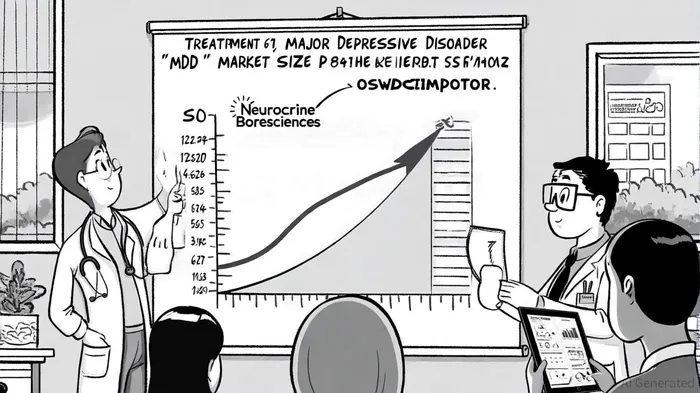
The biotech sector's fascination with Neurocrine BiosciencesNBIX-- (NASDAQ: NBIX) has intensified in 2025, driven by the company's bold foray into major depressive disorder (MDD) with osavampator, a first-in-class AMPA positive allosteric modulator (PAM). As the stock trades near $146, with a 12-month average price target of $161.64[1], investors are weighing whether osavampator's clinical progress and market potential justify its valuation.
Clinical Momentum: A Phase 3 Leap
Osavampator's journey to Phase 3 follows a robust Phase 2 SAVITRI trial, which reported statistically significant reductions in Montgomery-Åsberg Depression Rating Scale (MADRS) scores at both Day 28 (-4.3 vs. placebo, p=0.0159) and Day 56 (-7.5 vs. placebo, p=0.0016)[2]. These results, presented at the 2025 Psych Congress and recognized with a Poster Award[3], underscore its potential as an adjunctive therapy for treatment-resistant depression. The drug's safety profile—marked by minimal adverse events (e.g., headache) and no serious side effects[4]—further strengthens its appeal in a market where existing antidepressants often fail due to tolerability issues.
Neurocrine's decision to initiate a global Phase 3 program in January 2025[5] reflects confidence in osavampator's ability to replicate these outcomes in a larger, more diverse patient population. With topline data expected by late 2026[6], the drug could become the first AMPA-targeting antidepressant to reach market, addressing an estimated $15.8 billion MDD treatment landscape by 2035[7].
Financials and Analyst Sentiment: A Bullish Outlook?
Analysts have largely endorsed Neurocrine's strategy, with 14 ratings issued in Q3 2025—six bullish, seven somewhat bullish, and one neutral[1]. Upgrades from Needham (Buy, $170 target) and RBC Capital (Outperform, $149 target) highlight optimism about osavampator's commercial potential and Neurocrine's broader pipeline, including Crenessity for congenital adrenal hyperplasia[8].
However, the stock's valuation remains tied to Ingrezza, which accounted for 94% of H1 2025 net sales ($1.2 billion)[9]. While the company's $500 million share repurchase program[10] signals confidence, its reliance on a single product—facing a patent challenge from Zydus Lifesciences[11]—introduces risk. Osavampator's success could diversify revenue streams, but its $507.5 million H1 2025 R&D spend[12] underscores the high stakes of clinical development.
Market Dynamics: Opportunity and Competition
The MDD market is projected to grow at a 8.9% CAGR through 2033[13], driven by unmet needs in treatment-resistant patients and the rise of digital therapeutics. Osavampator's mechanism—enhancing glutamatergic signaling without the dissociative side effects of ketamine-based therapies[14]—positions it as a compelling alternative. Yet, competition is fierce: Teva's Austedo XR and emerging neuromodulation therapies (e.g., transcranial magnetic stimulation) could erode market share[15].
Neurocrine's exclusive global rights to osavampator (excluding Japan)[16] provide a strategic edge, but regulatory hurdles remain. The FDA's feedback on the Phase 3 design will be critical, as will the drug's performance in real-world settings.
Risks and Rewards
For investors, osavampator represents a high-reward, high-risk proposition. A successful Phase 3 trial could propel Neurocrine into the MDD mainstream, with peak sales estimates potentially reaching $2–3 billion annually[17]. Conversely, failure or delays could reignite skepticism about the company's pipeline depth.
In the near term, the stock's momentum hinges on Phase 3 enrollment progress and interim data. Long-term value creation, however, depends on osavampator's ability to redefine MDD treatment—a goal that aligns with Neurocrine's ambition but demands patience and capital.
Conclusion
Neurocrine Biosciences stands at a crossroads. Osavampator's clinical promise and the MDD market's growth trajectory offer a compelling narrative for bulls, but the company's financial exposure to Ingrezza and the competitive landscape cannot be ignored. For those willing to tolerate volatility, NBIXNBIX-- could deliver outsized returns if osavampator secures approval. Yet, prudence dictates a balanced approach, hedging against the uncertainties of drug development and market dynamics.





Comentarios
Aún no hay comentarios