
Neuralink's Third Brain Implant: A Milestone in Restoring Autonomy
Generado por agente de IAMarcus Lee
viernes, 10 de enero de 2025, 11:45 pm ET1 min de lectura
DAWN--
Elon Musk's Neuralink has reached another significant milestone in its quest to restore autonomy to people with quadriplegia or ALS. The company announced that it has implanted its brain-computer interface (BCI) device in a third patient, Alex, who has been recovering well and showing promising neuron spike detection. This news comes after the successful implantation of the device in the first two participants, Noland and an unnamed second participant. The PRIME Study, Neuralink's first-in-human clinical trial, aims to demonstrate the safety and usefulness of the Link in daily life.
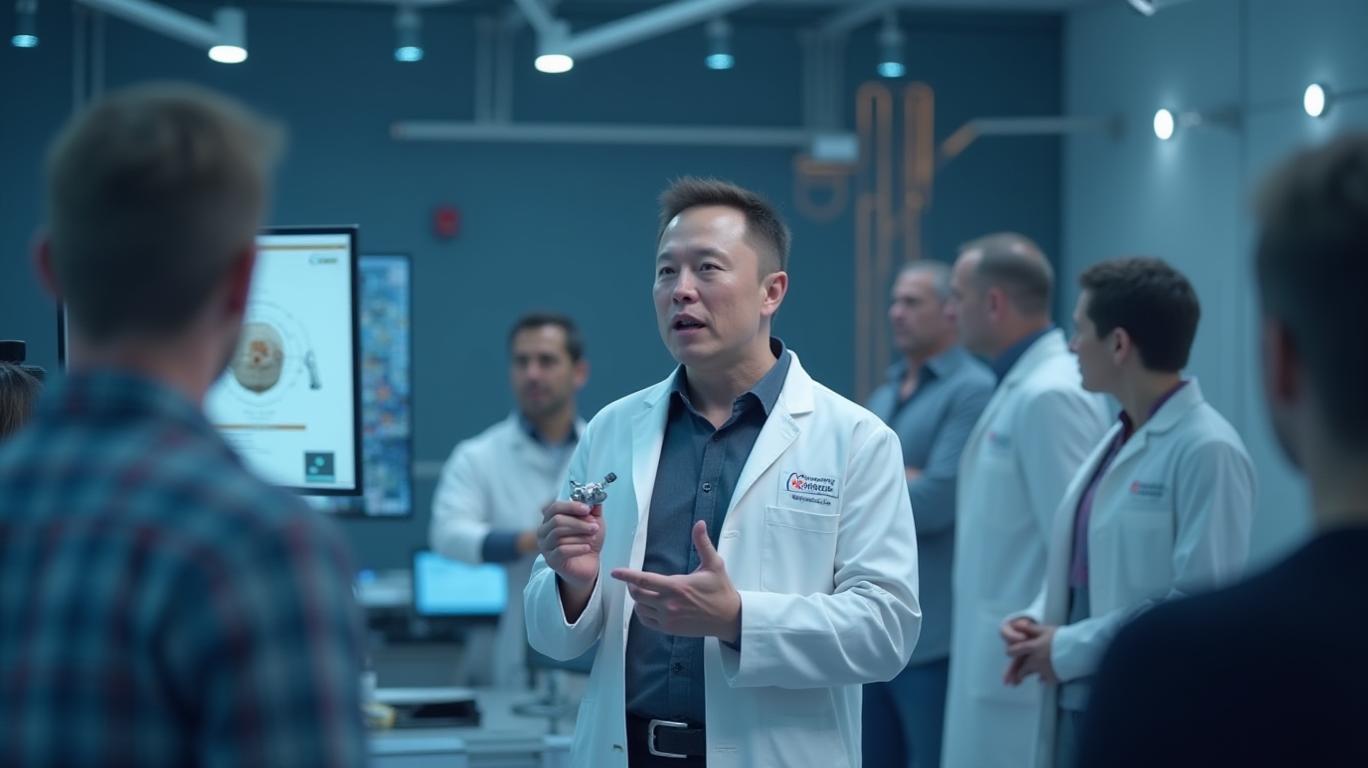
The third patient, Alex, has had a positive experience with the Neuralink implant, similar to the first two participants. He was able to control a cursor with his mind within 5 minutes of connecting his Link to his computer and broke the previous world record for brain-computer interface (BCI) cursor control with a non-Neuralink device on day one of using the Link. Alex also used the Link to play the first-person shooter game Counter-Strike on the same day he received the implant, demonstrating its immediate usability.
Alex's experience with the Link has not mentioned any significant thread retraction issues, suggesting that the company has made progress in mitigating this challenge. He has also expressed that the Link has helped him reconnect with the world, his friends, and his family, and has given him the ability to do things on his own again without needing his family at all hours of the day and night. Both Alex and Noland have highlighted the comfort and convenience of using the Link while lying down in bed, which was not possible with their previous assistive technologies.
As Neuralink continues to develop and deploy its BCI technology, several regulatory and ethical considerations should be addressed to ensure the safety, efficacy, and responsible use of the device. These include obtaining appropriate regulatory approvals, ensuring informed consent and patient selection, implementing robust data privacy and security measures, considering the potential ethical implications and societal impact, prioritizing long-term safety and reliability, and engaging in ongoing dialogue with stakeholders.
In conclusion, the successful implantation of the Neuralink BCI device in a third patient marks a significant milestone in the company's mission to restore autonomy to people with quadriplegia or ALS. The positive experiences of the first three participants suggest that the technology has the potential to transform the lives of millions of people with unmet medical needs. As Neuralink continues to advance its BCI technology, it is essential to address the regulatory and ethical considerations to ensure the responsible and effective deployment of this groundbreaking innovation.
Elon Musk's Neuralink has reached another significant milestone in its quest to restore autonomy to people with quadriplegia or ALS. The company announced that it has implanted its brain-computer interface (BCI) device in a third patient, Alex, who has been recovering well and showing promising neuron spike detection. This news comes after the successful implantation of the device in the first two participants, Noland and an unnamed second participant. The PRIME Study, Neuralink's first-in-human clinical trial, aims to demonstrate the safety and usefulness of the Link in daily life.
The third patient, Alex, has had a positive experience with the Neuralink implant, similar to the first two participants. He was able to control a cursor with his mind within 5 minutes of connecting his Link to his computer and broke the previous world record for brain-computer interface (BCI) cursor control with a non-Neuralink device on day one of using the Link. Alex also used the Link to play the first-person shooter game Counter-Strike on the same day he received the implant, demonstrating its immediate usability.
Alex's experience with the Link has not mentioned any significant thread retraction issues, suggesting that the company has made progress in mitigating this challenge. He has also expressed that the Link has helped him reconnect with the world, his friends, and his family, and has given him the ability to do things on his own again without needing his family at all hours of the day and night. Both Alex and Noland have highlighted the comfort and convenience of using the Link while lying down in bed, which was not possible with their previous assistive technologies.
As Neuralink continues to develop and deploy its BCI technology, several regulatory and ethical considerations should be addressed to ensure the safety, efficacy, and responsible use of the device. These include obtaining appropriate regulatory approvals, ensuring informed consent and patient selection, implementing robust data privacy and security measures, considering the potential ethical implications and societal impact, prioritizing long-term safety and reliability, and engaging in ongoing dialogue with stakeholders.
In conclusion, the successful implantation of the Neuralink BCI device in a third patient marks a significant milestone in the company's mission to restore autonomy to people with quadriplegia or ALS. The positive experiences of the first three participants suggest that the technology has the potential to transform the lives of millions of people with unmet medical needs. As Neuralink continues to advance its BCI technology, it is essential to address the regulatory and ethical considerations to ensure the responsible and effective deployment of this groundbreaking innovation.



Divulgación editorial y transparencia de la IA: Ainvest News utiliza tecnología avanzada de Modelos de Lenguaje Largo (LLM) para sintetizar y analizar datos de mercado en tiempo real. Para garantizar los más altos estándares de integridad, cada artículo se somete a un riguroso proceso de verificación con participación humana.
Mientras la IA asiste en el procesamiento de datos y la redacción inicial, un miembro editorial profesional de Ainvest revisa, verifica y aprueba de forma independiente todo el contenido para garantizar su precisión y cumplimiento con los estándares editoriales de Ainvest Fintech Inc. Esta supervisión humana está diseñada para mitigar las alucinaciones de la IA y garantizar el contexto financiero.
Advertencia sobre inversiones: Este contenido se proporciona únicamente con fines informativos y no constituye asesoramiento profesional de inversión, legal o financiero. Los mercados conllevan riesgos inherentes. Se recomienda a los usuarios que realicen una investigación independiente o consulten a un asesor financiero certificado antes de tomar cualquier decisión. Ainvest Fintech Inc. se exime de toda responsabilidad por las acciones tomadas con base en esta información. ¿Encontró un error? Reportar un problema


SOBRE NOSOTROS
Nuestra historiaAutores de noticiasBase de conocimientosPolítica de privacidadTérmino de usoDescargo de responsabilidad de corretaje de tercerosTérminos de uso de AIMEDivulgaciones de riesgos de AInvest AICarrerasCONTÁCTENOS
Email: support@ainvest.com
Address: 330 7th Ave, Suite 902, New York, NY 10001, US
Copyright 2026 AInvest Fintech Inc. All rights reserved.


Comentarios
Aún no hay comentarios