
Netflix's Strategic Move to Counter Google's Streaming Dominance
The streaming wars have entered a new phase. Netflix's $72 billion acquisition of Warner Bros.WBD-- Discovery's film and TV studios-encompassing HBO, DC Comics, and a treasure trove of iconic franchises-marks a seismic shift in the global entertainment landscape. This deal, valued at $82.7 billion in enterprise value, is not merely a consolidation of assets but a calculated maneuver to position NetflixNFLX-- as a direct rival to YouTube and Google, which have long dominated digital video through ad-driven models and unparalleled user reach. By integrating Warner BrosWBD--.'s library with its own, Netflix is redefining competition in streaming, leveraging scale, content depth, and regional adaptability to challenge Google's dominance while addressing piracy and market fragmentation.
A Content Powerhouse Emerges
The acquisition grants Netflix access to a library of over 10,000 hours of content, including Game of Thrones, Harry Potter, and The Dark Knight trilogy, alongside HBO Max's 130 million subscribers according to Netflix. This expansion creates a hybrid model: Netflix's 300 million subscribers according to reports now gain access to Warner Bros.'s premium franchises, while HBO's existing audience is folded into Netflix's global ecosystem. The combined entity's content breadth-spanning blockbuster films, prestige TV, and ad-supported tiers-positions it to compete with YouTube's fragmented but vast catalog of user-generated and professional content.
Critics argue that the deal may not significantly boost Netflix's market share, as many subscribers already access HBO Max according to market analysis. However, the strategic value lies in content synergy. By bundling HBO's theatrical releases with Netflix's original programming, the platform can offer a one-stop shop for both mass-market and niche audiences. This is critical in price-sensitive markets like India and Nigeria, where Netflix's ad-supported tiers and localized content partnerships according to industry reports are already gaining traction.
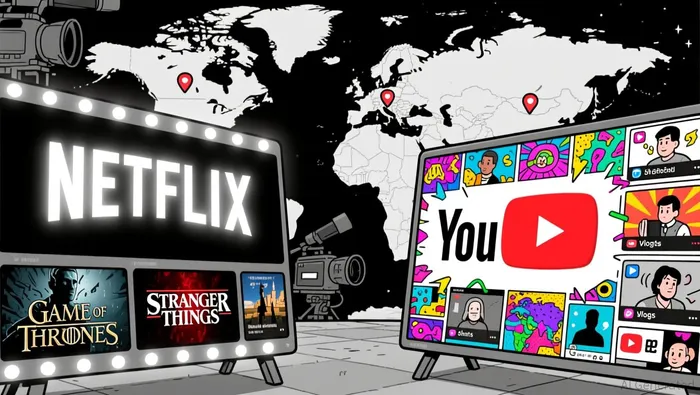
Challenging YouTube's Ad-Driven Empire
YouTube's dominance in 2025 is rooted in its freemium model: 2 billion users and 21% of global viewing time, fueled by ad revenue and YouTube Shorts. Netflix, meanwhile, is projected to surpass YouTube in total video revenue for the first time in 2025, reaching $46.2 billion compared to YouTube's $45.6 billion according to financial reports. This shift is driven by Netflix's ad-supported subscriptions, which appeal to users seeking curated content without the clutter of user-generated material.
The Warner Bros. acquisition accelerates this trend. By integrating HBO's premium content with Netflix's ad tiers, the platform can monetize both high-value and casual viewers. For instance, a $7/month ad-supported plan could offer The Sopranos and Stranger Things side by side, competing directly with YouTube's ad-supported YouTube Premium and Shorts. This dual approach-combining subscription exclusivity with ad-supported accessibility-mirrors Google's strategy but with the added leverage of a unified, professionally produced library.
Regional Piracy and Market Fragmentation
Piracy remains a persistent challenge, with global piracy website visits surging from 130 billion in 2020 to 216 billion in 2024. In price-sensitive regions like Southeast Asia and Latin America, where 25% of users in countries like Sweden reported using pirated content, Netflix's expansion could mitigate this trend. By offering affordable ad tiers and localized content (e.g., Indian originals and Spanish-language programming), Netflix addresses the root causes of piracy: cost and relevance.
The acquisition also strengthens Netflix's position in markets where YouTube's dominance is waning. For example, in France, Netflix's partnership with TF1 to integrate live TV channels according to industry analysis directly challenges YouTube's reliance on fragmented third-party content. Similarly, in Brazil, where piracy rates are high, Netflix's expanded library and lower-cost plans could capture users who previously relied on pirated copies of Game of Thrones or The Witcher.
Regulatory Risks and Long-Term Viability
Antitrust scrutiny in the U.S. and EU remains a hurdle. Regulators have expressed concerns about reduced competition and potential price hikes, while theater operators fear shorter theatrical windows according to industry reports. However, Netflix's argument-that the deal reduces costs and enhances consumer choice-resonates in a market where subscription fatigue is growing. The company's projected $2-3 billion in annual cost savings could be reinvested into content or passed to consumers, further undercutting piracy and YouTube's ad-heavy model.
For investors, the regulatory risks are manageable. The EU is unlikely to block the deal outright but may impose conditions according to market analysis, while U.S. lawmakers' skepticism is tempered by Netflix's promise to maintain theatrical releases. The key inflection point lies in the third-quarter 2026 closing, after which Netflix's expanded library and ad tiers will directly compete with Google's ecosystem.
Conclusion: A New Era in Streaming
Netflix's acquisition of Warner Bros. is not just a bet on content-it's a strategic repositioning to counter Google's ad-driven dominance. By combining HBO's prestige with Netflix's global scale and ad-supported innovation, the platform is creating a hybrid model that appeals to both casual and dedicated viewers. While piracy and regulatory challenges persist, the long-term outlook is clear: Netflix is now a direct competitor to YouTube, with the content, pricing, and regional adaptability to reshape the streaming landscape. For investors, this deal represents a critical inflection point-a rare opportunity to back a company redefining the rules of digital entertainment.







Comentarios
Aún no hay comentarios