
Netflix's Path to Outperforming the S&P 500 in 2026–2030: With or Without Warner Bros. Discovery
The streaming wars have entered a new phase, with Netflix's proposed $82.7 billion acquisition of Warner Bros.WBD-- Discovery (WBD) poised to redefine the industry's competitive landscape. For investors evaluating long-term growth potential, the question is whether this high-stakes move-coupled with Netflix's broader strategic expansion-can position the company to outperform the S&P 500 over the next five years.
Strategic Expansion and Content Ownership: A New Era of Dominance
Netflix's acquisition of WBD's studio and streaming assets represents a seismic shift in its growth strategy. By integrating WBD's iconic intellectual property (IP)-including DC Comics, Harry Potter, Game of Thrones, and the entire HBO catalog-with its existing global subscriber base of 300 million, NetflixNFLX-- aims to create a dominant entertainment ecosystem. The combined entity would reportedly command over 330 million subscribers, giving it a 45% market share in the U.S. streaming sector and a critical edge over rivals like Disney and Paramount.
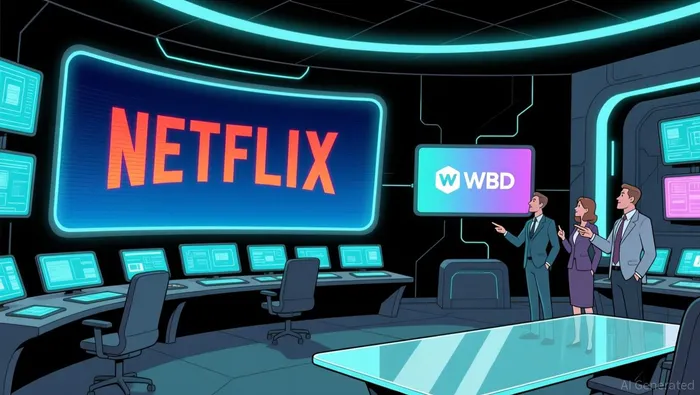 This move is not merely about scale. The acquisition grants Netflix access to premium content, sports rights (such as English Premier League broadcasts in the UK until 2029 and Olympic rights until 2032), and advertising potential. Analysts at Ampere Analysis note that the merged entity could leverage these assets to challenge platforms like YouTube and solidify a cultural stronghold in entertainment. Additionally, the deal is expected to reduce consumer costs through bundled subscriptions, addressing market fatigue from fragmented streaming services.
Financial Risks and Rewards: A High-Stakes Gamble
While the strategic benefits are clear, the financial implications are more contentious. The acquisition is largely debt-financed, with $59 billion in new loans pushing Netflix's pro forma debt to over $80 billion. This raises concerns about leverage and interest costs, which could strain profitability. Needham analyst Laura Martin warns that the deal exposes Netflix to $83 billion in value at risk, particularly as generative AI threatens to disrupt content creation over the next five years.
Regulatory hurdles further complicate the outlook. The combined entity's 45% market share has triggered antitrust scrutiny, with a 35–40% probability of regulatory rejection or prolonged litigation. If the deal fails, Netflix's stock could drop 15% in the short term, while long-term underperformance could erode investor confidence. Conversely, successful integration could yield $2–3 billion in annual cost savings by 2030, with revenue projected to rise from $39 billion in 2024 to $67.2 billion in 2029.
Expert Projections: A Tale of Two Scenarios
Analysts present divergent views on Netflix's stock trajectory. In the best-case scenario, the acquisition accelerates growth, with revenue and earnings per share (EPS) expanding significantly. If the deal closes and integrates smoothly, Netflix's stock could reach $153 by late 2028, a 60% upside from current levels, assuming a 30x forward earnings multiple. This would outpace the S&P 500's historical returns, which averaged 17.1% in 2025.
However, the risks are substantial. A 2025 report by Forbes highlights that past media mergers, such as AT&T's acquisition of Time Warner, often underperformed due to integration complexities and debt burdens. In this scenario, Netflix's stock might lag behind the S&P 500's more stable, diversified returns.
The Bigger Picture: Industry Consolidation and Investor Sentiment
The WBDWBD-- acquisition reflects a broader trend of consolidation in the streaming sector, driven by rising content costs and the need for scale. By reducing competition, Netflix aims to create a more sustainable business model with hybrid revenue streams (advertising, subscriptions, and licensing). This could pressure rivals to accelerate their own consolidation efforts, further reshaping the industry.
Investor sentiment remains mixed. While some analysts, like Laura Martin, maintain a "Buy" rating with a $150 price target, others caution against overpaying for legacy assets at a time of technological disruption. Netflix's current valuation-31.8x forward earnings-suggests high expectations, but its ability to deliver on these promises will hinge on regulatory approvals and operational execution. According to Nasdaq analysis, Netflix's path to success remains uncertain.
Conclusion: A Calculated Bet for Long-Term Growth
Netflix's path to outperforming the S&P 500 hinges on its ability to navigate the risks of the WBD acquisition while capitalizing on its strategic advantages. The deal offers unparalleled access to premium content and global scale, but its success depends on regulatory green lights, integration efficiency, and the company's adaptability in an AI-driven content landscape. For investors with a long-term horizon, the potential rewards-accelerated revenue growth, market dominance, and a diversified entertainment ecosystem-could justify the risks. However, those seeking stability may prefer the S&P 500's broader diversification, even if it means forgoing the high-reward potential of a concentrated bet on Netflix.
In the end, the streaming giant's ability to balance ambition with prudence will determine whether it emerges as a leader-or a cautionary tale-in the next decade of digital entertainment.





Comentarios
Aún no hay comentarios