
Netflix's 10-for-1 Stock Split: A Strategic Move for Accessibility and Investor Appeal?
Historical Context: The 2015 Split and Its Legacy
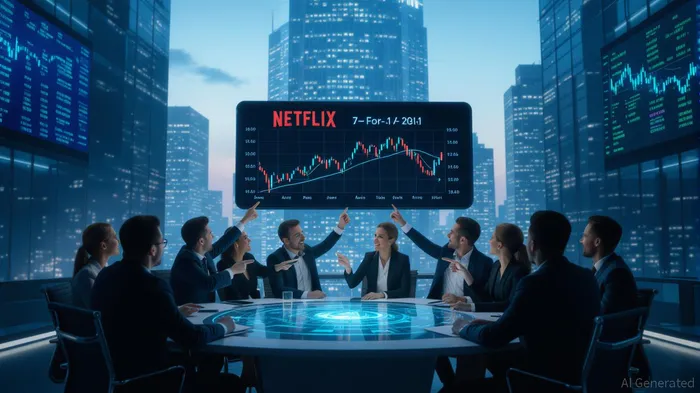
Netflix's 2015 7-for-1 split offers a compelling case study. Before the split, the stock traded above $700, a price point that deterred smaller investors. Post-split, the share price dropped to around $100, triggering an 180% surge in trading volume on the execution day. Over the next 60 days, the stock appreciated by 8%, and over two years, it soared 340% amid subscriber growth and content expansion. This historical precedent suggests that stock splits can catalyze both liquidity and price momentum, particularly when aligned with strong fundamentals.
The 2025 split mirrors this logic. With NetflixNFLX-- reporting a 17.2% year-over-year revenue increase in Q3 2025-driven by price hikes, membership growth, and ad revenue-the company is leveraging its financial strength to maintain retail participation. By reducing the psychological barrier of a $1,000+ share price, Netflix aims to attract a broader investor base, including employees exercising stock options and new retail buyers.
Market Psychology and Retail Participation: The Behavioral Angle
Academic research underscores the psychological impact of stock splits. A 2023 study in Scientific Reports found that retail investors are disproportionately influenced by upward social comparison on trading platforms, often increasing risk-taking and trading frequency after splits. This aligns with historical data showing that splits correlate with heightened retail participation, as seen in Netflix's 2015 split, which saw trading volume remain elevated for weeks post-announcement.
Moreover, splits can create a "halo effect," where the perceived affordability of shares fosters optimism. According to a Wiley study, companies announcing splits typically see average price increases of 25% in the following year, outpacing the S&P 500. While this may reflect investor confidence rather than intrinsic value, the behavioral dynamics are undeniable. For Netflix, the 2025 split arrives amid anticipation for Stranger Things' final season and a robust advertising business, amplifying the psychological boost.
Strategic Implications: Beyond the Split
Critics argue that splits do not alter a company's fundamentals, but Netflix's timing suggests a calculated move. The 2025 split coincides with a $250 billion market cap, a level where retail participation naturally wanes. By resetting the share price, Netflix ensures its stock remains accessible to new investors, particularly as it expands into gaming and interactive content. Additionally, the split may encourage employee retention through more attainable stock options, a critical factor in a competitive tech talent market according to market analysis.
However, long-term success hinges on execution. The 2015 split's success was underpinned by Stranger Things and The Witcher, which drove subscriber growth. For the 2025 split to resonate similarly, Netflix must continue delivering content that justifies its premium valuation.
Conclusion: A Win-Win for Investors?
Netflix's 10-for-1 split is a strategic blend of accessibility and psychology. By lowering the nominal price, the company invites retail investors back into the fold while signaling confidence in its growth story. Historically, splits have correlated with short-term price gains and sustained retail participation, as evidenced by the 2015 precedent. However, the long-term value will depend on Netflix's ability to maintain its dominance in streaming and innovate beyond content. For investors, the split is less about immediate returns and more about positioning for a future where Netflix remains a cornerstone of the digital entertainment ecosystem.





Comentarios
Aún no hay comentarios