
Nestlé's Strategic Transformation Under Philipp Navratil: Assessing Leadership Impact on Sales and Shareholder Value
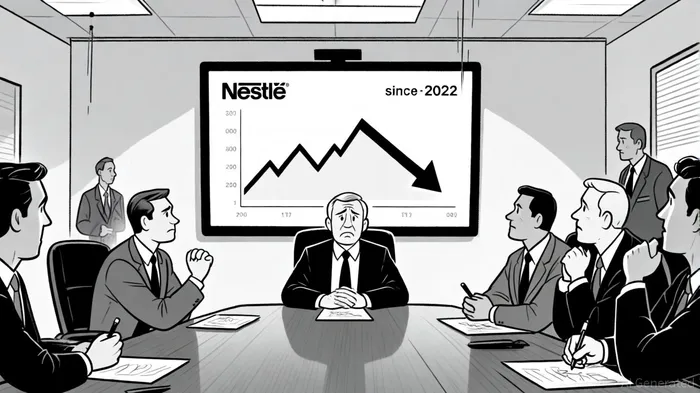
Nestlé's leadership overhaul in 2025, marked by the abrupt departure of CEO Laurent Freixe and the appointment of Philipp Navratil, has thrust the Swiss food and beverage giant into a critical phase of strategic transformation. Navratil, a 24-year Nestlé veteran and former Nespresso head, inherits a company grappling with weak sales, governance scandals, and a 40% share price decline since 2022, according to Tredu. His tenure, however, offers a rare opportunity to recalibrate the business model amid macroeconomic headwinds and shifting consumer preferences. This analysis evaluates the impact of Navratil's leadership on sales momentum, profit margins, and long-term shareholder value, drawing on recent financial data and expert insights.
Strategic Priorities: Cost-Cutting, RIG, and Portfolio Rationalization
Navratil's strategic agenda centers on three pillars: cost discipline, innovation-driven growth, and operational efficiency. The newly announced $2.8 billion cost-cutting plan-targeting a 16,000-employee reduction and CHF 3.0 billion in savings by 2027-reflects a sharp focus on margin preservation, Morningstar noted. These measures, part of the broader "Accelerating Nestlé" initiative, aim to streamline operations, spin off underperforming units (e.g., water and premium beverages), and reinvest in high-growth platforms like GLP-1-related nutrition products, CNBC TV18 reported.
Early results under Navratil's leadership show mixed signals. For the first nine months of 2025, Nestlé reported 3.3% organic sales growth, driven by 0.6% real internal growth (RIG) and 2.8% pricing gains, as Morningstar highlighted. While this outperforms the flat sales growth of 2024, it remains below the company's long-term targets. Navratil has emphasized the need to accelerate innovation and digital transformation, particularly in underperforming markets like Greater China, where structural challenges persist, according to CEO Today.
Profit Margins and Shareholder Value: A Delicate Balance
The cost-cutting initiatives are expected to stabilize Nestlé's profit margins, which were reduced from 18.5% to 17% in 2024 due to inflationary pressures and operational inefficiencies, CNBC TV18 reported. Navratil has committed to maintaining a margin of at least 16% in 2025, a goal that hinges on successful execution of the restructuring plan, Tredu noted. Analysts at Morningstar note that while the company's trailing P/E ratio of 18.94 and forward P/E of 17.15 suggest undervaluation, the path to margin recovery is clouded by rising input costs and competitive pressures from private-label brands.
Shareholder value metrics remain a mixed bag. Nestlé's total shareholder yield of 4.96%-comprising a 3.31% dividend yield and 1.65% buyback yield-positions it as an income-focused play, according to CNBC TV18. However, the stock's 52-week price change of -2.38% and beta of 0.42 highlight lingering investor skepticism. The leadership turmoil, including Freixe's misconduct scandal, has eroded confidence, with shares dropping 3% immediately after his ouster, according to Portfolio Performance Today. Navratil's ability to restore governance credibility while delivering on financial targets will be pivotal.
Risks and Long-Term Outlook
Despite Navratil's strategic clarity, risks loom large. The company's leverage ratio (Debt/EBITDA) has risen from 1.71x in 2021 to 2.9x in 2025, raising concerns about financial flexibility, Tredu observed. Additionally, the spin-off of the water and premium beverages division-a move intended to sharpen focus-could face regulatory and operational hurdles. Analysts at the Financial Times caution that Navratil's success depends on his capacity to balance short-term cost discipline with long-term reinvestment in innovation.
Morningstar's fair value estimate of CHF 89, coupled with its "wide economic moat" rating, underscores long-term confidence in Nestlé's brand strength and global distribution network. However, achieving this requires a generational reset in leadership and strategy, as noted by CEO Today. Navratil's track record in Nespresso and Latin America suggests he possesses the operational rigor to drive change, but the scale of Nestlé's challenges is unprecedented.
Conclusion: A Make-or-Break Transition
Philipp Navratil's leadership represents a critical inflection point for Nestlé. The early emphasis on cost-cutting and RIG-driven growth has stabilized sales momentum, but the true test lies in translating these efforts into sustainable margin expansion and shareholder value creation. With a roadmap that includes CHF 3.0 billion in savings, strategic divestitures, and a renewed focus on innovation, Navratil has laid the groundwork for a turnaround. Yet, the path forward remains fraught with risks, from macroeconomic volatility to governance scrutiny. Investors must weigh the company's structural advantages against its operational headwinds, recognizing that Navratil's tenure could redefine Nestlé's trajectory in the global FMCG landscape.







Comentarios
Aún no hay comentarios