
Neste's Strategic Realignment in Renewable Energy: A Catalyst for Long-Term Shareholder Value and Sector Transformation
Neste's 2025 strategic realignment marks a pivotal shift in its approach to renewable energy, prioritizing scalable solutions in renewable diesel and sustainable aviation fuel (SAF) while reinforcing its commitment to decarbonization. This recalibration, underpinned by ambitious climate targets and operational efficiency gains, positions the company to capitalize on regulatory tailwinds and growing demand for low-emission fuels. For investors, the implications extend beyond short-term profitability, offering a blueprint for how strategic agility and policy alignment can drive long-term shareholder value in a rapidly evolving energy landscape.
Revised Climate Targets: Scaling Impact in Hard-to-Abate Sectors
Neste has set a long-term goal to reduce its customers' greenhouse gas emissions by at least 20 million tons of CO2e annually by 2030 according to its sustainability report. This target is anchored in the company's decision to scale renewable fuels production to 6.8 million tons by 2027, with SAF and renewable diesel forming the core of its growth strategy. The focus on aviation and transportation sectors-traditionally resistant to decarbonization-aligns with global regulatory trends, such as the European Union's Corporate Sustainability Reporting Directive (CSRD) and the U.S. Renewable Fuel Standard (RFS), which mandate emissions reductions in these areas. By targeting these high-potential markets, Neste not only strengthens its competitive positioning but also creates a recurring revenue stream tied to policy-driven demand.
Operational Efficiency: Fueling Margins and Profitability
The company's performance improvement program has already delivered measurable results, generating a cumulative EBITDA run rate impact of EUR 229 million annually by Q3 2025 through streamlined operations and procurement efficiencies. These gains are reflected in the Renewable Products segment's robust sales margin of USD 480/ton in the same period, alongside record SAF sales of 251,000 tons. Such operational discipline is critical for maintaining profitability as the company invests in expanding its production capacity. For instance, the integration of renewable hydrogen at Neste's Rotterdam facility-via a high-temperature electrolyzer-demonstrates a forward-looking approach to reducing refinery emissions while securing a stable green hydrogen supply. 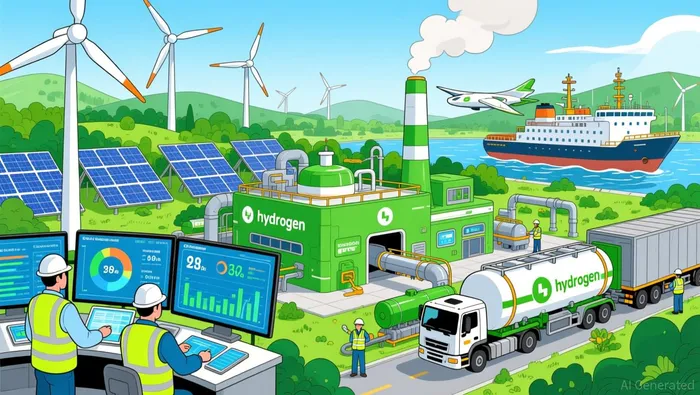 This dual focus on cost optimization and technological innovation enhances resilience against commodity price volatility and regulatory risks.
### Sector Dynamics: Policy-Driven Growth and Competitive Positioning
The renewable energy sector's trajectory is inextricably linked to regulatory frameworks that create predictable demand. According to Neste's analysis, Neste's strategic emphasis on markets with strong policy support-such as blending mandates for SAF and renewable diesel-ensures alignment with global decarbonization goals. For example, the International Air Transport Association (IATA) projects that SAF demand could reach 180 billion liters by 2050, driven by carbon-neutral growth targets. Neste's ambition to become the world's leading SAF producer directly taps into this potential, leveraging its existing infrastructure and feedstock partnerships to outpace competitors. This policy-driven scalability reduces market uncertainty, enabling long-term capital allocation decisions that prioritize high-impact projects.
Shareholder Value: Balancing Ambition with Financial Prudence
While Neste's climate targets are ambitious, the company's financial strategy ensures these goals are achievable without compromising shareholder returns. The EUR 229 million annual EBITDA improvement from operational efficiencies provides a buffer for reinvestment in high-margin renewable fuels, while its focus on hard-to-abate sectors minimizes exposure to commoditization. Additionally, the integration of renewable hydrogen at Rotterdam underscores Neste's ability to innovate within existing operations, avoiding the capital-intensive risks of greenfield projects. For investors, this balance between growth and prudence signals a company that is not only environmentally responsible but also financially disciplined-a rare combination in the renewable energy sector.
Conclusion: A Model for Sustainable Energy Transition
Neste's 2025 strategic realignment exemplifies how a clear-eyed focus on regulatory alignment, operational excellence, and market-specific innovation can drive both environmental impact and shareholder value. By prioritizing scalable solutions in high-growth, policy-supported sectors, the company is well-positioned to navigate the transition to a low-carbon economy. For the renewable energy sector as a whole, Neste's approach offers a replicable model: leveraging policy frameworks to create demand, optimizing operations to sustain margins, and investing in technology to future-proof competitiveness. As global decarbonization goals tighten, companies that follow this blueprint-like Neste-are likely to emerge as long-term leaders.







Comentarios
Aún no hay comentarios