
Neptune Insurance Goes Public Amidst National Flood Insurance Program Shutdown
PorAinvest
martes, 14 de octubre de 2025, 2:23 pm ET1 min de lectura
NP--
The shutdown has left the NFIP in limbo, unable to sell new policies or renew expired ones. This has created an opening for private insurers like Neptune. While the NFIP remains in effect, private insurers are stepping in to fill the gap. Neptune, in particular, has been betting on flood insurance, an area that has historically been unprofitable for private companies due to poor flood modeling and significant losses [1].
Neptune's co-founder and CEO, Trevor Burgess, a former Morgan Stanley investment banker, sees potential in the flood insurance market. He believes that advancements in flood modeling have made it possible to accurately predict flood risks and price policies accordingly. Neptune does not pay out claims directly but acts as an intermediary for global insurers, who empower the company to write policies for them [1].
The stakes are high. Flooding is the most costly natural disaster in the U.S., with nearly 20 million properties at high risk. However, only around 5 million homes carry flood insurance, mostly from the NFIP. The shutdown has accelerated the growth of the private flood insurance market, with more insurers entering the sector [1].
Neptune's shares have seen a mixed performance since its debut. They fell 3.5% on Friday and are up 32% since their debut at $20 on October 1. The company's technology, which Burgess claims is sophisticated enough to reliably attract insurance capital, has attracted partners like AXA XL, Fortegra, and Palomar [1].
However, there are uncertainties. The demand for flood insurance is unclear, especially as home insurance costs are rising. Additionally, competing with the NFIP can be challenging, as the government often charges below-market rates. Burgess expects his premiums to rise significantly over the next two decades, eventually reaching a level where Neptune can compete with the NFIP [1].
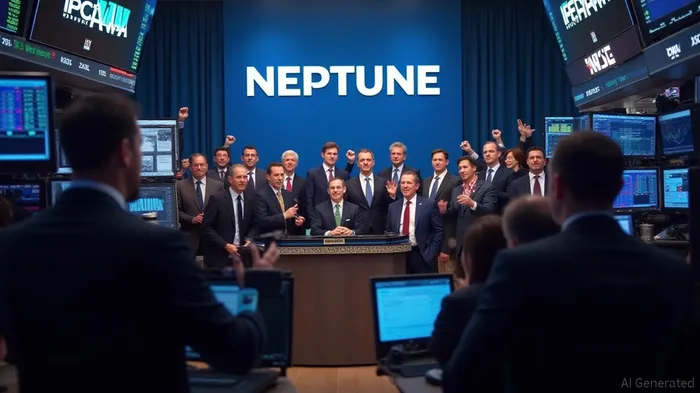
Neptune Insurance Holdings, a private insurer, went public on the NYSE on Oct. 1, hours after the government shutdown put the National Flood Insurance Program on hold. Neptune has 260,000 policyholders, compared to the government's 4.7 million. The shutdown has left the National Flood Insurance Program in limbo.
Neptune Insurance Holdings, a private insurer, went public on the New York Stock Exchange (NYSE) on October 1, hours after the government shutdown put the National Flood Insurance Program (NFIP) on hold. Neptune, with 260,000 policyholders, is a notable player in the flood insurance market, which has been traditionally dominated by the government's NFIP, with 4.7 million policyholders [1].The shutdown has left the NFIP in limbo, unable to sell new policies or renew expired ones. This has created an opening for private insurers like Neptune. While the NFIP remains in effect, private insurers are stepping in to fill the gap. Neptune, in particular, has been betting on flood insurance, an area that has historically been unprofitable for private companies due to poor flood modeling and significant losses [1].
Neptune's co-founder and CEO, Trevor Burgess, a former Morgan Stanley investment banker, sees potential in the flood insurance market. He believes that advancements in flood modeling have made it possible to accurately predict flood risks and price policies accordingly. Neptune does not pay out claims directly but acts as an intermediary for global insurers, who empower the company to write policies for them [1].
The stakes are high. Flooding is the most costly natural disaster in the U.S., with nearly 20 million properties at high risk. However, only around 5 million homes carry flood insurance, mostly from the NFIP. The shutdown has accelerated the growth of the private flood insurance market, with more insurers entering the sector [1].
Neptune's shares have seen a mixed performance since its debut. They fell 3.5% on Friday and are up 32% since their debut at $20 on October 1. The company's technology, which Burgess claims is sophisticated enough to reliably attract insurance capital, has attracted partners like AXA XL, Fortegra, and Palomar [1].
However, there are uncertainties. The demand for flood insurance is unclear, especially as home insurance costs are rising. Additionally, competing with the NFIP can be challenging, as the government often charges below-market rates. Burgess expects his premiums to rise significantly over the next two decades, eventually reaching a level where Neptune can compete with the NFIP [1].


Divulgación editorial y transparencia de la IA: Ainvest News utiliza tecnología avanzada de Modelos de Lenguaje Largo (LLM) para sintetizar y analizar datos de mercado en tiempo real. Para garantizar los más altos estándares de integridad, cada artículo se somete a un riguroso proceso de verificación con participación humana.
Mientras la IA asiste en el procesamiento de datos y la redacción inicial, un miembro editorial profesional de Ainvest revisa, verifica y aprueba de forma independiente todo el contenido para garantizar su precisión y cumplimiento con los estándares editoriales de Ainvest Fintech Inc. Esta supervisión humana está diseñada para mitigar las alucinaciones de la IA y garantizar el contexto financiero.
Advertencia sobre inversiones: Este contenido se proporciona únicamente con fines informativos y no constituye asesoramiento profesional de inversión, legal o financiero. Los mercados conllevan riesgos inherentes. Se recomienda a los usuarios que realicen una investigación independiente o consulten a un asesor financiero certificado antes de tomar cualquier decisión. Ainvest Fintech Inc. se exime de toda responsabilidad por las acciones tomadas con base en esta información. ¿Encontró un error? Reportar un problema


SOBRE NOSOTROS
Nuestra historiaAutores de noticiasBase de conocimientosPolítica de privacidadTérmino de usoDescargo de responsabilidad de corretaje de tercerosTérminos de uso de AIMEDivulgaciones de riesgos de AInvest AICarrerasCONTÁCTENOS
Email: support@ainvest.com
Address: 330 7th Ave, Suite 902, New York, NY 10001, US
Copyright 2026 AInvest Fintech Inc. All rights reserved.


Comentarios
Aún no hay comentarios