
NeoVolta's Strategic Acquisition of Neubau Energy: A Tariff-Driven Path to Residential Energy Storage Dominance
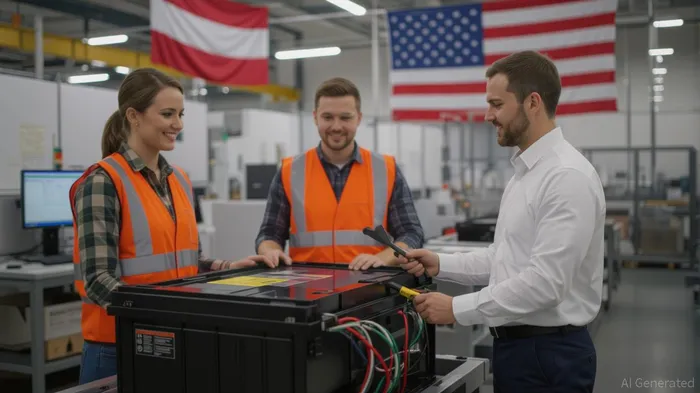
The U.S. residential energy storage market is on the brink of a seismic shift as the Biden administration's 2026 Section 301 tariffs on Chinese lithium-ion batteries loom, with rates set to rise from 7.5% to 25%[1]. Coupled with the Trump administration's proposed 60% tariff hikes and potential revocation of China's PNTR status, total import costs could surge by nearly 150%[2]. In this high-stakes environment, NeoVoltaNEOV-- Inc. (NASDAQ: NEOV) has positioned itself as a strategic innovator by acquiring Neubau Energy's assets—a move designed to circumvent these tariffs while accelerating its dominance in a market projected to grow by 50% in cost due to trade barriers[3].
Strategic Synergy: Tariff Avoidance and Technological Edge
NeoVolta's acquisition of Neubau Energy's Austrian manufacturing base and patented technology portfolio is a masterstroke in navigating the impending tariff crisis. By anchoring production in Austria, the combined entity sidesteps U.S. import duties on Chinese-made batteries, which could otherwise inflate costs by up to 8% for 5-MWh systems between 2023 and 2028[4]. Neubau's modular battery architecture, protected by over a dozen patents, further differentiates the offering: its sub-30-minute installation process reduces deployment costs by 75% compared to traditional systems, enabling any licensed electrician—not just specialized technicians—to deploy units[5]. This democratization of installation aligns with U.S. market demands for scalability and affordability, particularly as Chinese LFP systems face price headwinds from tariffs and anti-dumping investigations[6].
Financial Implications: Cost Arbitrage and Market Capture
The financial rationale for the acquisition is compelling. With U.S. domestic battery production covering only 6% of demand by 2025[7], the market remains heavily reliant on imports—many of which will become prohibitively expensive post-2026. NeoVolta's tariff-free Austrian platform offers a critical cost arbitrage opportunity. Analysts note that Chinese import prices, even with tariffs, may still set the marginal price for battery energy storage systems (BESS) through 2027[8]. However, NeoVolta's Neubau-powered systems, with their streamlined deployment and modular design, could undercut these prices while maintaining quality. This positions the company to capture market share as competitors grapple with soaring costs, particularly in the residential segment, where price sensitivity is acute.
Operational Integration: Accelerating Execution
Operational integration is already underway, with both teams collaborating at RE+ 2025 and accepting orders for Neubau's systems under the NeoVolta brand[9]. The acquisition's cash-and-stock structure, pending board and shareholder approvals, ensures flexibility in scaling production to meet U.S. demand. Neubau's Austrian facilities also provide a buffer against supply chain disruptions, a critical advantage as U.S. buyers face shortages from Chinese suppliers. Meanwhile, the integration of Neubau's intellectual property into NeoVolta's portfolio strengthens its competitive moat, offering a dual advantage of tariff-free access and proprietary technology.
Conclusion: A Tariff-Proof Growth Engine
NeoVolta's acquisition of Neubau Energy is not merely a defensive maneuver against tariffs but a proactive strategy to redefine the residential energy storage landscape. By leveraging Austria's manufacturing base, patented modular technology, and cost-efficient deployment models, the company is poised to outperform peers as U.S. trade policies drive up the cost of imported alternatives. For investors, this represents a rare opportunity to back a company that is not only mitigating regulatory risks but also capitalizing on them to secure a leadership position in a market on the cusp of transformation.





Comentarios
Aún no hay comentarios