
The NEO Ecosystem and Governance Risks in Blockchain Investment
Blockchain projects, by their very nature, are deeply intertwined with governance structures that define their operational and financial transparency. For investors, understanding these dynamics is critical, as governance flaws can directly impact asset valuation and long-term sustainability. The case of NEO, a blockchain platform co-founded by Da Hongfei and Erik Zhang, offers a compelling lens through which to examine these risks. Over the past decade, the public finance dispute between the co-founders and the evolving regulatory landscape have exposed vulnerabilities in decentralized governance models, raising questions about their resilience in the face of leadership conflicts and regulatory uncertainty.
Leadership Conflict and Governance Flaws
The governance structure of NEONEO-- has been a focal point of contention since its reorganization in 2018. Da Hongfei and Erik Zhang co-chaired the NEO Foundation, overseeing two key units: NEO Global Development (NGD), responsible for R&D and community engagement, and NEO Global Capital (NGC), a Singapore-based investment arm according to official records. While this structure aimed to separate technological development from profit-driven activities, it also created overlapping responsibilities and potential conflicts of interest.
A public finance dispute emerged in recent years, with Da Hongfei accusing Erik Zhang of controlling a majority of the project's funds and influencing consensus node voting. These claims highlight a lack of clear financial transparency and accountability, which are critical for decentralized projects aiming to build trust with stakeholders. The co-founders' collaboration, rooted in their 2014 partnership under AntShares (NEO's predecessor), has faced periodic tensions, particularly as the project transitioned to the NEO N3 platform and sought to expand its developer ecosystem.
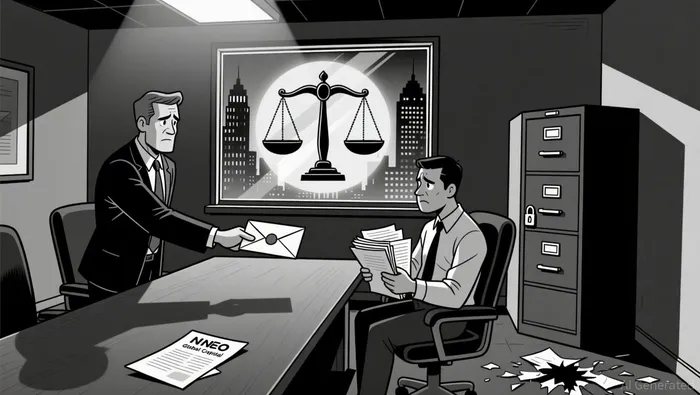
The governance model's reliance on co-founding leadership, while initially effective, has exposed scalability issues. For instance, Da Hongfei emphasized in a 2021 Reddit AMA that balancing regional community needs with local regulatory compliance was a priority. However, the absence of independent oversight mechanisms-such as a decentralized autonomous organization (DAO) or third-party audits-has left the project vulnerable to accusations of centralization.
Regulatory Uncertainty and Indirect Impacts
While no direct regulatory enforcement actions against NEO were identified in the 2018–2025 period, the broader regulatory environment for blockchain projects has grown increasingly complex. The evolution of frameworks like the EU's Markets in Crypto-Assets (MiCA) and the U.S. GENIUS Act has introduced clarity for stablecoins and DeFi platforms but also heightened compliance burdens. For projects like NEO, which operate across multiple jurisdictions, navigating these divergent regulations requires robust governance structures to avoid reputational and financial risks.
The 2025 fintech compliance landscape further underscores the challenges. Neobanks and digital asset platforms faced fines exceeding $4.4 million on average for AML and KYC failures. While NEO has not been directly penalized, the reputational damage from governance conflicts could indirectly affect investor confidence. Research indicates that investors react negatively to governance disputes unless projects demonstrate high transparency and quality ratings. Da Hongfei's pledge to publish NGC's financial reports in Q3 2018 aimed to address these concerns, but the lack of independent verification mechanisms leaves room for skepticism.
Investor Sentiment and Asset Valuation
The interplay between governance risks and asset valuation is evident in the broader crypto market. Weak corporate governance-such as opaque financial reporting or leadership conflicts-can lead to securities litigation and eroded stakeholder trust. For NEO, the public dispute between its co-founders has likely contributed to volatility in its market valuation, particularly during periods of heightened regulatory scrutiny.
Erik Zhang's public statements on the "obscure regulatory landscape" and "lack of mass adoption" further illustrate how governance and regulatory challenges are intertwined. These factors not only deter traditional developers but also create uncertainty for institutional investors, who require predictable compliance frameworks to justify large-scale allocations. The absence of a clear resolution to the governance conflict may perpetuate this uncertainty, limiting NEO's ability to attract capital in a competitive market.
Conclusion: Mitigating Governance Risks in Blockchain Investment
The NEO case underscores the importance of transparent, decentralized governance structures in blockchain projects. While the co-founders' reorganization in 2018 aimed to separate development and investment activities, the lingering leadership conflict and regulatory ambiguities highlight systemic risks. For investors, due diligence must extend beyond technical innovation to include scrutiny of financial transparency, leadership dynamics, and regulatory preparedness.
As the crypto-asset class matures, projects that fail to address governance flaws risk falling behind in a landscape increasingly defined by institutional demand for accountability. The lessons from NEO's ecosystem serve as a cautionary tale: governance is not just a technical or operational concern-it is a cornerstone of sustainable value creation in blockchain investment.







Comentarios
Aún no hay comentarios