
S&P’s Negative Outlook for Hungary: A Fiscal Crossroads Amid Political and Economic Pressures
Budapest’s fiscal stability has reached a precarious inflection point. On April 15, S&P Global Ratings downgraded Hungary’s outlook to negative, signaling heightened risks to its ‘BBB-/A-3’ credit rating amid election-driven spending, stalled EU funding, and a fragile external environment. This decision underscores a deepening divide between Hungary’s short-term political priorities and its long-term economic sustainability.
The Fiscal Tightrope: Debt, Deficits, and Election Promises
Hungary’s public finances are strained at multiple levels. With a debt-to-GDP ratio of 73.5% in 2024—the highest in Central and Eastern Europe—the government faces rising interest costs that now consume over 4% of GDP annually.  S&P estimates the 2025 deficit will hit 4.5% of GDP, exceeding the government’s 3.7% target as election pledges—including expanded housing subsidies and tax breaks for families—inflate spending.
The ruling Fidesz party’s aggressive pre-election fiscal easing risks further destabilizing the budget. “Discretionary spending hikes could push the deficit closer to 5% by 2026,” S&P warned, noting that Hungary’s structural deficit—excluding cyclical factors—is already among the worst in the EU.
External Vulnerabilities: Trade, FDI, and Geopolitical Headwinds
Hungary’s open economy, reliant on automotive exports (75% of GDP), is increasingly exposed to global shocks. Trade tensions over EVs—where China’s competition threatens Hungary’s German-dependent auto sector—could further squeeze export revenues. 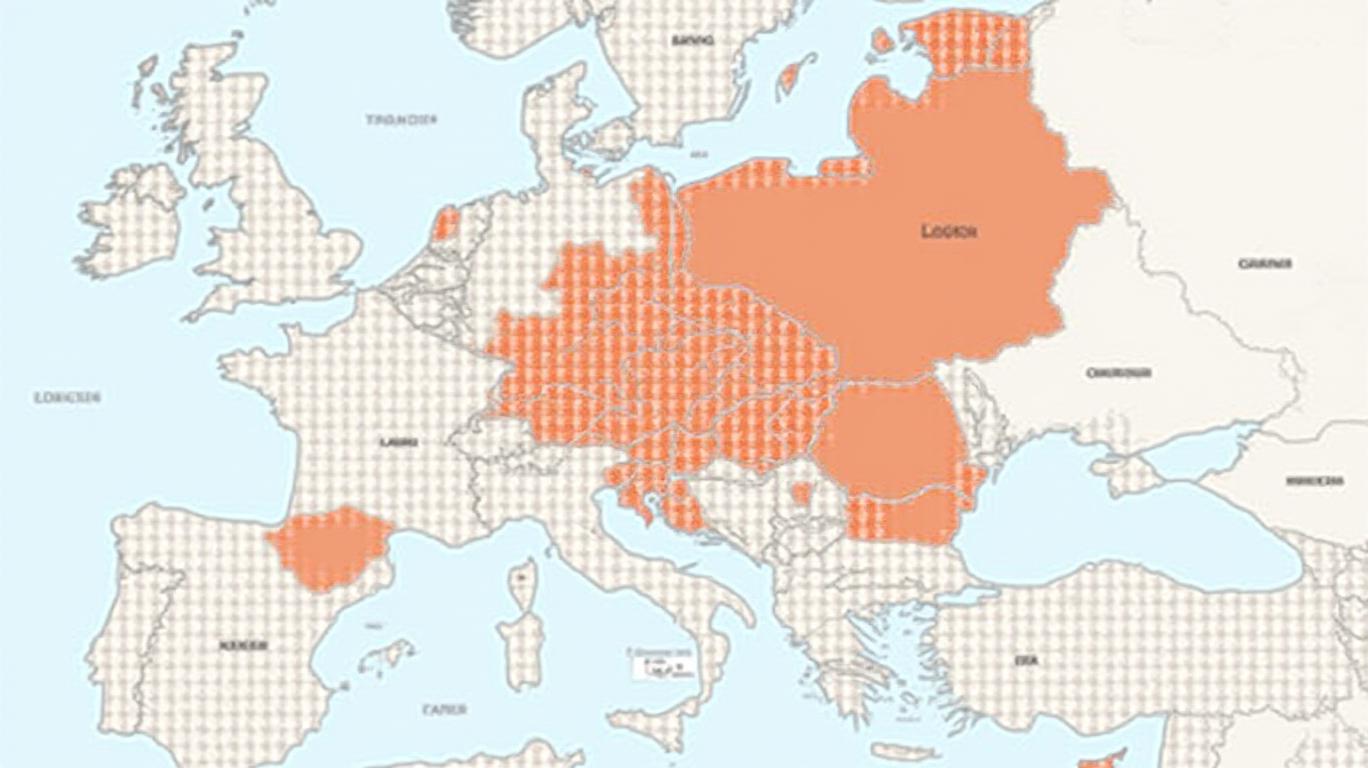
Foreign direct investment has already collapsed, falling to 2% of GDP in 2024 from 8.4% in 2022 as EV sector interest wanes. S&P notes that without RRF funds or FDI, capital inflows will remain meager, straining public investment plans.
The EU Funding Stalemate: A €9.5 Billion Standoff
The withheld EU Recovery Fund (RRF) allocation—€9.5 billion in grants and loans—has become a fiscal black hole. With disbursement unlikely before the December 2026 deadline, Hungary’s capital account balance is projected to shrink to 0.9% of GDP over 2025–2028, down from 1.5%. This delay not only deprives Hungary of critical infrastructure funding but also amplifies fiscal pressures.
Inflation and Monetary Policy: A Tightening Vise
While Hungary’s annual inflation dipped to 3.7% in 2024, it rebounded to 4.7% in March 2025, driven by food and service costs. The central bank’s policy rate at 6.5%—a near 15-year high—leaves little room to stimulate growth. S&P warns that fiscal loosening could force the MNB into a “lose-lose” scenario: either tolerate higher inflation or tighten further, exacerbating stagnation.
Growth and Governance: Structural Weaknesses
With GDP growth revised down to 1.5% in 2025 from an earlier 3%, Hungary’s economy is lagging behind its 3%-6% medium-term target. Structural issues—including low business confidence, weak domestic demand, and frequent state-of-emergency laws—undermine institutional credibility. S&P highlights Prime Minister Orbán’s supermajority as enabling “election-focused policymaking,” prioritizing short-term stability over fiscal rules.
Pathways to Stability—or Downgrade?
S&P’s downgrade triggers are clear: a deficit exceeding 5% of GDP, further delays in EU funds, or a sharp forint depreciation could push Hungary into a ratings cut. Conversely, fiscal consolidation (reducing debt to below 70% of GDP), securing RRF funds, or diversifying exports might stabilize the outlook.
Conclusion: A Precarious Balancing Act
Hungary’s creditworthiness hinges on a high-stakes balancing act between political ambition and economic reality. With elections looming in 2026, the government faces a stark choice: continue its fiscal expansion, risking a downgrade and investor flight, or enact unpopular austerity to restore stability.
The stakes are enormous. A downgrade to “BB+” would push Hungary into speculative-grade territory, raising borrowing costs and deepening its reliance on domestic debt. Investors should monitor two critical indicators: the deficit trajectory and EU fund negotiations. Without meaningful reform, Hungary’s economic model—built on EU subsidies and export dependency—may prove unsustainable in a world of slowing growth and geopolitical fragmentation.
In the coming months, Budapest’s actions will determine whether its “BBB-” rating holds—or becomes a relic of a more stable past.







Comentarios
Aún no hay comentarios