
NEC Indonesia's Smart Manufacturing Push in the Context of Indonesia 4.0
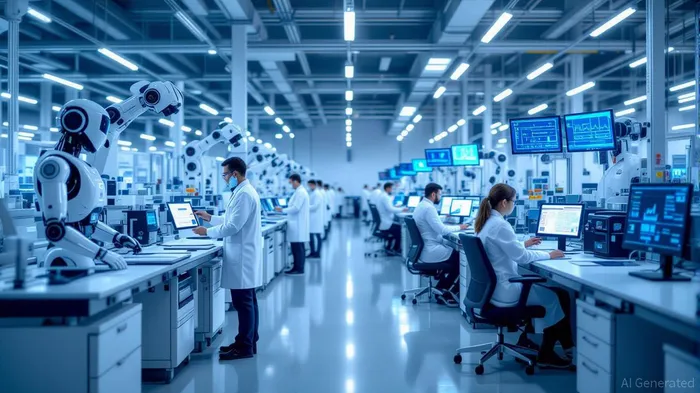
In the heart of Southeast Asia's digital transformation, NEC Indonesia has emerged as a pivotal player in the race to redefine manufacturing through Industry 4.0 technologies. As Indonesia's government accelerates its “Making Indonesia 4.0” agenda—a strategic roadmap to modernize the nation's industrial base—NEC's smart manufacturing initiatives are not just aligning with national goals but actively shaping the trajectory of the sector. With a focus on AI, IoT, and human-centric digital transformation, NEC's investments in Indonesia reflect a calculated bet on Southeast Asia's industrial future.
The Strategic Alignment with Indonesia 4.0
NEC Indonesia's recent showcase of technologies such as System Invariant Analysis Technology (SIAT) and Work Process Recognition (WPR) underscores its commitment to addressing the dual challenges of operational efficiency and workforce adaptation. SIAT, an AI-driven predictive maintenance tool, enables manufacturers to detect anomalies in production lines before they escalate into costly disruptions[1]. Meanwhile, WPR leverages video analytics to optimize manual workflows, a critical step in bridging the gap between traditional labor practices and automated systems[2]. These solutions are not abstract experiments but practical tools deployed in collaboration with the Center for Digital Industry 4.0 (PIDI 4.0) and BogorTech, a partnership that has yielded tangible innovations like the Industrial IoT SmartBox—a device designed for real-time data acquisition and visualization[3].
The government's Making Indonesia 4.0 initiative, launched in 2018, has prioritized digital infrastructure, workforce upskilling, and technological adoption to enhance global competitiveness. NEC's Human-Centric Digital Transformation approach, which integrates Industrial IoT and cloud-based ERP systems, directly supports these objectives[4]. By emphasizing adaptability and scalability, NEC's solutions cater to both large-scale manufacturers and small-to-medium enterprises (SMEs), a demographic that constitutes a significant portion of Indonesia's industrial landscape.
Market Dynamics and Investment Potential
The Indonesia smart manufacturing market is projected to grow at a compound annual growth rate (CAGR) of 13.2% from 2025 to 2031, driven by government incentives and the rising adoption of automation[5]. While NEC Indonesia has not disclosed specific investment figures for 2025, its strategic collaborations and product deployments signal a robust financial commitment. For instance, the development of the NEC Realtime Monitoring Dashboard and Warehouse Management System (WMS) highlights the company's focus on end-to-end operational transparency—a critical factor in attracting foreign investors seeking reliable supply chain solutions[6].
The electronics and automotive sectors, in particular, are expected to lead this growth, with automation hardware and cloud-integrated systems becoming standard requirements for global competitiveness[7]. NEC's emphasis on predictive analytics and real-time monitoring aligns seamlessly with these trends, positioning the company to capture a significant share of the market. Moreover, its collaboration with Kementerian Perindustrian (Kemenperin) to accelerate digital transformation in manufacturing underscores the government's endorsement of its approach[8].
Risks and Opportunities in a Shifting Landscape
Despite the optimism, challenges persist. Indonesia's fragmented SME sector, limited digital literacy, and infrastructure gaps could slow adoption rates. However, NEC's phased, adaptable solutions—designed to meet the specific needs of local industries—mitigate these risks. For example, the Industrial IoT SmartBox, developed in partnership with BogorTech, is tailored to Indonesia's industrial context, ensuring compatibility with legacy systems while enabling incremental upgrades[9].
From an investment perspective, NEC's initiatives are not isolated but part of a broader ecosystem. The company's participation in events like the Indonesia 4.0 Conference & ExpoEXPO-- and PIDI 4.0 Media Tour demonstrates its role as a thought leader, fostering partnerships that amplify its impact[10]. As Southeast Asia's manufacturing hubs increasingly prioritize resilience and agility, NEC's focus on human-centric technologies—tools that enhance, rather than replace, human labor—positions it as a bridge between technological innovation and social responsibility.
Conclusion
NEC Indonesia's smart manufacturing push is a masterclass in strategic alignment with national policy and market demand. By embedding itself in Indonesia's Industry 4.0 narrative, the company is not only securing a foothold in a high-growth sector but also contributing to the broader goal of industrial modernization. For investors, the key takeaway is clear: NEC's investments in AI, IoT, and workforce-centric solutions are not just about profit—they are about building the infrastructure for Indonesia's digital future. As the nation's smart manufacturing market accelerates, NEC's role as a catalyst for transformation will likely become a cornerstone of Southeast Asia's industrial evolution.







Comentarios
Aún no hay comentarios