
Nebius: A Structural Bet on AI Infrastructure's Capital Efficiency
The investment case for NebiusNBIS-- is a classic story of structural shift versus near-term execution. The company is a high-conviction play on the undeniable, explosive demand for dedicated AI infrastructure. Yet its soaring valuation and current financial profile capture the market's deep tension between that long-term promise and the path to sustainable profitability. The stock's journey over the past year is the clearest signal of this divide.
On one side, the demand narrative is powerful. Nebius operates in a market where demand is outpacing supply by a wide margin. Its data center capacity is already fully booked, and it carries a substantial contractual backlog. This supply-constrained environment has fueled a remarkable rally, with the stock more than tripling over the past year. The surge is a direct bet on the company's ability to monetize this scarcity and scale its integrated hardware-software platform.
On the other side, the skepticism is palpable. The broader AI sector has cooled, with AI skepticism largely to blame for a market-wide correction. Nebius's own stock reflects this, having declined about 40% since it hit a record high in October. This volatility underscores the risk that growth projections may not be enough to justify current prices if profitability remains elusive. The view from the sidelines is stark. In a recent lightning round, Jim Cramer labeled Nebius "too speculative" and a "losing money company", recommending the safer alternative of Dell. His critique highlights the core tension: the market is rewarding the structural bet on AI infrastructure, but it is punishing companies that haven't yet turned that demand into consistent profits.
The bottom line is that Nebius's story is one of capital efficiency in the making. The company has secured its place in the AI supply chain, but the investment thesis now hinges on its ability to convert that booked capacity and backlog into a durable, profitable model. The recent pullback is a reminder that in a skeptical market, even the most structural shifts must be backed by financial substance.
Structural Demand vs. Financial Reality
The disconnect at Nebius is stark. On one hand, the company operates in a market where demand is outpacing supply by a wide margin, and its data center capacity is already fully booked. This creates exceptional near-term revenue visibility and a powerful growth runway. On the other, the company is a "losing money company" that must continuously raise capital to fund its expansion, highlighting the immense financial strain of its capital-intensive model.
This tension is playing out in real time. To finance its build-out and address its cash burn, Nebius has been aggressively tapping the markets. In September, it closed a complex financing package that raised approximately $4.2 billion through a public offering of shares and a private offering of convertible notes. More recently, the company announced a proposed $2.75 billion private offering of convertible senior notes, underscoring its ongoing need for substantial capital. This relentless fundraising is the financial reality that must support the structural demand narrative.
Yet the company is positioning itself to capture the next wave of AI workloads, aiming to stay ahead of the curve. Nebius has secured a privileged early access role, announcing it will be among the first NVIDIA Cloud Partners to deploy the next-generation Rubin platform. This integration, slated to begin in the second half of 2026, is designed to unlock advanced reasoning and agentic AI capabilities. It's a strategic bet to ensure its infrastructure remains at the forefront of the industry's most demanding applications.
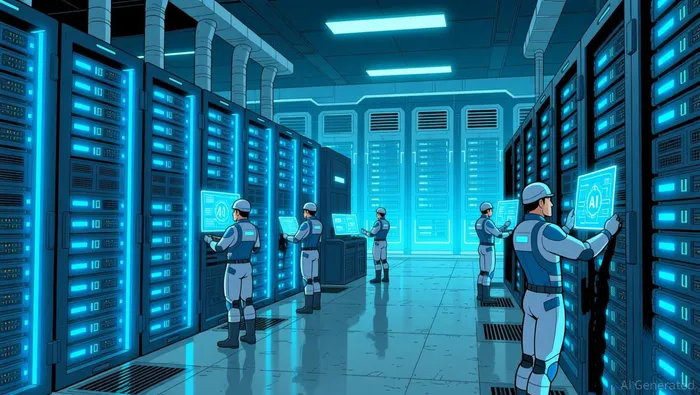
The bottom line is a race between capital efficiency and capital intensity. Nebius's fully booked capacity provides a strong foundation, but its ability to convert that demand into profit hinges on its success in deploying new, more efficient hardware like Rubin while managing its significant cash burn. For now, the financial reality is that the company is spending heavily to secure its future, making the sustainability of its model a function of execution on both the technological and financial fronts.
Investment Implications: A Tale of Two Profiles
The structural analysis at Nebius leads to a clear bifurcation in investment approach. The company's story is not one-size-fits-all; it demands a risk profile that aligns with its speculative growth narrative versus its fundamental financial reality.
For young, risk-tolerant speculators, the case is framed by opportunity cost. As Jim Cramer noted, "you're young, you can speculate on it". This view acknowledges the potential for outsized returns if Nebius successfully navigates its capital-intensive build-out and captures the next wave of AI demand. The stock's volatility and high-growth narrative are features, not bugs, for an investor with a long horizon and a high tolerance for uncertainty. The bet here is on the company's ability to secure and monetize its privileged position in the AI infrastructure stack before the capital burn becomes unsustainable.
For conservative investors, the thesis is straightforwardly defensive. The recommendation is to "go with Dell" as a superior alternative. Dell offers exposure to the same AI infrastructure theme-providing servers and solutions for data centers-but from a position of established profitability and a proven path to earnings. It carries none of Nebius's financial risk, providing a steadier, less speculative vehicle to participate in the AI ecosystem's expansion. In a market where skepticism is high, this is the path of lower volatility and clearer fundamentals.
The primary catalyst that could bridge this divide and validate the growth premium is the successful deployment of the NVIDIA Rubin platform. The company has announced it will be among the first partners to bring this next-generation hardware to market, with integration slated to begin in the second half of 2026. If this rollout delivers on its promise of unlocking advanced reasoning and agentic AI capabilities, it could serve as a powerful proof point. It would demonstrate Nebius's technological leadership and its ability to convert its infrastructure advantage into a tangible, high-demand service. For the speculative investor, Rubin is the linchpin to the upside story. For the conservative investor, a successful Rubin launch would be the first concrete evidence that Nebius is moving beyond a capital-intensive gamble toward a capital-efficient model. The market will be watching that H2 2026 timeline closely.
Catalysts and Risks: The Path to Conviction
The investment thesis for Nebius now hinges on a series of specific, near-term events that will either validate its structural bet or expose its financial vulnerabilities. The path forward is defined by a clear set of catalysts to watch and risks to monitor.
The most immediate risk is the failure to achieve profitability. The company remains a "losing money company" that must continuously raise capital to fund its expansion. Any delay in turning its fully booked capacity into consistent profits would undermine the core argument for its high valuation. This financial pressure is compounded by two other significant headwinds. First, increased competition in the AI infrastructure space is a constant threat, as more players seek to capture a share of the booming market. Second, a prolonged period of AI sector skepticism could keep investor sentiment subdued, making it harder to raise capital and sustain the stock's premium.
Against this backdrop, the stock's recent trajectory is a key metric. The shares have been in a deep correction, declining about 40% since their October peak. Yet, this pullback has coincided with a broader market that has "taken a beating since hitting fresh peaks in late October". The fact that Nebius's stock has fallen even more sharply than the general market suggests the company is facing specific, company-driven concerns beyond sector-wide pessimism. Retail investors see the dip as a "buying opportunity", but the market's verdict will depend on concrete execution, not just sentiment.
The primary catalysts to watch are execution on two major fronts. First is the commercial uptake of the new NVIDIA Rubin platform. Nebius has announced it will be among the first partners to bring this next-generation hardware to market, with integration slated to begin in the second half of 2026. Success here is critical. It would demonstrate the company's technological leadership and its ability to monetize its infrastructure advantage with a new, high-demand service. For skeptics, a delayed or underwhelming rollout would be a major red flag.
Second is the execution on the multi-billion dollar deal with Microsoft. Announced in early September, the agreement to deliver dedicated capacity from its new Vineland data center was a major validation of Nebius's model. However, as Jim Cramer noted, the stock's subsequent surge on the news was met with skepticism, with the host calling the deal a "red flag" for capital destruction. The market will be watching for tangible progress reports on this partnership, as its successful delivery is essential for converting the backlog into recurring revenue.
The bottom line is that conviction will be earned quarter by quarter. The company must navigate a period of high financial risk while delivering on its strategic partnerships and technological roadmap. For now, the stock's fate is tied to its ability to turn its privileged position into a profitable reality.





Comentarios
Aún no hay comentarios