
Nebius: A High-Risk, High-Reward Bet in the AI Infrastructure Boom
The AI infrastructure sector has emerged as one of the most dynamic and capital-intensive industries of the 2020s, with Nebius GroupNBIS-- (NBIS) standing at the forefront of this transformation. The company's aggressive expansion, bolstered by multi-billion-dollar contracts with tech giants like MicrosoftMSFT-- and MetaMETA--, has fueled a valuation that many analysts argue is both justified and precarious. For investors, the question remains: Does Nebius' rapid growth and strategic positioning offset its operational risks and stretched financial metrics?
Financial Performance: Explosive Growth, but at What Cost?
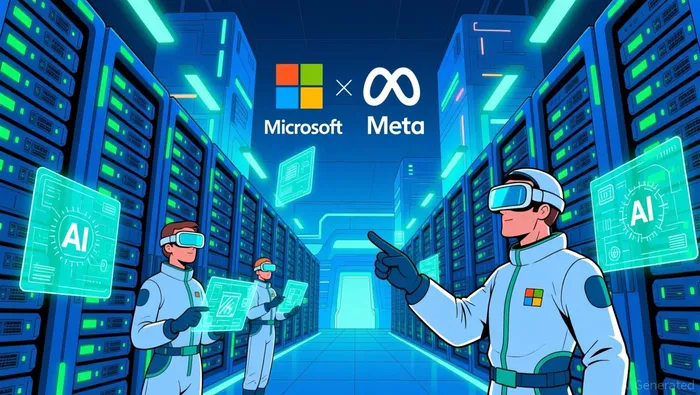
Nebius' Q3 2025 results underscore its meteoric rise. Revenue surged to $146.1 million, a 355% year-over-year increase, with an annualized run rate (ARR) of $551 million according to the latest earnings report. This growth is largely driven by two landmark contracts: a $17.4–$19.4 billion, five-year deal with Microsoft and a $3 billion agreement with Meta as reported in the earnings release. These partnerships have effectively sold out Nebius' current data center capacity, enabling the company to raise its 2025 capital expenditure guidance from $2 billion to $5 billion to meet demand.
However, Nebius' financial profile remains a double-edged sword. Despite holding $4.9 billion in cash as of Q3 2025, the company has yet to achieve free cash flow positivity. Operating losses have widened as CapEx and debt servicing costs rise, with analysts warning that sustained access to capital markets is critical for long-term survival. The company's reliance on equity and convertible debt-$4.3 billion raised in 2025 alone-has also raised concerns about dilution and financial flexibility.
Valuation: A Premium on Growth, but Peer Comparisons Tell a Mixed Story
Nebius' valuation has been a subject of debate. At a price-to-sales (P/S) ratio of 114, it trades at a stark premium to peers like CoreWeave (P/S of 19) according to market analysis. Yet, this disconnect is partly justified by its contract backlog and growth trajectory. A discounted cash flow analysis suggests the stock is undervalued by 23.2–29.7%, while analyst price targets average $155.89, implying a 72% upside from its November 2025 closing price of $90.54 according to recent market data.
The key assumption underpinning these valuations is Nebius' ability to convert its contracted revenue into sustainable profits. The company projects EBIT margins of 20–30% mid-term, with a DCF model assuming 25% to account for uncertainty. To justify its current valuation, NebiusNBIS-- must achieve a 12.6% annualized top-line growth rate after 2027 according to financial forecasts. Given its ARR guidance of $7–$9 billion by 2026 as reported in earnings, this appears ambitious but not impossible-if execution risks are mitigated.
Competitive Landscape: A Crowded Arena with Looming Threats
Nebius operates in a market dominated by Amazon's AWS, which leverages its vast data center footprint and proprietary silicon (e.g., Trainium2) to maintain a cost and scale advantage. Meanwhile, CoreWeave has captured market share with its AI-focused infrastructure and partnerships with OpenAI and Microsoft.
Nebius differentiates itself through its "AI-native" infrastructure and rapid deployment capabilities. Its AI Cloud 3.0 "Aether" platform and Nebius Token Factory aim to attract startups and enterprises seeking specialized AI tools. However, the company's managed cloud model-unlike Amazon's utility-based approach-introduces higher fixed costs and execution risks.
Customer Concentration: A Double-Edged Sword
Nebius' reliance on Microsoft and Meta is both a strength and a vulnerability. These contracts account for nearly all of its projected ARR growth, with Microsoft expected to contribute fully by 2027 and Meta by 2026 according to financial analysis. While this concentration provides revenue stability and financing advantages, it also exposes the company to client-specific risks. A shift in spending patterns or deployment delays from either partner could derail Nebius' growth narrative.
Long-Term Outlook: Can the AI Boom Sustain Nebius?
The AI infrastructure sector is poised for sustained demand, driven by generative AI adoption and cloud computing expansion. Nebius' aggressive capacity expansion-targeting 1.2–1.4 GW of active power by 2027 according to company guidance-positions it to capitalize on this trend. However, the company's success hinges on three critical factors:
1. Execution on CapEx: Delivering data centers and hardware at scale without cost overruns.
2. Margin Expansion: Achieving 25% EBIT margins amid rising competition and pricing pressures.
3. Diversification: Reducing dependency on Microsoft and Meta by expanding its customer base.
Conclusion: A High-Stakes Proposition
Nebius Group embodies the paradox of the AI infrastructure boom: a company with explosive growth potential but equally explosive risks. For risk-tolerant investors, its multi-billion-dollar contracts and aggressive expansion plans justify a long-term bet on AI's future. However, the stretched valuation, operational losses, and customer concentration make it a speculative play best suited for those with a high-risk appetite and a multi-year time horizon.
As one analyst aptly put it, "Nebius is a company built on borrowed capital and AI dreams. Whether it becomes a success story or a cautionary tale depends on its ability to execute in a hyper-competitive market" according to market commentary.







Comentarios
Aún no hay comentarios