
Nebius Group: A Structural Differentiator in the AI Infrastructure Boom
The AI infrastructure sector is undergoing a seismic shift, driven by insatiable demand for scalable compute power and advanced data processing capabilities. Amid this transformation, NebiusNBIS-- Group N.V. (NASDAQ:NBIS) has emerged as a standout player, leveraging strategic execution, proprietary technology, and a robust financial framework to carve out a unique position in the market. As of late 2025, the company's $25-billion market cap and 248% year-to-date stock price surge underscore its rapid ascent. This analysis examines how Nebius is building a durable competitive moat through strategic partnerships, high-margin infrastructure, and scalable profitability, positioning it as a structural beneficiary of the AI infrastructure boom.
Strategic Execution: Partnerships as a Catalyst for Growth
Nebius's strategic partnerships with MicrosoftMSFT-- and MetaMETA-- have been pivotal in accelerating its market dominance. The Microsoft agreement and Meta contract not only validate Nebius's technological credibility but also provide long-term revenue visibility. These deals are structured to support Microsoft's AI cloud expansion and Meta's large-scale compute needs, ensuring Nebius's infrastructure becomes a critical node in the global AI ecosystem.
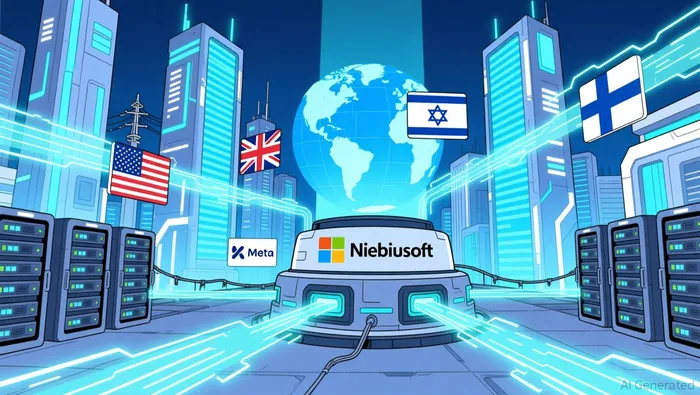 According to a report by Bloomberg, Nebius's platform for running open models directly challenges established cloud providers, further diversifying its value proposition. The Microsoft partnership, in particular, has unlocked access to the New Jersey data center site, enabling Nebius to scale its power capacity to 2.5 gigawatts by 2026. This infrastructure expansion is critical for meeting the surging demand for AI workloads, which co-founder Roman Chernin estimates could grow ten- to hundred-fold.
Proprietary Technology and High-Margin Infrastructure
Nebius's competitive edge is rooted in its proprietary AI Cloud 3.0 "Aether" platform, which integrates advanced security, compliance, and developer productivity features. This offering differentiates Nebius from peers by addressing enterprise concerns around data governance and operational efficiency. Additionally, the company's portfolio of assets-including Avride, TripeTen, and stakes in Toloka and ClickHouse-enables it to deliver tailored solutions for large-scale compute and data analytics.
Financially, Nebius has demonstrated exceptional margin discipline. For Q3 2025, the company reported a 71% gross margin and 19% adjusted EBITDA margin, reflecting the high-margin nature of its infrastructure-as-a-service model. These metrics are underpinned by its ability to secure long-term, asset-backed contracts, which reduce capital intensity and enhance cash flow predictability. As stated by Reuters, the Microsoft and Meta partnerships are expected to drive a net income turnaround, with 2025 profits estimated at $155 million-a stark contrast to the $641 million loss in 2024.
Scalable Profitability and Market Resilience
Nebius's financial trajectory highlights its potential for scalable profitability. The company raised its 2025 revenue guidance to $500–550 million and reiterated an ARR target of $900–$1.1 billion. Looking ahead, 2026 projections are even more ambitious: an ARR of $7–9 billion, with over half already booked. This growth is supported by asset-backed financing, corporate debt, and an at-the-market equity program, ensuring liquidity for expansion.
The company's focus on high-margin services and long-term customer relationships positions it as a consolidator in potential market downturns. By securing multi-year contracts with tech giants, Nebius reduces exposure to cyclical demand fluctuations. Furthermore, its expansion into the UK, Israel, Finland, and the U.S. diversifies geographic risk while tapping into emerging AI hubs.
Conclusion: A Structural Winner in the AI Era
Nebius Group's strategic execution, proprietary technology, and financial discipline create a compelling investment thesis. The company's partnerships with Microsoft and Meta not only validate its market position but also provide a foundation for sustained growth. With a 71% gross margin, expanding ARR, and a clear path to profitability, Nebius is well-positioned to capitalize on the AI infrastructure boom. As the sector evolves, its ability to scale high-margin services while maintaining technological differentiation will likely solidify its role as a structural leader in the AI ecosystem.





Comentarios
Aún no hay comentarios