
H&M's Nearshoring Gambit and Family Buyout Hints: Is This the Undervalued Retailer Play?
H&M, the Swedish fast-fashion giant, is at a pivotal crossroads. Despite a 5% sales dip in Q2 2025 and a 9% year-to-date stock decline, its strategic moves—nearshoring, margin optimization, and a looming family buyout—are creating an intriguing value proposition. Let's dissect whether this is the moment to bet on H&M before the sector's next shift.
Nearshoring: A Cost-Saving Masterstroke or a Marginal Win?
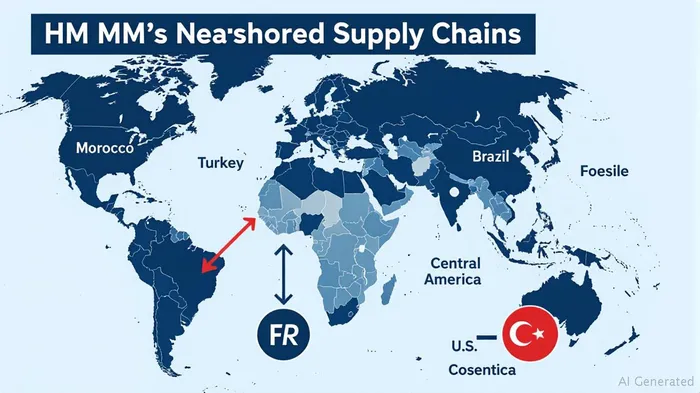
H&M's pivot to nearshoring since 2023 has been a bold response to rising tariffs and supply chain fragility. By shifting production to North Africa (Morocco, Egypt), the Middle East (Jordan), and Central America (USMCA-aligned countries), the company has slashed delivery times to Europe by 40% and avoided U.S. tariffs via Brazil. This strategy kept U.S. prices 3% lower year-on-year, while rivals like Zara hiked prices by 28%.
The payoff? A stable 16% U.S. market share and a pathway to its 2026 EBIT margin target of 10%—up from the current 5.4% (Q2 2025). But risks loom: rising wage costs in Morocco and Brazil, and the specter of new U.S. tariffs on European goods.
Margin Improvement: A Long Game of Cost Discipline
H&M's nearshoring isn't just about geography—it's a lever to consolidate suppliers and streamline operations. By favoring large, multi-country vendors, H&M can pivot production to the cheapest, most geopolitically stable regions. This agility helped it avoid the 28% margin squeeze faced by peers like Temu, which faltered under tariff pressures.
The company's focus on sustainability—like its goal to use 100% recycled polyester by 2030—also aligns with millennial preferences, potentially boosting premium pricing power. Yet, current margins remain thin: Q2 operating profit fell 21% to SEK 5.6 billion, with gross margins at a five-year low of 10.4%.
The Family Buyout: A Catalyst or a Distraction?
The Persson family's stake in H&M has surged from 35.5% in 2016 to over 64% by mid-2025. Their accelerated share purchases—42.75 million in the first half of 2025 alone—suggest a play for control. At current prices (SEK 137/share), a full buyout would cost ~SEK 255 billion ($26 billion). While the family's voting power (85%) already gives them de facto control, a delisting could remove public market scrutiny and allow operational flexibility.
Analysts speculate this could happen by 2030, but the hurdles are steep. H&M's debt (SEK 73 billion) and a dividend payout ratio of 108% (unsustainable without cuts) complicate the path. Yet, the 21% short interest in its shares—a record—hints at a market ripe for a squeeze if buyout rumors intensify.
The Investment Case: Buy the Doubt, Sell the News?
H&M trades at a 21.9x trailing P/E and 7.9x EV/EBITDA, far below its historical average and peers. The stock's 29% year-to-date decline has priced in near-term risks—tariffs, store closures, and margin pressures. But if nearshoring and supplier consolidation deliver on the 10% EBIT target, the stock could rebound.
The Persson family's buyout ambitions add a kicker: a potential premium for shareholders if they proceed. Even without a buyout, the 5.2% dividend yield (despite its unsustainable payout) offers a floor.
Risks to Consider
- Tariff Volatility: U.S. trade policies remain unpredictable.
- Sustainability Scrutiny: Greenwashing claims could hit brand equity.
- Competitor Pressure: Shein and TikTok-owned brands are lapping up Gen Z, while Zara's premium model keeps margins fatter.
Final Call: A Value Play for Patient Investors
H&M's stock is a contrarian bet: it's cheap, but its execution on nearshoring and margins remains unproven. The Persson family's consolidation adds a speculative upside. For investors willing to look beyond 2025's headwinds, H&M could be a diamond in the rough—provided the family's buyout timeline tightens or margins stabilize.
Investment Advice: Consider a small position in H&M (HMB.ST) for a 12–18-month horizon. Pair it with a stop-loss near SEK 120 and watch for Q3 margin data and Persson family share purchases. If the 10% EBIT target is met by 2026, the stock could climb to SEK 180+—a 30% gain. But stay nimble: the retail sector is littered with cautionary tales.
In a market obsessed with growth darlings like Shein and ASOS, H&M's value metrics and strategic bets make it worth a second look.







Comentarios
Aún no hay comentarios