
Nearshoring-Driven Energy Infrastructure Growth in Mexico
The U.S.-Mexico manufacturing realignment, accelerated by nearshoring trends, is catalyzing a seismic shift in Mexico's energy infrastructure landscape. As global supply chains pivot to capitalize on Mexico's geographic proximity, labor cost advantages, and trade agreements like USMCA, midstream energy firms are repositioning to meet surging demand for natural gas, electricity, and logistics connectivity. This analysis explores how strategic capital allocation in Mexican midstream energy companies is poised to benefit from this transformation, with a focus on firms directly addressing infrastructure gaps in key industrial corridors.
The Nearshoring Imperative: Energy as a Critical Enabler
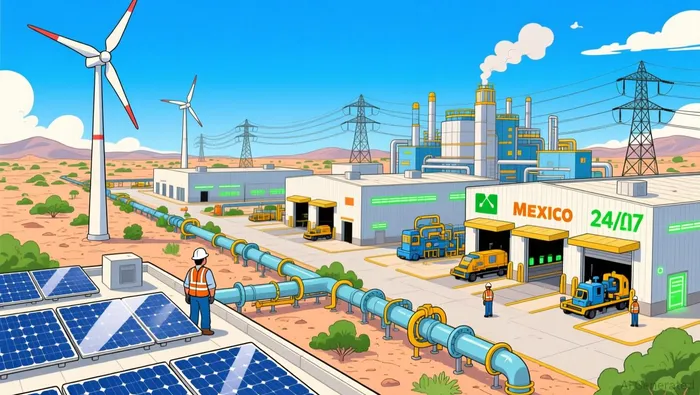
The relocation of manufacturing from Asia to Mexico has created concentrated hubs of industrial activity, particularly in regions like Bajío, Nuevo León, and border megaregions such as CaliBaja. These zones require robust energy infrastructure to support 24/7 operations, with natural gas accounting for 60–62% of Mexico's electricity generation. According to a report by Mexico Business News, manufacturers are now treating energy as a "critical asset," prioritizing reliability through solutions like gas-fired combined heat and power (CHP) systems, hybrid microgrids, and modular infrastructure as research shows.
For example, midstream energy intermediaries like LUXEM are structuring stable electricity and gas supply contracts to mitigate volatility tied to U.S. gas price indices, while companies in pipeline-constrained areas are adopting redundant gas supply contracts and on-site storage solutions according to industry analysis. This shift underscores the growing role of midstream firms in ensuring energy resilience for nearshoring-driven industrial parks.
Strategic Capital Allocation: Expanding Pipeline Capacity and Connectivity
Mexican midstream energy firms are actively raising capital to expand pipeline capacity and enhance cross-border connectivity. A prime example is Esentia Energy Development, which recently completed a $457 million IPO on the Mexican stock exchange. The funds are earmarked to expand its pipeline capacity by 660 million cubic feet per day, connecting the Waha area of West Texas to key Mexican industrial centers. This project is critical, as Mexico imports over 16% of its daily natural gas consumption from the U.S., and nearshoring trends are expected to amplify this demand.
Similarly, Fibra Next, an industrial real estate investment trust (REIT), raised $400 million in a downsized share sale in 2025 to expand its portfolio of industrial properties, including 182 assets acquired from Fibra Uno as per market reports. While Fibra Next operates in real estate, its growth is inextricably linked to energy infrastructure, as its properties house manufacturing and logistics operations reliant on stable energy supply. The REIT's expansion reflects broader investor confidence in Mexico's industrial real estate market, despite challenges like regulatory delays and market volatility as investors note.
Infrastructure Gaps and the Need for Collaboration
Despite progress, infrastructure gaps persist. A report by Natural Gas Intelligence highlights that Mexico's industrial park boom will require approximately 2.3 gigawatts of new electricity generation capacity by 2024 as industry analysis shows. Private developers are already shouldering the financial burden for new transmission lines, but government-private sector collaboration is essential to expedite stalled projects. For instance, the Bajío region-a nearshoring hotspot-is grappling with grid saturation, necessitating investments in redundant energy systems.
Moreover, environmental and ESG considerations are reshaping capital allocation strategies. As stated by Jusda Global, sustainable infrastructure development is gaining traction, with a focus on renewable energy integration and stricter emissions standards. This trend aligns with global investor preferences, creating opportunities for midstream firms that can demonstrate ESG-aligned growth.
Investment Outlook: Risks and Opportunities
While the nearshoring-driven energy infrastructure boom presents significant opportunities, investors must navigate risks such as regulatory bottlenecks, international capital market volatility, and geopolitical uncertainties (e.g., U.S. tariff policies). Fibra Next's delayed IPO and reliance on Mexican pension funds for its 2025 share sale illustrate these challenges as financial reports indicate. However, firms with diversified capital structures and cross-border partnerships-like Esentia Energy's U.S.-Mexico pipeline network-are better positioned to mitigate these risks.
For investors, the key is to identify midstream energy firms with clear visibility into nearshoring-driven demand, scalable infrastructure projects, and ESG-aligned strategies. Companies like Esentia Energy and Fibra Next exemplify this model, leveraging capital raises to address both immediate operational needs and long-term growth.
Conclusion
The U.S.-Mexico nearshoring trend is not merely a manufacturing shift-it is a catalyst for energy infrastructure modernization in Mexico. Midstream energy firms that strategically allocate capital to expand pipeline capacity, enhance grid resilience, and integrate sustainable practices will be well-positioned to capitalize on this transformation. As global supply chains continue to realign, Mexico's energy sector offers a compelling investment thesis for those willing to navigate its complexities.







Comentarios
Aún no hay comentarios