
The NBA's Macau Gambit: A Blueprint for Sports-Driven Urban Revival and Retail Investment
The NBA's return to Macau in 2025 marks a pivotal moment in the city's economic evolution. Once synonymous solely with its gambling industry, Macau is now leveraging sports as a catalyst for diversification, aiming to shift 60% of its GDP from non-gaming sources by 2028, according to CapWolf. This strategic pivot, anchored by high-profile NBA games at Sands China's Venetian Arena, is not just about basketball-it's a calculated investment in urban revitalization, retail growth, and global brand positioning. For investors, the convergence of sports, entertainment, and luxury retail in Macau presents a compelling case study in how cities can transform themselves through strategic infrastructure and cultural programming.
The NBA as an Economic Catalyst
The NBA's return to Macau is projected to generate USD 9.6–16 million in local economic activity per two-day event, driven by 30,000–50,000 attendees, according to Travel and Tour World. This figure extends beyond ticket sales to include hospitality, dining, and retail. Sands China's NBA Flagship Store and event-driven promotions are designed to capitalize on the influx of visitors, blending sports fandom with luxury consumption. The city's existing gaming revenue-$28 billion in 2024-provides a robust financial foundation, but Travel and Tour World also notes that the NBA's global media deals (worth $800 million annually in China) elevate Macau's profile as a destination for both sports and entertainment.
This model mirrors successful sports-driven urban transformations elsewhere. For instance, Columbus, Ohio's Nationwide Arena District transformed 100 acres of industrial land into a mixed-use hub with public spaces, residential areas, and commercial developments, as described by Urban Land. Similarly, Macau's Venetian Arena is poised to become a year-round economic engine, with NBA events serving as a draw for ancillary investments in hotels, dining, and retail.
Retail and Entertainment Synergies
The NBA's presence in Macau is not an isolated event but part of a broader strategy to create a sports-anchored entertainment district. Sands China's plans for NBA-themed retail and experiential events align with global trends where sports facilities act as anchors for mixed-use developments. For example, The Battery Atlanta, adjacent to the Atlanta Braves' stadium, generates consistent revenue from retail, residential, and hospitality sectors even when games are not in session, according to NAIOP. Macau's approach-combining high-traffic events with luxury retail-could replicate this success, particularly in a market where discretionary spending is already robust.
Data from 2023 underscores the localized economic benefits of such developments. For every 100 visits to a sports venue, 29 additional visits to nearby food and accommodation businesses are generated, concentrated within 1 km of the stadium, according to a 2022 study. In Macau, where the Venetian Arena is located in a dense urban area, this spillover effect could amplify the impact of NBA events, creating a ripple effect across the city's retail and hospitality sectors.
Global Precedents and Macau's Unique Position
While cities like Barcelona and London have used the Olympics to drive long-term economic growth, Macau's strategy is more targeted. By focusing on a globally recognized league like the NBA, the city is tapping into a pre-existing fan base and media infrastructure. Travel and Tour World notes that the NBA's $800 million annual media deals in China ensure that Macau's events will receive extensive coverage, attracting both domestic and international tourists. This media-driven exposure is critical for a city seeking to rebrand beyond its gaming legacy.
Moreover, Macau's approach avoids some of the pitfalls of large-scale sports projects. Unlike the underutilized infrastructure often seen after mega-events, the NBA's recurring games and associated retail ventures create sustained demand. The city's compact size also allows for efficient integration of sports, retail, and entertainment, minimizing the logistical challenges faced by sprawling urban centers.
Risks and Considerations
Despite the optimism, investors must remain cautious. The success of sports-driven urban revival hinges on strategic planning and inclusive development. For example, the Tampa Bay Rays' project in St. Petersburg includes commitments to address housing and employment disparities, emphasizing equitable growth, as reported by Credaily. Macau must similarly ensure that the benefits of NBA-related investments extend beyond luxury retail to include affordable housing, public infrastructure, and job creation.
Additionally, the high costs of development and the risk of overestimating economic returns are persistent challenges. A 2025 study notes that while sports-anchored districts can generate $100 billion in investment by 2040, their success depends on tenant compatibility, infrastructure, and long-term vision, according to Mortenson. Macau's ability to balance short-term gains with sustainable development will determine whether the NBA's return becomes a model for urban revival or a fleeting spectacle.
Conclusion
The NBA's return to Macau is more than a sporting event-it's a calculated investment in the city's economic future. By leveraging the league's global reach, Macau is positioning itself as a hub for sports, entertainment, and luxury retail, mirroring the success of cities like Columbus and Valencia. For investors, the key opportunities lie in ancillary sectors: hospitality, media, and mixed-use developments that capitalize on the NBA's foot traffic. However, the long-term viability of this strategy depends on Macau's ability to integrate these investments into a cohesive urban plan that prioritizes both growth and equity. 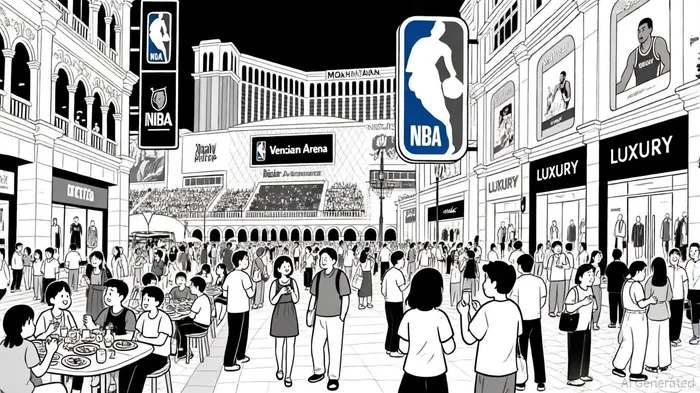







Comentarios
Aún no hay comentarios