
Navitas Semiconductor Insider Selling: A Warning Signal or Misinterpreted Move?
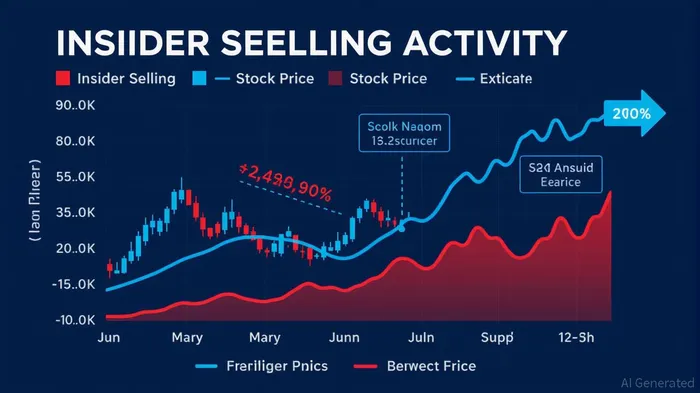
The absence of recent insider transactions at NavitasNVTS-- Semiconductor (NVSB) raises an intriguing question for investors: Does this signal a lack of concern, or does it mask deeper uncertainties? While specific data on Navitas' insider activity remains elusive, academic research on insider trading patterns offers a framework to interpret such scenarios. Studies consistently show that insider selling—particularly when it occurs in extended sequences or after business hours—is strongly correlated with negative abnormal returns, suggesting that insiders may act on non-public information[2]. This dynamic complicates the interpretation of Navitas' current situation, where no recent transactions have been reported.
The Predictive Power of Insider Trading
Insider trading has long been scrutinized as a potential barometer of corporate health. According to a study published in Journal of Financial Economics, insider sales are followed by statistically significant negative returns, especially when the selling is concentrated or prolonged[2]. This pattern is attributed to the informational advantage insiders possess, allowing them to act before market-moving events. For example, aggressive insider selling often coincides with firms meeting or exceeding analyst forecasts—a scenario that may serve as a "camouflage" for informed trades[1].
Machine learning models further validate this link. A 2025 study demonstrated that algorithms trained on insider trading data could predict stock price movements with notable accuracy, underscoring the informational content embedded in these transactions[2]. These findings imply that the absence of insider selling at Navitas could either reflect confidence in the company's trajectory or, conversely, a lack of actionable information among insiders.
Navitas Semiconductor: A Case of Absence
Navitas, a leader in gallium nitride (GaN) power semiconductors, has seen its stock fluctuate amid broader market volatility. However, as of September 2025, no insider transactions have been reported in SEC filings or news outlets. This absence is unusual for a company in a high-growth sector, where insider activity often mirrors strategic shifts.
The lack of data could be interpreted in two ways. First, it may indicate that insiders are holding their positions, signaling optimism about Navitas' ability to capitalize on its technological edge. Alternatively, it could suggest that insiders are either restricted from trading (e.g., due to regulatory constraints) or are withholding information, which might hint at underlying challenges. Without concrete evidence, investors are left to navigate ambiguity.
Strategic Implications for Investors
For investors, the key takeaway lies in contextualizing insider activity within broader fundamentals. While Navitas' absence of insider selling does not inherently signal distress, it should not be dismissed as inconsequential. Academic research emphasizes that insider trading patterns are most informative when analyzed alongside other metrics, such as earnings trends, R&D expenditures, and competitive positioning[2].
Navitas' recent performance—marked by strong demand for GaN in electric vehicles and renewable energy systems—suggests a company on an upward trajectory. However, the semiconductor industry is notoriously cyclical, and overreliance on a single technology (e.g., GaN) could expose Navitas to supply chain or demand shocks. In this context, the lack of insider selling may reflect confidence in the company's long-term strategy, but it should not override due diligence on macroeconomic risks.
Conclusion
The debate over whether insider selling is a warning signal or a misinterpreted move hinges on the quality and context of the data. For Navitas Semiconductor, the absence of recent insider transactions complicates this analysis. While academic research underscores the predictive value of insider trading patterns, it also highlights the importance of corroborating these signals with other indicators. Investors should approach Navitas with a balanced lens: acknowledging the potential insights from insider activity while prioritizing a holistic evaluation of the company's fundamentals and industry dynamics.





Comentarios
Aún no hay comentarios