
Navigating New Zealand's Low-Yield Landscape: Fixed-Income Strategies Amid RBNZ Rate Projections
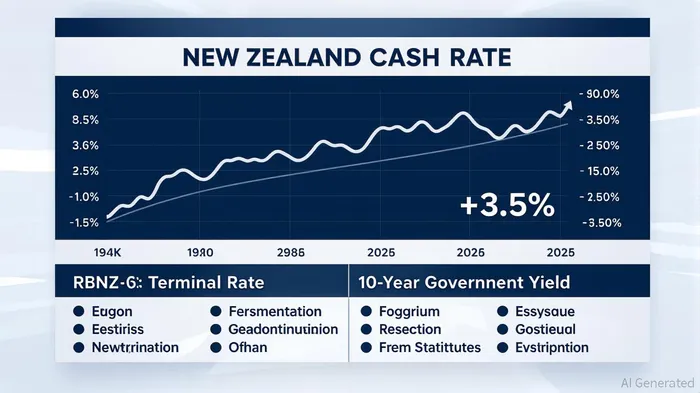
The Reserve Bank of New Zealand (RBNZ) has signaled a clear path for monetary easing, with Governor Christian Hawkesby reiterating that the OCR is expected to reach 2.5% by the end of 2025 and remain near that level into early 2026[1]. This projection, underscored by a slowing economy and moderating inflation, has significant implications for fixed-income investors operating in a low-yield environment. As the OCR continues to decline, investors must adapt their strategies to balance risk and return in a landscape where traditional bonds offer diminishing returns.
RBNZ's Rate Path and Market Implications
The RBNZ's August 2025 decision to cut the OCR to 3% marked the resumption of its easing cycle after a brief pause in July[2]. Hawkesby emphasized that further reductions would depend on incoming data, particularly the pace of economic recovery and inflation trends. While the terminal rate of 2.5% remains a key anchor, the central bank's cautious tone reflects uncertainties, including global headwinds and administered price pressures in sectors like energy and transport[1].
For fixed-income markets, this trajectory suggests prolonged low yields. The 10-year New Zealand government bond yield currently stands at 4.35%, with expectations of a slight decline to 4.20% within 12 months[3]. These levels, while modest by historical standards, reflect market pricing of the RBNZ's accommodative stance. However, the narrowing spread between bond yields and the OCR highlights the challenge of generating alpha in a low-yield environment.
Strategic Adjustments for Fixed-Income Investors
In such conditions, investors must prioritize strategies that optimize returns while managing risk. Three key approaches emerge:
Duration Management
With the RBNZ poised to cut rates further, extending the duration of bond portfolios could enhance returns. Longer-duration bonds typically benefit from falling interest rates, as their prices rise more sharply than shorter-duration counterparts. However, this strategy carries reinvestment risk if rates rebound unexpectedly. Investors must balance this by actively monitoring the RBNZ's policy signals and adjusting duration accordingly[1].Credit Allocation
While government bond yields remain subdued, the corporate sector offers more attractive opportunities. Spreads between corporate and government bonds have widened slightly, reflecting improved risk premiums. Investors are advised to focus on high-quality corporate debt, particularly in sectors with stable cash flows, such as utilities and infrastructure[2]. This approach allows for yield enhancement without excessive credit risk.Alternative Yield Sources
Traditional fixed-income instruments are no longer sufficient to meet return targets. Investors are increasingly turning to alternatives such as private debt, real estate, and infrastructure funds, which offer higher yields and diversification benefits[2]. These assets also provide insulation from interest rate volatility, making them well-suited to a low-yield environment.
Inflation Expectations and Portfolio Resilience
Inflation expectations remain a critical factor. The RBNZ's latest survey shows business managers anticipating an average inflation rate of 2.29% over the next two years, up from 2.06% in the previous quarter[3]. While this remains within the central bank's 1%-3% target range, the upward trend in short-term expectations—particularly in food and energy sectors—suggests lingering cost pressures. Investors should incorporate inflation-linked bonds or inflation-indexed swaps to hedge against unexpected price shocks[1].
Conclusion
The RBNZ's projected path to a 2.5% OCR underscores the need for fixed-income investors to adopt a proactive, diversified approach. By leveraging duration management, credit opportunities, and alternative yields, investors can navigate the low-yield environment while aligning with the central bank's policy trajectory. However, vigilance is essential, as evolving economic data and global uncertainties could necessitate rapid recalibration. In this context, strategic agility will be the hallmark of successful fixed-income portfolios in 2025 and beyond.







Comentarios
Aún no hay comentarios