
Navigating the Yield Curve: Sector Strategies in a Shifting Rate Environment
The U.S. 6-Month Treasury Bill yield, a critical barometer of short-term monetary policy and investor sentiment, has settled at 3.57% as of January 9, 2026. This figure, while modestly higher than the previous year's 4.24%, reflects a broader trend of stabilization after a decade of volatility. For investors, the yield's trajectory offers a lens through which to assess sector-specific opportunities and risks in a shifting rate environment.
The Financial Services Sector: A Beneficiary of Rising Yields
Financial institutions, particularly banks and insurers, thrive in environments where short-term interest rates rise. The 6-Month Bill yield, though a proxy for the broader rate environment, signals a narrowing of the spread between borrowing and lending costs—a key driver of profitability for banks. For example, JPMorgan ChaseJPM-- (JPM) and Bank of AmericaBAC-- (BAC) have historically seen net interest margins expand during periods of rate hikes, as higher funding costs are offset by increased loan yields.
The Federal Reserve's 2025 rate cuts, while easing immediate pressure, have not erased the structural advantages for financial services. Insurers, such as AllstateALL-- (ALL) and ProgressivePGR-- (PGR), also benefit from rising rates, as their fixed-income portfolios gain value. The recent 3.57% yield, though below the 1980s inflation-era peaks, remains above the long-term average of 2.91%, suggesting a supportive backdrop for sector earnings.
Consumer Durables: A Sensitive Indicator of Economic Sentiment
In contrast, the Consumer Durables sector—encompassing automotive, home appliances, and electronics—faces headwinds in a rising rate environment. Higher borrowing costs deter consumers from purchasing large-ticket items, a dynamic amplified by the lingering effects of 2022–2023 rate hikes. For instance, Whirlpool (WHR) and Home Depot (HD) have seen demand for appliances and home improvement products soften as mortgage rates remain elevated.
The resurgence of core goods inflation, driven by tariffs and input cost pressures, further complicates the outlook. While durable goods manufacturers may benefit from higher prices, the trade-off is reduced consumer affordability. This duality is evident in the sector's mixed performance: while steel and aluminum prices have surged due to tariffs, nonfuel import prices remain modest, indicating limited pass-through of cost increases to consumers.
Tactical Adjustments for Investors
Given these dynamics, investors should consider a strategic reallocation of assets to capitalize on sector divergences. Here's how:
Overweight Financial Services: With the 6-Month Bill yield stabilizing above its long-term average, financial institutions are well-positioned to benefit from continued rate normalization. Investors might prioritize large-cap banks with diversified revenue streams and robust capital reserves.
Underweight Consumer Durables: Until inflation expectations and borrowing costs normalize, the sector's growth potential remains constrained. Defensive plays in essential goods or services may offer safer havens, but discretionary durables should be approached with caution.
Hedge Against Volatility: Given the Fed's projected rate cuts and the uncertainty surrounding inflation, a hedged approach—such as using interest rate futures or sector ETFs—can mitigate risks. For example, the Financial Select Sector SPDR (XLF) and the Consumer Discretionary Select Sector SPDR (XLY) provide concentrated exposure to these dynamics.
The Road Ahead
The 6-Month Bill yield, while a short-term indicator, offers valuable insights into the interplay between monetary policy and sector performance. As the Fed navigates its dual mandate of price stability and maximum employment, investors must remain agile. The key lies in aligning sector allocations with the evolving rate environment, leveraging the strengths of financial services while tempering exposure to durables until macroeconomic conditions stabilize.
In conclusion, the current yield environment underscores the importance of sector-specific strategies. By understanding the nuanced impacts of rate changes, investors can optimize returns while navigating the uncertainties of a post-pandemic economy.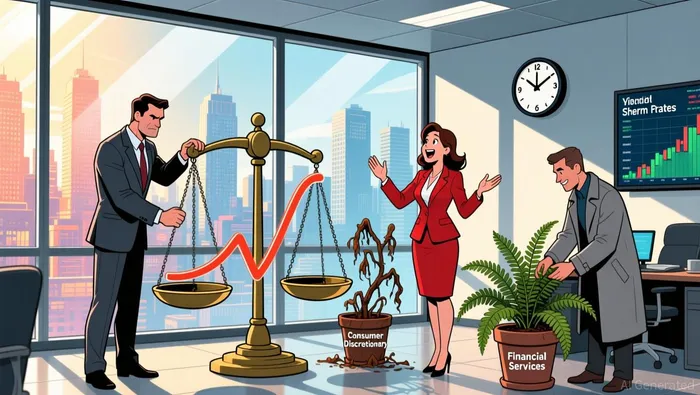





Comentarios
Aún no hay comentarios