
Navigating the Waters: How Trump’s Canal Demands Could Ripple Through Global Trade
U.S. President Donald Trump’s recent demand that American ships traverse the Panama and Suez Canals for free has reignited debates over geopolitical leverage, trade economics, and infrastructure ownership. The directive, issued via Truth Social, instructed Secretary of State Marco Rubio to formalize this policy, underscoring a strategic push to reduce U.S. trade costs and reclaim influence over critical waterways. But what does this mean for investors?
The Strategic Importance of the Canals
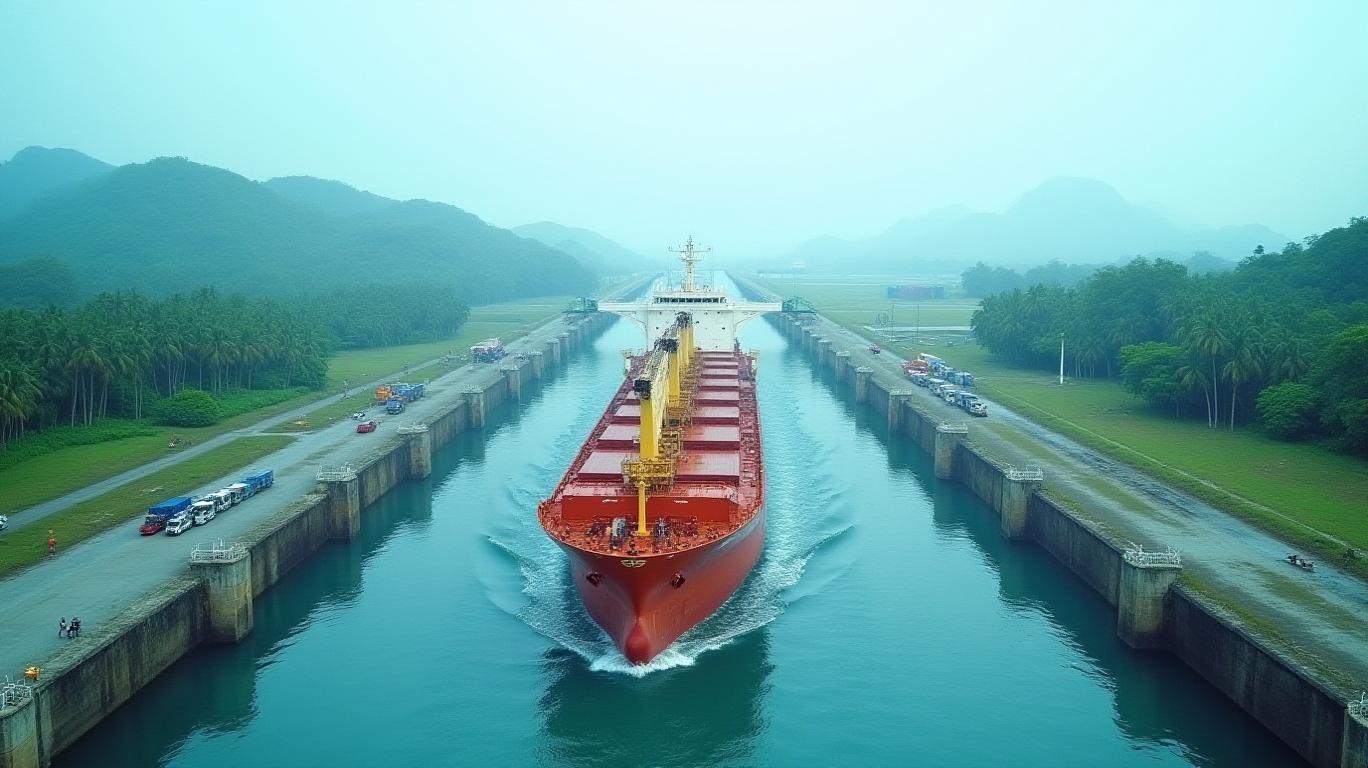
The Panama Canal, completed in 1914 and transferred to Panama in 1999, handles roughly 40% of U.S. container traffic annually. Its strategic location and capacity to shorten transoceanic journeys make it indispensable for American exporters and importers. The Suez Canal, controlled by Egypt, similarly serves as a lifeline for global trade, connecting Europe and Asia via the Mediterranean and Red Seas. Together, the two canals facilitate nearly 20% of global maritime trade.
Historical Context and Legal Challenges
Trump’s demand revives Cold War-era debates over sovereignty and infrastructure control. The Panama Canal’s 1999 handover was enshrined in the Torrijos-Carter Treaties, which prohibited U.S. military interference and guaranteed neutrality. Forcing free passage would require renegotiating these agreements—a move likely to face fierce opposition from Panama, whose government derives ~5% of GDP from canal tolls. The Suez Canal, meanwhile, generates over $6 billion annually for Egypt, making any U.S. demand for exemption politically and economically fraught.
Geopolitical Risks and Market Reactions
The statement has already sparked volatility in shipping stocks.
A sudden loss of U.S. toll payments could destabilize both canal operators, prompting them to raise fees for other nations or expand capacity to offset losses. For investors in shipping firms like Maersk (MAERSK-B.CO) or Cosco (601866.SS), this creates uncertainty over operational costs. Conversely, U.S. exporters might benefit from reduced expenses, potentially boosting sectors like agricultureANSC-- (e.g., ADM) or manufacturing (e.g., CAT).
The Geopolitical Calculus
Trump’s stance aligns with his “America First” agenda, prioritizing short-term savings over long-term alliances. However, Panama’s cooperation is not guaranteed. The country has long sought to diversify its economy, with plans to double the canal’s capacity by 2040. A U.S. ultimatum could accelerate these efforts, pushing Panama toward closer ties with China or other nations willing to invest. Similarly, Egypt’s reliance on Suez revenues leaves it vulnerable to U.S. pressure but also incentivizes diversification through projects like the new Suez Canal expansion.
Investment Implications
- Shipping Firms: Companies reliant on canal tolls (e.g., CMA CGM, Hapag-Lloyd) may face margin pressures if fees rise elsewhere. Monitor stock performance and dividend yields.
- Alternative Routes: Investors should track developments in the Arctic’s Northern Sea Route (e.g., Russian infrastructure projects) or alternative U.S. ports (e.g., Houston’s port expansion).
- Canal Operators: The Panama and Suez Canal Authorities’ revenues are tied to geopolitical stability. Short-term volatility is likely, but long-term resilience depends on diversification.
Conclusion
Trump’s demand reflects a high-stakes gamble with profound implications. While U.S. shipping costs could drop, the risks of strained relations with Panama and Egypt—both U.S. allies—loom large. Historically, the Panama Canal’s transfer was peaceful, but renegotiating its terms could trigger a costly diplomatic clash. For investors, the key is to balance near-term opportunities (e.g., lower U.S. export costs) against long-term risks like rising tolls elsewhere or infrastructure projects that bypass the canals entirely.
The data tells the story: in 2023, the Panama Canal generated $3.2 billion in revenue, while the Suez Canal earned $6.3 billion. If U.S. exemptions force operators to compensate, the ripple effects could reshape global trade costs—and investor portfolios—for years to come.
In short, investors must navigate this geopolitical crosscurrent with caution, favoring diversification and agility over aggressive bets on any single outcome. The canals may be Trump’s battleground, but the markets will decide who wins.







Comentarios
Aún no hay comentarios