
Navigating Volatility: Strategic Crypto Positioning in a High-Risk Macro Environment
The crypto market of 2023–2025 has been defined by relentless volatility, driven by macroeconomic turbulence, regulatory uncertainty, and rapid technological shifts. For investors, this environment demands a recalibration of risk management frameworks. Traditional strategies are insufficient; instead, a layered approach combining diversification, advanced hedging tools, and macroeconomic foresight is essential to preserve capital and capitalize on opportunities.
Diversification: The Bedrock of Resilience
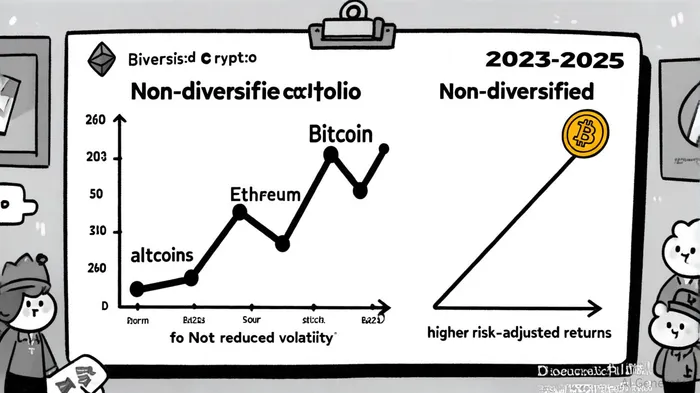
Portfolio diversification remains the cornerstone of crypto risk mitigation. Spreading investments across multiple cryptocurrencies-such as BitcoinBTC--, EthereumETH--, and smaller-cap assets like SolanaSOL-- or Chainlink-reduces exposure to idiosyncratic risks, as shown in recent case studies. A 2024 study demonstrated that portfolios containing 10–15 of the most traded cryptos generated similar returns to concentrated portfolios but with significantly lower volatility. This aligns with modern portfolio theory, as explained in understanding market risk, where diversification offsets the "fat tail risks" inherent in crypto markets.
Stablecoins further enhance resilience. Maintaining a portion of liquidity in USD-pegged tokens like USDCUSDC-- or DAIDAI-- ensures ready access to capital during market stress, while hedging against the erratic price swings of volatile assets, according to an IMF assessment. For instance, during the 2024 Fed rate hike cycle, investors who allocated 20–30% of their portfolios to stablecoins navigated liquidity crunches with minimal losses, as highlighted in the OpenMarketCap case studies.
Hedging Tools: Beyond Stop-Losses
While stop-loss orders remain a basic defense, sophisticated investors now leverage options-based protection. Purchasing put options on Bitcoin or Ethereum during high-risk periods-such as FOMC announcements or geopolitical crises-creates a floor for potential losses, a tactic discussed by the IMF. In 2025, institutions like Asva Capital reported using these instruments to limit downside exposure during the 30%+ sell-off in mid-2024, according to the OpenMarketCap case studies.
Platforms like Bitunix have introduced "hedge mode," allowing simultaneous long and short positions on the same asset. This dual-directional strategy proved critical during the 2025 Bitcoin halving event, where price whipsaws created profit opportunities for balanced traders, a point covered in the OKX market-risk guidance.
Macroeconomic Alignment: Reading the Macro Tape
Crypto markets are no longer isolated from traditional finance. Interest rates, inflation, and geopolitical events now directly influence crypto valuations. For example, Bitcoin's correlation with equities spiked during the 2024 U.S. debt-ceiling crisis, while its inverse relationship with gold emerged during the 2025 banking sector turmoil, as noted in OpenMarketCap's analyses.
Institutions like Grayscale have integrated macroeconomic indicators into their risk models. Their 2025 analysis showed that a 5% allocation of Bitcoin in a 60/40 stock-bond portfolio improved risk-adjusted returns by 12% during periods of high inflation and rising rates. This underscores crypto's evolving role as a macro hedge, though its effectiveness remains conditional on broader economic narratives discussed in the OKX guide.
Advanced Risk Metrics: Quantifying the Unquantifiable
Traditional risk measures like Value at Risk (VaR) struggle with crypto's non-normal return distributions. Hybrid models combining VaR with Expected Shortfall (ES)-which accounts for losses beyond the VaR threshold-are gaining traction, as outlined in the IMF assessment. A 2024 simulation by TokenMetrics found that portfolios using ES-based frameworks reduced maximum drawdowns by 18% during the 2024–2025 bear market, according to the 2024 analysis referenced above.
Monte Carlo simulations further refine risk assessments by modeling thousands of price scenarios. These tools helped investors anticipate the 2025 "Black Thursday" crash in Ethereum derivatives, enabling timely rebalancing, as shown in the OpenMarketCap case studies.
Case Study: A 679.53% Return Through Strategic Diversification
A 2025 case study highlights the power of disciplined risk management. A portfolio allocating 40% to Bitcoin, 30% to Ethereum, and 30% to a basket of altcoins (Solana, ChainlinkLINK--, Polygon) achieved a 679.53% return between 2023 and 2025, outperforming both the S&P 500 and gold, according to OpenMarketCap's case studies. Key to this success was dynamic rebalancing, options hedging during FOMC cycles, and stablecoin liquidity buffers during the 2024 LUNA collapse, as noted in the IMF assessment.
Conclusion: Building a Resilient Crypto Portfolio
The 2023–2025 period has reaffirmed that crypto volatility is both a risk and an opportunity. Investors who combine diversification, macroeconomic awareness, and advanced hedging tools can transform this volatility into a strategic advantage. As the market matures, the focus will shift from speculative bets to structured risk management-a paradigm essential for thriving in a high-risk macro environment.







Comentarios
Aún no hay comentarios