
Navigating Volatility in "Interesting Times"
The phrase "May you live in interesting times," often misattributed as a Chinese curse, encapsulates a paradox that resonates deeply in today's investment landscape. While its origins lie in a -"Better to be a dog in times of tranquility than a human in times of chaos"-the modern iteration was popularized by British diplomats in the early 20th century, later gaining traction in political discourse as a metaphor for turbulent eras according to research. This duality-where volatility is both a threat and an opportunity-frames the current geopolitical and macroeconomic environment. Investors must now navigate a world defined by geopolitical fragmentation, inflationary pressures, and technological disruption, yet these challenges also create fertile ground for those who adopt resilient, adaptive strategies.
Historical Lessons: Crises as Catalysts for Resilience
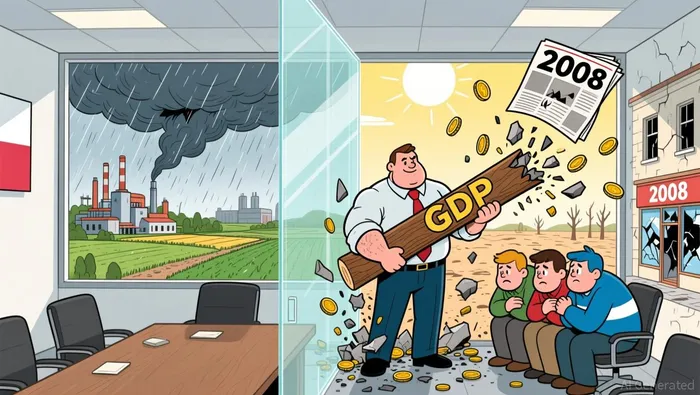
The 2008 Global Financial Crisis and the 2020 pandemic underscored the importance of structural adaptability. Central and Eastern European economies, for instance, , while the Baltic states faced severe contractions. Similarly, the pandemic revealed the limitations of traditional asset allocations, prompting a shift toward inflation hedges like commodities and a reevaluation of diversification strategies. These crises highlighted that economic resiliency is not merely about absorbing shocks but about leveraging them to rebuild stronger systems.
 The 1997 Asian Financial Crisis offers another instructive case. Countries like South Korea and Thailand implemented banking reforms, accumulated foreign reserves, and adopted inflation targeting to stabilize their economies according to studies. These measures not only mitigated the crisis's impact but also positioned them for long-term growth. Such historical precedents emphasize that proactive policy interventions and diversified portfolios are critical in volatile environments.
The New Normal: Geopolitical Uncertainty as a Defining Feature
The geopolitical landscape of 2023–2025 is marked by a stark departure from past crises. Unlike the 2008 financial collapse or the 2000 dot-com bust, which were primarily economic in nature, today's risks are deeply intertwined with geopolitical and societal factors. The World Economic Forum's Global Risks Report 2025 ranks state-based armed conflict as the top threat, with geoeconomic confrontation and cyber warfare close behind. Conflicts in Ukraine, the Middle East, and Sudan, coupled with U.S.-China competition, have created a fragmented global order.
This environment demands a rethinking of traditional investment paradigms. For example, supply chain resilience has become a strategic imperative. Companies are diversifying suppliers, leveraging AI for risk monitoring, and prioritizing sectors critical to national security, such as semiconductors and critical minerals. Meanwhile, inflationary pressures driven by geopolitical tensions-such as energy price shocks and trade restrictions-necessitate allocations to inflation-linked assets like commodities and real estate.







Comentarios
Aún no hay comentarios