
Navigating Volatility: Evaluating Ethereum and UNI Long Positions in a Downtrend
The Risks of Leverage in a Downtrend
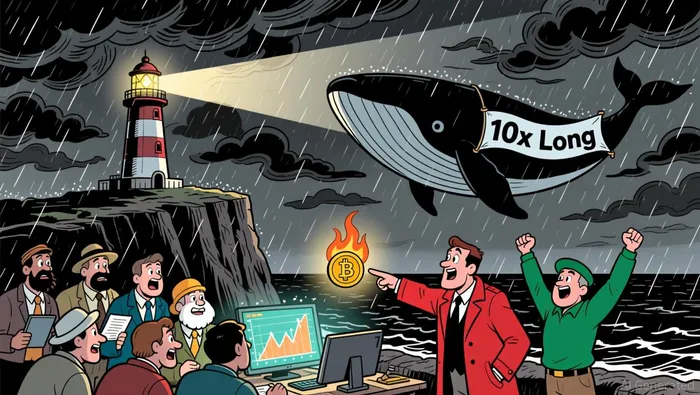
Leveraged trading amplifies both gains and losses. A notable example is a whale on Hyperliquid who took a 10x long position on UNI at $5.02, generating a 480% unrealized gain, LookOnChain reported. Conversely, another whale's 10x short on UNI at $9.20 resulted in a 39% loss, Coinotag reported. These cases underscore the fragility of leveraged positions during sudden price swings. According to a report by Bitget, excessive leverage-such as the 1,001x offerings seen in late 2025-contributed to billions in liquidations during sharp corrections, Bitget reported. For ETH and UNI, where technical indicators like the death cross and oversold RSI readings signal bearish momentumMMT--, Bitget reported, overexposure to leverage can quickly erode capital.
Position Sizing: A Critical Risk Management Tool
Position sizing determines how much capital is allocated to a single trade, directly influencing portfolio resilience. A disciplined whale who managed a $3 million initial capital across ETH, BTC, and SOL longs grew their portfolio to $30 million in two months, LookOnChain reported. This success hinged on limiting exposure to 2–5% of the portfolio per asset, a strategy that minimizes the impact of adverse price movements. In contrast, a whale who deposited 1.19 million UNI into Binance-valued at $10.54 million-incurred a $914,000 loss due to market volatility, Coinotag reported. These examples illustrate the importance of aligning position sizes with risk tolerance and market conditions.
Stop-Loss Strategies: Limiting Downside in a Downtrend
Stop-loss orders are indispensable for protecting leveraged positions. During the 2025 BitcoinBTC-- leverage liquidation crisis, traders who avoided leverage above 5x and used stop-loss orders mitigated significant losses, Bitget reported. For ETH and UNI, setting stop-loss levels below key support zones-such as the 200-day EMA or Bollinger Band lower bounds, Bitget reported-can prevent panic selling. Additionally, monitoring open interest and funding rates provides insights into market sentiment. For instance, rising open interest during a downtrend may indicate sustained bearish pressure, warranting tighter stop-loss thresholds, Bitget reported.
Hedging: Balancing Long Positions with Short Instruments
Hedging is a powerful tool for mitigating downside risk. Protective put options, for example, allow traders to lock in a minimum selling price for ETH or UNI, offsetting potential losses during corrections, KuCoin reported. Similarly, short futures positions can hedge long ETH holdings by profiting from price declines. During the 2025 Bitcoin liquidation crisis, traders who maintained smaller leveraged positions (2–5% of their portfolio) and used hedging instruments preserved capital despite market turmoil, Bitget reported. For UNI, the Unification proposal's fee activation and token burns, Coinotag reported, could create supply shocks, making hedging particularly valuable for long-term holders.
Portfolio Balancing: Diversification and Structural Opportunities
Diversification remains a cornerstone of portfolio balance. Allocating a portion of the portfolio to stablecoins or low-volatility assets can cushion against ETH and UNI's swings. Meanwhile, structural changes in tokenomics-such as Uniswap's projected $500 million annual UNI burns, Coinotag reported-offer long-term value creation opportunities. High-profile investors like Arthur Hayes, who recently acquired 28,670 UNI tokens, Coinotag reported, are betting on these fundamentals. During downturns, increasing UNI allocation may be justified if the Unification proposal passes, as it could drive scarcity and price appreciation.
Conclusion
Navigating volatility in ETH and UNI requires a multifaceted approach. Position sizing, stop-loss orders, and hedging strategies form the bedrock of risk management, while diversification and structural analysis guide portfolio balance. As the crypto market evolves in 2025, traders must remain agile, leveraging both technical and fundamental insights to protect and grow their capital.






Comentarios
Aún no hay comentarios