
Navigating Volatility: Energy Security and the Solar Waste Opportunity in 2025
The confluence of Middle East geopolitical tensions and the escalating solar panel waste crisis has created a dual-layered opportunity for investors. While short-term oil price surges driven by regional instability may offer tactical gains, the long-term demand for sustainable recycling solutions—particularly in solar waste management—signals a structural shift in the energy landscape. This article outlines how to position portfolios to capitalize on both dynamics.
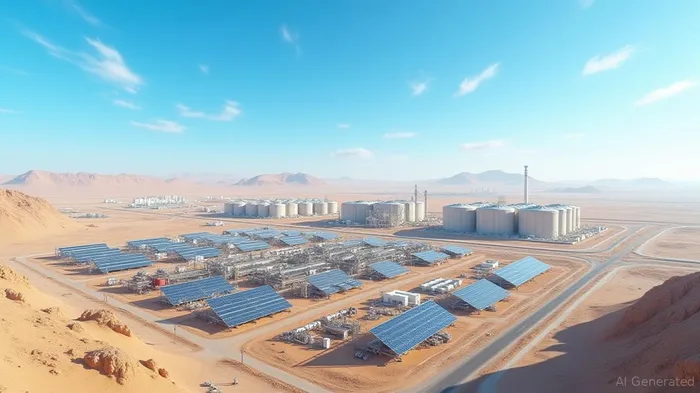
Middle East Tensions: Fueling Oil Price Volatility and Strategic Investment Opportunities
The Middle East remains the epicenter of global energy geopolitics. Recent developments, including U.S.-Iran nuclear negotiations, OPEC+ production decisions, and Houthi attacks on oil infrastructure, have kept oil prices volatile. Brent crude surged to $70/barrel in June 2025 amid fears of supply disruptions, while U.S. sanctions on Iran and Russia continue to constrain global output.
Geopolitical Risks to Watch:
- Strait of Hormuz Blockage: A blockade here, which handles 20% of global oil trade, could spike prices to $100+/barrel.
- U.S.-Iran Nuclear Deal: A breakthrough could flood markets with 500,000+ barrels/day of Iranian oil, pushing prices below $60/barrel.
- OPEC+ Compliance: The cartel's ability to enforce production cuts (4.57 million barrels/day by 2026) will determine whether prices stabilize or collapse.
Investment Play: Allocate 20-25% of your portfolio to oil-linked ETFs such as XLE (Energy Select Sector SPDR Fund) or USO (United States Oil Fund). These instruments capture price movements while avoiding direct commodity exposure.
The Solar Waste Crisis: A Long-Term Demand Catalyst for Recycling Tech
While oil markets face near-term uncertainty, the solar industry is confronting a systemic issue: solar panel waste. By 2025, an estimated 2 million metric tons of panels will reach end-of-life globally, with 80% of this waste concentrated in the EU and China.
Key Challenges and Opportunities:
1. Regulatory Push: The EU's amended WEEE Directive mandates manufacturers (e.g., First Solar, JinkoSolar) to recycle panels, creating a $20 billion+ market by 2030.
2. Recycling Tech Breakthroughs: Firms like ROSI Alpes use hydrometallurgical processes to recover 95% of silicon and silver, reducing reliance on scarce raw materials.
3. Supply Chain Risks: Polysilicon shortages and logistical bottlenecks highlight the need for circular economy solutions.
Investment Play: Deploy 10-15% of capital in e-waste recyclers with solar expertise. Consider:
- Veolia (VIE.PA): A global leader in industrial waste recycling, expanding into solar-specific facilities.
- TerraCycle (TCYC): Specializes in hard-to-recycle materials, including photovoltaic cells.
Portfolio Construction: Balancing Short-Term Volatility and Long-Term Sustainability
- Energy Security (20-25%):
- ETFs: XLE, USO.
Commodity Exposure: Gold (GLD) as a geopolitical risk hedge.
Sustainable Recycling (10-15%):
- Equities: ROSI Alpes (private), Veolia, TerraCycle.
Themes: Firms advancing silver recovery (a critical solar material) or circular supply chains.
Risk Mitigation:
- Diversify further into clean hydrogen (e.g., Plug Power, PLUG) or grid storage (Tesla's TESLA Powerpack).
- Monitor geopolitical events (e.g., U.S.-Iran talks) and recycling tech scalability.
Conclusion: Positioning for Energy Transition and Geopolitical Realities
The Middle East's energy volatility and the solar waste crisis are twin drivers of investment opportunity. While oil prices offer tactical gains, the $20 billion solar recycling market is a structural bet on sustainability. Investors must blend these exposures to navigate 2025's dual challenges: securing energy supplies today and building a circular economy for tomorrow.
Final Takeaway:
- Oil ETFs for short-term upside.
- Recycling firms for long-term growth.
- Stay agile: Geopolitical shocks and regulatory shifts will define both sectors' trajectories.
The energy transition is underway—but its path is anything but smooth.
Disclosure: This analysis is for informational purposes only and not personalized financial advice. Investors should conduct their own research or consult a financial advisor.





Comentarios
Aún no hay comentarios