
Navigating the Volatility: A Deep Dive into 20x Leveraged Bitcoin Trading in 2025
In the high-stakes arena of cryptocurrency trading, 20x leveraged BitcoinBTC-- positions have emerged as both a double-edged sword and a potential goldmine. As the market enters 2025, the interplay of macroeconomic forces, regulatory shifts, and on-chain dynamics has created a landscape where leverage is both a tool and a trap. This analysis evaluates the risks and returns of 20x leveraged Bitcoin trading, drawing on real-time on-chain data from platforms like CoinGlass and Glassnode to dissect the mechanics of liquidation rates, funding rates, and open interest.
The Fragility of 20x Leverage: Liquidation Rates as a Barometer of Risk
The November 2025 market turmoil offers a stark case study. As Bitcoin's price plummeted from $112,000 to under $106,000, a $1.27 billion liquidation event in long positions and $250 million in short positions occurred. This surge in liquidations was exacerbated by regulatory uncertainty-such as the CFTC's announcement of leveraged spot trading on U.S. exchanges-and geopolitical tensions between the U.S. and China as reported.
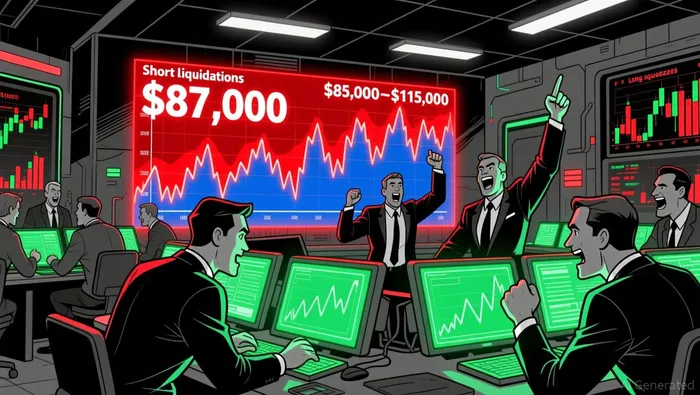
Liquidation rates are not merely a function of price volatility but also a reflection of systemic leverage. For 20x positions, even minor price corrections can trigger cascading liquidations. For instance, the $87,000 level became a critical threshold in November 2025, as a rebound above this price could trigger a short squeeze, with $250 million in short positions at risk. This underscores the importance of real-time monitoring: platforms like CoinGlass provide liquidation heatmaps that highlight concentration zones, enabling traders to anticipate and mitigate risks.
Funding Rates: The Hidden Cost of Holding Leverage
Funding rates, which align perpetual futures prices with spot prices, have become a critical metric for leveraged traders. In November 2025, Bitcoin's perpetual funding rates turned negative for the first time in a month, signaling a shift in sentiment as short sellers began to lose ground. Negative funding rates effectively mean longs are being subsidized by shorts, a reversal that often precedes a short squeeze.
Historically, extreme funding rate collapses-such as those seen in October 2025, when annualized rates hit levels not seen since the FTX fallout-have coincided with market bottoms. However, the current environment is more complex. With Bitcoin's open interest dropping from 752,000 BTC to 683,000 BTC in November 2025, the market is in a deleveraging phase. For 20x positions, this means holding costs are rising, and the risk of margin calls is amplified.
Open Interest: A Dual-Edged Indicator
Open interest (OI) provides a macro view of leverage appetite. In November 2025, Bitcoin futures OI fell from $37 billion to $29 billion, reflecting a broad deleveraging. This decline, while reducing systemic risk, also signals a loss of speculative momentum. Conversely, Bitcoin options OI hit an all-time high in BTC-denominated terms, indicating a shift toward hedging strategies as traders seek to protect against volatility.
The interplay between futures and options OI is telling. While futures OI declined, options OI surged, suggesting a market in transition. Traders are increasingly using options to hedge against the risks of leveraged futures, a trend that could stabilize the market in the long term but may also limit upside potential in the short term.
Strategic Implications for 20x Leverage
For traders considering 20x leveraged positions in 2025, the data paints a cautionary picture. The November 2025 liquidation event highlights the need for dynamic risk management. Key strategies include:
1. Real-Time Monitoring: Platforms like Glassnode and Dune Analytics offer granular metrics on liquidation zones and funding rate trends.
2. Position Sizing: Given the fragility of 20x leverage, smaller position sizes and tighter stop-loss orders are essential to survive volatility.
3. Hedging with Options: As options OI surges, using options to hedge against adverse price movements can mitigate the risks of leveraged futures.
Conclusion: Leverage as a High-Stakes Gamble
The 2025 Bitcoin market has demonstrated that 20x leveraged positions are inherently volatile. While the potential for outsized returns exists, the risks-exacerbated by regulatory shifts, geopolitical tensions, and on-chain fragility-are equally profound. Real-time on-chain data is not just a tool for analysis but a lifeline for survival in this environment. As the market continues to deleverage, the key to success lies in balancing aggression with prudence, and in leveraging data to navigate the storm.






Comentarios
Aún no hay comentarios