
Navigating Uncertainty: Is Enbridge's Earnings Decline a Buying Opportunity?
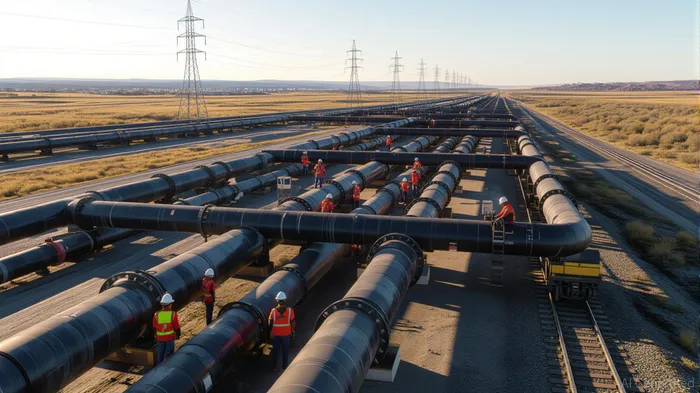
The energy transition has created a paradox for investors: while renewable energy ascends, traditional infrastructure operators like EnbridgeENB-- (ENB) remain critical to bridging the gap between legacy systems and emerging technologies. As the Canadian energy giant prepares to release its Q2 2025 earnings on August 1, the market braces for a projected 2.4% year-over-year decline in earnings per share (EPS) to $0.41. Yet beneath this headline number lies a more nuanced story—one that challenges conventional valuation frameworks and invites a closer look at Enbridge's strategic resilience. Historically, Enbridge's stock has shown a mixed short-term response to earnings releases, with a 28.57% 3-day win rate and 42.86% 10-day and 30-day win rates over 14 events since 2022.
Earnings Outlook: A Decline in Context
The anticipated EPS contraction follows a robust Q1 2025 performance, where Enbridge exceeded expectations by $0.04, highlighting operational flexibility. While Q2's projected decline stems from sector-wide challenges—such as seasonal demand fluctuations and regulatory headwinds—the accompanying 9.9% revenue growth to $9.11 billion signals a decoupling of top-line strength from short-term earnings volatility. This divergence is not uncommon in capital-intensive sectors like energy infrastructure, where revenue trends often outpace near-term profitability due to long-term asset management cycles.
The Zacks Earnings Surprise Prediction (ESP) of 0% suggests limited analyst optimism, yet the company's historical ability to exceed expectations in volatile quarters (as seen in Q1) introduces a margin of safety. For long-term investors, the focus should shift from quarterly fluctuations to the broader narrative: Enbridge's reaffirmed 2025 guidance, which includes a $19.4–$20.0 billion adjusted EBITDA range and $5.50–$5.90 DCF per share, underscores its capacity to generate stable cash flows despite cyclical pressures.
Valuation Implications: A Premium on Resilience
Enbridge's valuation appears stretched at first glance: a forward P/E of 21.24 and a PEG ratio of 4.25, both above industry averages. However, these metrics fail to capture the company's structural advantages. A debt-to-EBITDA ratio of 5.0x (targeting 4.5x–5.0x by year-end) and a 30-year dividend growth streak (with a current yield of ~3.77%) position Enbridge as a hybrid of a utility and a growth asset—a rare combination in today's market.
The disconnect between earnings and valuation is further illuminated by analyst sentiment. A “Moderate Buy” consensus rating, supported by a 48.91% projected upside to $67.00, reflects confidence in Enbridge's ability to navigate macroeconomic headwinds. Recent upgrades, such as Jefferies' elevation of its price target from $65 to $72, signal growing recognition of the company's strategic pivot toward renewable energy and its $26 billion secured growth backlog.
Strategic Positioning: A Bridge to the Future
Enbridge's recent acquisitions—such as the 10% stake in the Matterhorn Express Pipeline and the Traverse Pipeline—underscore its commitment to expanding its natural gas infrastructure. These projects align with the U.S. Energy Information Administration's (EIA) forecast of sustained demand for natural gas as a transitional fuel in decarbonization efforts. Meanwhile, its investments in offshore wind and solar projects diversify its revenue streams, reducing exposure to oil price volatility.
The company's disciplined capital allocation strategy further enhances its appeal. With a target DCF payout ratio of 60–70%, Enbridge balances reinvestment and shareholder returns, ensuring it remains a self-funding entity. This is critical in a high-interest-rate environment, where access to cheap capital is scarce.
Risks and Considerations
While Enbridge's fundamentals are robust, investors must remain cognizantCTSH-- of external risks. A prolonged period of elevated interest rates could pressure its financing costs, and regulatory shifts in North America's energy policy could alter project timelines. Additionally, the stock's current premium valuation (as reflected in its P/E and PEG ratios) leaves little room for error if earnings disappoint.
Investment Thesis: A Buy for the Patient
The projected Q2 earnings decline should not deter investors. Instead, it offers an opportunity to assess Enbridge's broader trajectory. The company's ability to grow revenue, maintain a healthy balance sheet, and execute on its $26 billion growth backlog positions it as a defensive play in an otherwise volatile sector. For those with a five- to seven-year horizon, Enbridge's hybrid model—combining the stability of regulated utilities with the growth potential of infrastructure—makes it a compelling addition to a diversified portfolio.
In conclusion, Enbridge's Q2 earnings report will be a data point, not a determinant. The stock's valuation, while elevated, is justified by its long-term cash flow visibility and strategic alignment with the energy transition. For investors willing to look beyond quarterly noise, the current price represents a calculated risk with substantial upside potential.
Final Note: The energy transition is not a sprint; it is a marathon. Enbridge, with its blend of resilience and adaptability, is well-positioned to lead the charge.





Comentarios
Aún no hay comentarios