
Navigating the Turbulence: How Tariff Uncertainty Threatens Global Aircraft Deliveries and Investment Strategies
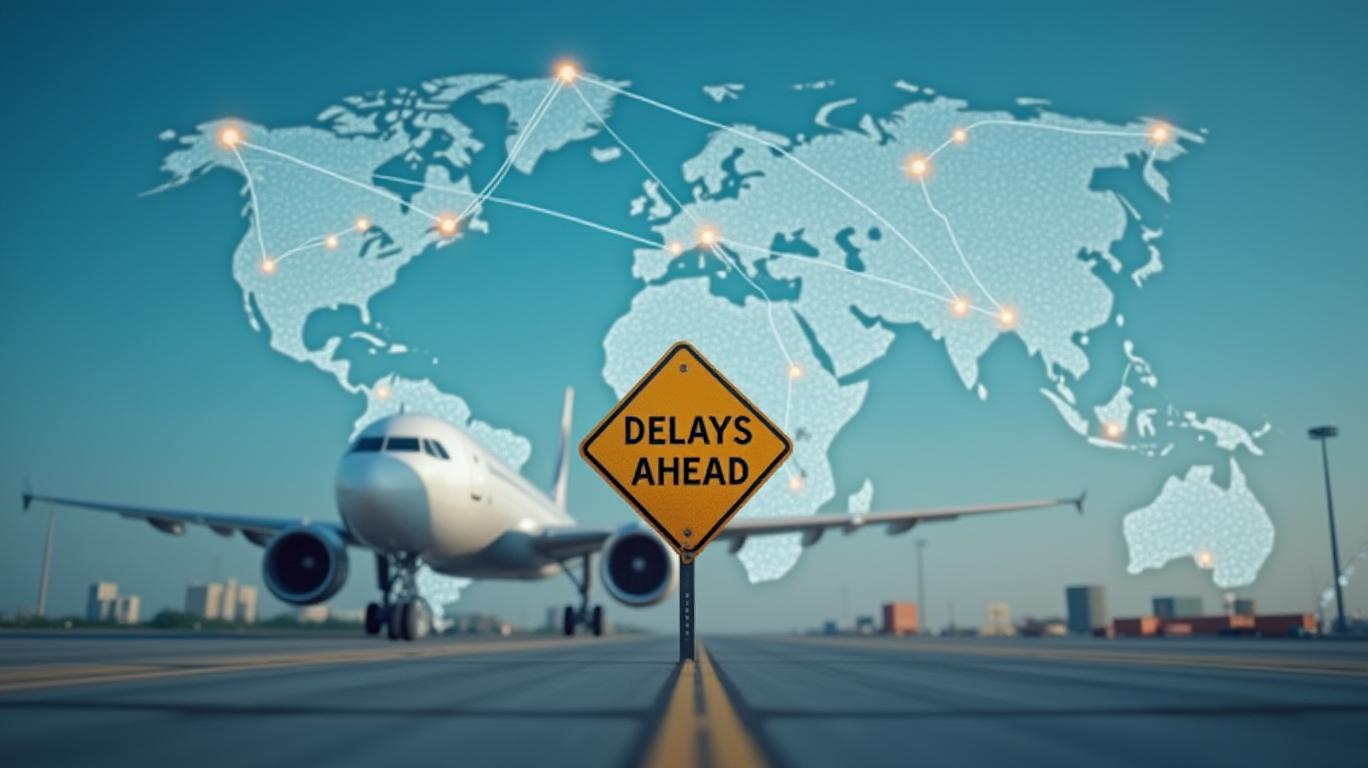
The skies are rarely this cloudy for the aerospace industry. As President Trump’s administration wavers on tariffs targeting European aircraft, the once-stable supply chains and delivery schedules of BoeingBA-- and Airbus now face unprecedented uncertainty. This policy whiplash—from threats of 100% tariffs to sudden pauses—has left investors and manufacturers alike grappling with a question: How long can the industry weather this storm?
The Trade Dispute’s Unsteady Flight Path
The U.S.-EU trade conflict over aircraft subsidies has been simmering for nearly two decades, but recent developments have intensified the turbulence. In October 2019, the World Trade Organization (WTO) authorized the U.S. to impose tariffs on $7.5 billion of EU goods, including aircraft. Yet, instead of a clear resolution, the administration has oscillated between threats and delays, most recently suspending new tariffs in July 2023 while negotiations continue. This stop-and-go approach creates a dangerous game of “wait and see” for companies reliant on transatlantic collaboration.
For Boeing and Airbus, the stakes are existential. Boeing’s 787 Dreamliner, for instance, relies on European suppliers for critical components like wings and engines, while Airbus’s A350 incorporates U.S.-made avionics and software. A  illustrates the fragility of this ecosystem. Delays in component deliveries or sudden tariff hikes could disrupt production timelines, forcing airlines to delay or cancel orders.
The Ground Effect: Economic and Operational Fallout
The ripple effects extend far beyond factories. Airlines, already squeezed by rising fuel costs and labor disputes, face higher operational risks if deliveries stall. A would likely reveal spikes in cancellations coinciding with tariff threats. For instance, in 2020, Boeing’s deliveries fell to 157 aircraft—down from 380 in 2018—as uncertainty mounted.
Moreover, the broader economy feels the tremors. The aerospace sector supports over 2.8 million jobs globally, with $900 billion in annual economic output. Prolonged disruptions could shave 0.3% off GDP in both the U.S. and EU, per industry estimates. Supply chain bottlenecks also raise costs for unrelated industries, from semiconductors to luxury goods, as manufacturers divert resources to navigate tariffs.
Investment Implications: Flying Blind
Investors in aerospace stocks now confront heightened volatility. Boeing’s stock price has fluctuated by over 20% in response to tariff headlines alone since 2020, while Airbus’s shares have mirrored this instability. A would underscore their sensitivity to trade policy noise.
Strategically, investors should consider three moves:
1. Diversify geographically: Shift exposure to Asian manufacturers like COMAC (China) or Embraer (Brazil), less entangled in U.S.-EU disputes.
2. Hedge with defensive assets: Allocate to utilities or real estate ETFs to offset aerospace volatility.
3. Monitor geopolitical signals: Track U.S.-EU trade talks and WTO rulings, as a resolution could unlock pent-up demand.
Conclusion: Clearing the Air Requires More Than a Pause
The aerospace industry’s limbo underscores a broader truth: in today’s interconnected economy, policy uncertainty is a tax on growth. While Boeing and Airbus have absorbed $15 billion in combined losses since 2019 due to trade wars, the path forward demands more than temporary tariff pauses.
Investors must prepare for prolonged volatility, but also recognize opportunities in resilience. Companies that diversify suppliers, governments that prioritize negotiated settlements, and portfolios that balance risk with long-term growth will navigate this turbulence best. As the skies clear—or not—the lesson is clear: in an era of geopolitical friction, adaptability is the ultimate stabilizer.
The clock is ticking. For the aerospace sector—and the investors tied to it—the question isn’t just whether the tariffs will land, but how long the industry can stay airborne while waiting for clarity.





Comentarios
Aún no hay comentarios