
Navigating Turbulence: Geopolitical and Labor-Driven Disruptions in the 2025 Global Oil Market
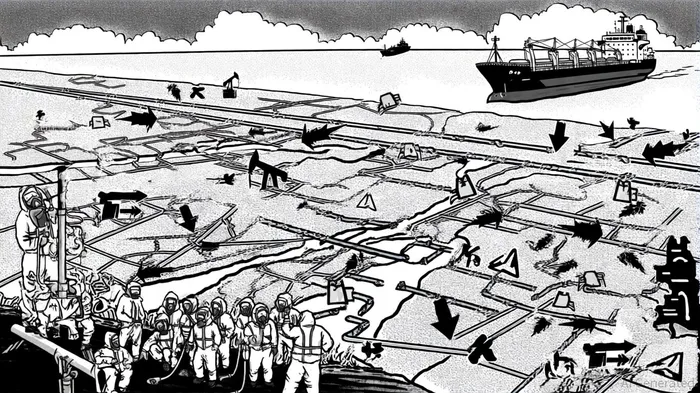
The global oil market in 2025 is navigating a dual storm of geopolitical volatility and labor-driven supply chain disruptions. These forces, operating in tandem, are reshaping investment landscapes and challenging the resilience of energy infrastructure. For investors, understanding the interplay between these factors is critical to identifying opportunities and mitigating risks in an increasingly fragmented market.
Geopolitical Tensions: A Catalyst for Price Volatility
The Middle East remains a flashpoint for global oil markets. In June 2025, escalating conflicts between Israel and Iran—including airstrikes and threats to close the Strait of Hormuz—triggered a 14.5% spike in Brent crude prices, surging from $69 to $79 per barrel within a week [1]. While a subsequent ceasefire stabilized prices, the underlying risks persist. The International Energy Agency (IEA) warns that structural shifts in supply and demand, coupled with ongoing geopolitical strains, will continue to drive volatility [2].
The Strait of Hormuz, through which 20% of the world's oil flows, exemplifies the fragility of global supply chains. Even minor disruptions in this region can ripple across markets, as seen in 2025 when shipping delays and infrastructure threats led to elevated diesel margins in Europe [1]. Meanwhile, the Russia-Ukraine war remains a lingering wildcard, with sanctions and retaliatory measures affecting not just oil but also related commodities like aluminum and nickel [3].
Labor-Driven Disruptions: A Silent Bottleneck
While geopolitical events grab headlines, labor shortages are quietly constraining oil production and distribution. The U.S. oil sector, for instance, has announced over 8,000 job cuts by major players like ConocoPhillipsCOP-- and ChevronCVX--, driven by falling crude prices and OPEC+ output surges [4]. These layoffs are compounded by broader supply chain labor gaps: the U.S. trucking industry alone faces an 80,000-driver shortage, projected to double by 2030 [5].
Regional disparities further complicate the labor landscape. In Saudi Arabia, Vision 2030's focus on downstream petrochemicals is creating jobs but reducing reliance on foreign labor. Conversely, Nigeria's Petroleum Industry Act aims to boost local content, potentially attracting foreign investment while addressing workforce gaps [6]. Meanwhile, European refining sectors grapple with aging infrastructure and workforce attrition, hampering modernization efforts [7].
The Interplay of Geopolitical and Labor Risks
The convergence of these factors amplifies systemic vulnerabilities. For example, geopolitical tensions in the Middle East not only disrupt oil flows but also strain logistics networks already weakened by labor shortages. A 2025 report by the Global Banking and Finance Review highlights how U.S.-China trade tariffs—peaking at 145%—have forced firms to regionalize supply chains, a shift that requires both capital and skilled labor [8].
Automation and digital tools are emerging as partial solutions. Companies are investing in AI-driven logistics and robotic pipeline maintenance to offset labor gaps. However, these technologies demand upfront capital, leaving smaller firms at a disadvantage [5]. Moreover, roles requiring human judgment—such as crisis management in geopolitical hotspots—remain irreplaceable, underscoring the need for hybrid strategies.
Investment Implications and Strategic Considerations
For investors, the 2025 oil market demands a nuanced approach:
1. Diversification: Prioritize geographically diversified portfolios to mitigate regional shocks. For instance, Saudi Arabia's downstream expansion and Canada's hydrogen projects offer contrasting but complementary opportunities [6][7].
2. Resilience Technologies: Allocate capital to firms developing automation and digital supply chain solutions, particularly in labor-scarce regions like the U.S. and Europe [5].
3. Geopolitical Hedging: Monitor conflict zones and consider hedging against price spikes through futures contracts or partnerships with politically stable producers.
Conclusion
The 2025 global oil market is a mosaic of geopolitical fragility and labor-driven bottlenecks. While these challenges create uncertainty, they also open avenues for innovation and strategic investment. By aligning capital with resilience-focused technologies and diversified supply chains, investors can navigate the turbulence and position themselves for long-term gains in an evolving energy landscape.





Comentarios
Aún no hay comentarios