
Navigating Turbulence: Aviation Sector Resilience and Investment Opportunities Amid 2025 U.S. Government Shutdown Risks
Sector Resilience: Lessons from Past Shutdowns and 2025 Projections
The aviation sector has historically demonstrated surprising resilience during government shutdowns. , . For instance, , , according to a US Funds analysis. This resilience stems from several factors:
- Inelastic Demand for Air Travel: Business and premium travel remain relatively unaffected by short-term economic or political disruptions. High-net-worth travelers, who prioritize convenience and reliability, continue to drive demand even during uncertainty, the US Funds analysis notes.
- Loyalty Program Strength: Airlines with robust loyalty programs, such as Delta's SkyMiles, benefit from recurring revenue streams and customer retention, cushioning the impact of operational hiccups, the US Funds analysis adds.
- Improved Balance Sheets: Post-pandemic cost-cutting and fleet modernization have strengthened airline balance sheets, enabling them to absorb short-term losses without compromising long-term profitability, according to the US Funds analysis.
In 2025, these dynamics persist. Despite flight delays and staffing challenges at the FAA and TSA, global air travel demand is projected to grow significantly, with the world's fleet expected to double by 2044, the US Funds analysis projects. This secular trend underscores the sector's long-term appeal, even amid near-term turbulence.
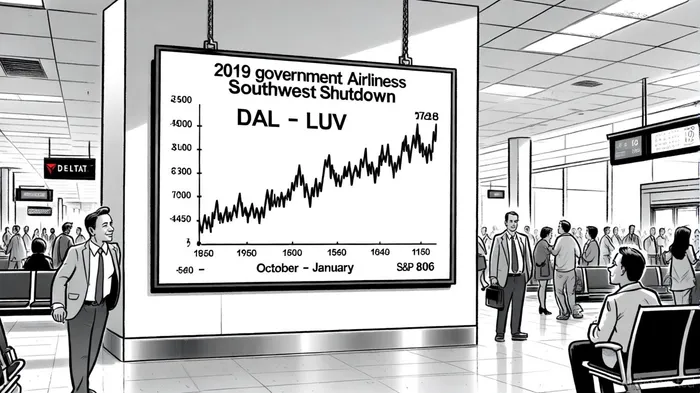
Stock-Specific Valuation Opportunities: SouthwestLUV-- and DeltaDAL-- in Focus
Two airlines stand out for their financial resilience and attractive valuations: Southwest Airlines and .
Southwest Airlines (LUV):
- Recent Performance: In Q3 2025, , driven by strong unit revenue growth and disciplined cost management. Despite a 12% stock price drop following a profit outlook cut, , according to a Southwest press release.
- Valuation Metrics: As of October 22, 2025, , , , indicating undervaluation relative to earnings growth, according to StockAnalysis statistics. ; those StockAnalysis figures further illustrate historical volatility.
- Strategic Positioning, the Southwest press release notes.
Delta Air Lines (DAL):
- Premium Segment Strength: Delta's Q3 2025 results highlight its dominance in premium, corporate, and loyalty segments, . , as detailed in Delta financial results.
- Operational Efficiency. Strategic initiatives, including retiring older aircraft and investing in fuel-efficient models, further enhance its competitive edge, the Delta release notes.
- Valuation and Outlook: Analysts project 12–15% annual EPS growth for Delta in 2026, , according to the Delta financial results. .
Political and Economic Implications for the Aviation Sector
The ongoing shutdown exacerbates operational challenges for the FAA and TSA. Air traffic controllers, , are working without pay, increasing the risk of delays and cancellations, as reported in a Forbes article. Similarly, TSA officers have reported calling in sick during past shutdowns, compounding security and efficiency issues, the US Funds analysis documents. These disruptions could temporarily dampen traveler confidence and strain domestic operations.
However, the global aviation sector's long-term trajectory remains intact. The U.S. , the Forbes article notes, but this pales in comparison to the sector's projected growth. Investors who focus on companies with strong operational flexibility-like Delta and Southwest-may find opportunities to capitalize on post-shutdown rebounds.
Conclusion: Balancing Risk and Reward
While the 2025 government shutdown poses immediate risks to aviation operations, the sector's historical resilience and strategic adaptability offer a counterbalance. Airlines with robust balance sheets, premium-focused business models, and efficient cost structures are well-positioned to weather short-term turbulence. For investors, Southwest and Delta represent not just short-term plays but long-term bets on the enduring demand for air travel. As the sector navigates this period of uncertainty, patience and a focus on fundamentals will be key to unlocking value.





Comentarios
Aún no hay comentarios