
Navigating the Trump-EU Tariff Tensions: Sector-Specific Risks and Investment Strategies in a Fractured Transatlantic Trade Landscape
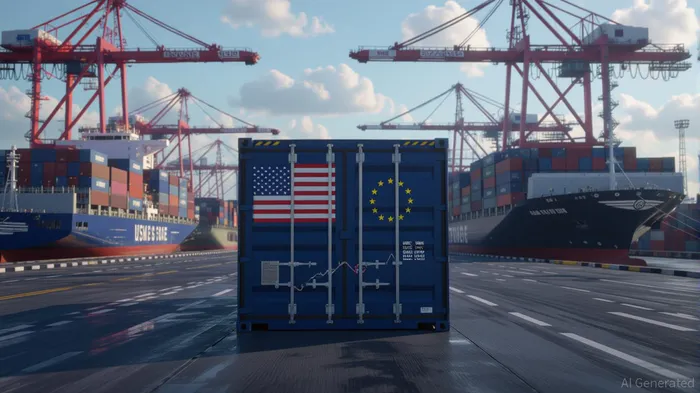
The U.S.-EU trade relationship, once the bedrock of global commerce, now teeters on the edge of a new confrontation. President Donald Trump's demand for 15-20% tariffs on EU imports—coupled with the EU's retaliatory threats—has ignited a high-stakes standoff with far-reaching implications for supply chains, equity markets, and asset allocation. For investors, the challenge lies in identifying sector-specific vulnerabilities while capitalizing on emerging opportunities in a landscape reshaped by protectionist policies.
Sectoral Vulnerabilities: From Automotive to Agriculture
The automotive industry is among the most exposed. The EU's proposal to reduce U.S. car tariffs to below 20% in exchange for Trump lowering tariffs on EU vehicles highlights the sector's fragility. European automakers like Volkswagen and BMW face higher input costs due to U.S. steel and aluminum tariffs, while U.S. brands such as Harley-DavidsonHOG-- could see further export declines. Investors should monitor for signals of distress in U.S. export-dependent firms. Conversely, European automakers may benefit from a last-minute trade deal, making long positions in automotive ETFs (e.g., IXC) a potential hedge.
The aviation sector is equally at risk. Ireland's dominance in aircraft leasing—managing 37% of the global commercial fleet—could be disrupted by U.S. tariffs on EU aircraft parts. A 30% tariff on U.S. imports of aircraft components would ripple through supply chains, affecting firms like Airbus and BoeingBA--. Investors should weigh exposure to aerospace ETFs (e.g., ITA) against the likelihood of diplomatic resolutions.
Agricultural products, including bourbon whiskey and peanut butter, have become political pawns. The EU's retaliatory tariffs on U.S. spirits could hurt companies like Brown-Forman (), while European producers in wine and dairy may gain market share. Diversifying into European agribusiness ETFs or equities like FrieslandCampina (FRAC.AS) could offset U.S. sector-specific losses.
Industrial and Tech Sectors: Hidden Risks and Rebalancing
The machinery and chemicals sectors are critical to global manufacturing. Germany's €7.5 billion in U.S. machinery imports and Belgium's €13.7 billion in U.S. chemical imports make these countries particularly vulnerable. Higher tariffs could force companies to restructure supply chains, favoring firms with robust compliance infrastructure. Texas InstrumentsTXN-- (TXN) and IntelINTC-- (INTC) may benefit from post-tariff rebalancing, while U.S. cloud providers like AmazonAMZN-- (AMZN) face indirect risks from tech diplomacy tensions.
The technology sector's indirect exposure lies in non-tariff barriers, such as U.S. export controls on semiconductors and EU conformity assessments. Investors should prioritize firms with diversified supply chains and strong EU ties, such as ASML (ASML) or Analog DevicesADI-- (ADI).
Asset Class Implications: Equity Volatility and Hedging Strategies
Equity markets have historically overreacted to tariff threats before stabilizing post-diplomatic truces. The S&P 500 and STOXX Europe 600 indices have shown sharp repricings following trade announcements, particularly in automotive, industrials, and materials sectors. Investors should consider as a guide to sectoral sensitivity.
Hedging strategies include short-term options on vulnerable sectors (e.g., puts on U.S. steel stocks) and currency plays (e.g., shorting EUR/USD if a trade war escalates). Gold and Treasury bonds remain traditional safe havens, though their effectiveness may diminish in a prolonged standoff.
Strategic Roadmap for Investors
- Sector Diversification: Reduce exposure to export-heavy industries (e.g., automotive, agriculture) and rebalance toward sectors with pricing power (e.g., tech, healthcare).
- Geographic Hedging: Invest in firms with EU-Mercosur or EU-China trade corridors to mitigate U.S.-EU risks.
- Timing and Flexibility: Position for a potential last-minute diplomatic resolution by buying dips in automotive ETFs or EU-focused equities ahead of the August 1 deadline.
- Compliance-Driven Opportunities: Favor companies with robust global compliance infrastructure, such as semiconductor firms or aerospace contractors.
Conclusion: Navigating the New Normal
The Trump-EU tariff standoff is not merely a trade dispute—it is a test of global supply chain resilience and investor adaptability. While short-term volatility is inevitable, the long-term winners will be those who anticipate structural shifts and position for a world of fragmented trade. For now, a balanced approach of hedging, diversification, and strategic sector rotation offers the best path forward.





Comentarios
Aún no hay comentarios