
Navigating the New Transatlantic Trade Landscape: Opportunities and Risks in the 2025 US-EU Deal
The 2025 U.S.-EU Trade Deal, finalized after months of high-stakes negotiations between Donald Trump and Ursula von der Leyen, marks a pivotal shift in transatlantic economic relations. By capping tariffs at 15% on most EU goods—a compromise from the 30% threat—while exempting strategic sectors like aerospace and semiconductors, the agreement reshapes global supply chains and investment flows. For investors, the deal introduces both headwinds and tailwinds, demanding a nuanced understanding of sector-specific dynamics.
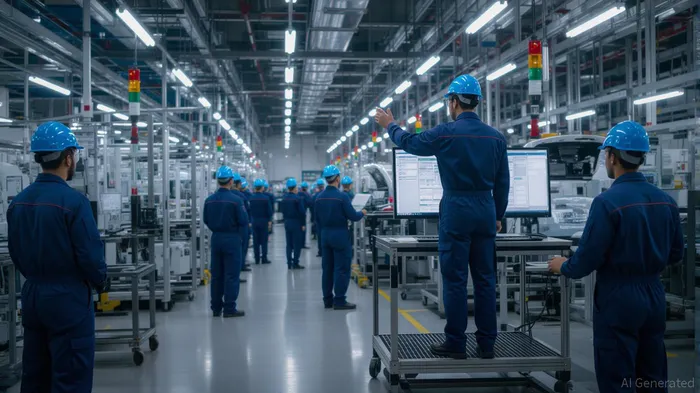
The 15% Tariff: Winners and Losers
The 15% tariff on EU goods, including automobiles and pharmaceuticals, disproportionately impacts industries reliant on transatlantic trade. German automakers like Volkswagen and Mercedes-Benz, which export 10% of their vehicles to the U.S., face a $1.5–2 billion annual profit hit. This has already forced price hikes in U.S. markets, as seen in Mercedes-Benz's 2025 model-year adjustments. For investors, exposure to these firms carries elevated risk, particularly as supply chains face added friction.
Conversely, U.S. steel and aluminum producers benefit from the 50% tariff on EU imports, which protects domestic industries from cheaper European competition. However, this protection is a double-edged sword: while it bolsters U.S. manufacturers, it also inflates costs for downstream industries like automotive and construction, potentially dampening long-term growth.
Zero-Tariff Exemptions: Strategic Gains
The deal's zero-tariff exemptions for aircraft, semiconductor equipment, and certain chemicals create a green zone for cross-border trade. Aerospace giants like BoeingBA-- and Airbus can maintain cost-efficient supply chains, with European suppliers continuing to export components to the U.S. without duties. This stability is critical for the sector, which relies on global collaboration for innovation and production.
Semiconductor equipment, a cornerstone of the U.S.-EU pact, benefits from zero tariffs as both sides seek to reduce reliance on non-allied suppliers. This exemption supports companies like ASMLASML-- (Dutch) and Applied MaterialsAMAT-- (U.S.), which supply tools for advanced chip manufacturing. For investors, this sector offers resilience amid geopolitical tensions, particularly as the U.S. and EU align on tech security.
Pharmaceuticals: A Lingering Uncertainty
The exclusion of pharmaceuticals from the agreement introduces a wildcard. While the 15% tariff is already a burden for EU firms, Trump's threat of a 200% tariff looms large. Ireland, the EU's pharmaceutical hub, exports 80% of U.S.-bound EU drugs, making it a prime target for retaliatory measures. This uncertainty could disrupt drug pricing and availability in the U.S., with knock-on effects for insurers and healthcare providers. Investors in European pharma firms like Roche or NovartisNVS-- should brace for volatility until this issue is resolved.
Energy and Investment: A New Transatlantic Axis
The EU's $750 billion energy purchase commitment and $600 billion investment pledge in the U.S. signal a shift in economic alignment. U.S. LNG producers like Cheniere and oil majors such as ExxonMobil stand to gain from increased exports to Europe, which aims to wean itself off Russian energy. For investors, this represents a long-term opportunity, albeit with cyclical risks tied to global energy prices.
Meanwhile, the EU's investment in U.S. infrastructure and technology could boost sectors like renewable energy and defense. Firms in these areas, such as General Electric and Lockheed MartinLMT--, may see heightened demand as the EU prioritizes strategic partnerships.
Risk Mitigation and Investment Strategy
To navigate this landscape, investors should adopt a diversified approach:
1. Short-Term Hedging: For sectors exposed to the 15% tariff (e.g., autos, pharmaceuticals), consider short-term hedging or investing in firms with diversified supply chains.
2. Long-Term Exposure: Allocate to zero-tariff sectors like aerospace and semiconductors, which offer stable growth and geopolitical alignment.
3. Energy Sector Focus: Prioritize U.S. energy companies861070-- with contracts tied to EU demand, balancing cyclical exposure with strategic value.
4. Pharma Caution: Avoid heavy exposure to European pharma firms until tariff uncertainties are resolved, or hedge with U.S.-focused healthcare providers.
Conclusion
The 2025 U.S.-EU Trade Deal is a mixed bag for global markets. While it avoids a trade war, it introduces friction in key industries and creates a patchwork of tariffs that will require constant monitoring. For investors, the path forward lies in identifying sectors insulated from tariffs—like aerospace and semiconductors—while cautiously navigating high-risk areas such as pharmaceuticals. As transatlantic trade evolves, agility and sector-specific insight will be paramountPARA-- to capitalizing on this new economic reality.





Comentarios
Aún no hay comentarios