
Navigating the Transatlantic Tariff Storm: Sector-Specific Strategies for Profit in a Fractured Market
The simmering U.S.-EU trade tensions, reignited by President Trump's 50% tariff threat on European goods, have thrust automotive, steel, and renewable energy sectors into a high-stakes game of supply chain reconfiguration and regulatory arbitrage. With the clock ticking until June 1, investors must act swiftly to capitalize on opportunities emerging from this geopolitical tempest—or face margin-crushing risks.
The stakes are clear: the EU's exports to the U.S. total over $550 billion annually, and tariffs on automotive, steel, and renewable components could disrupt global value chains, inflate costs, and reshape cross-Atlantic partnerships. Yet within this turmoil lies a roadmap for shrewd investors to profit from sector-specific shifts.
Automotive Sector: Reshoring and Regionalization Are the New Playbooks
The automotive industry faces a dual threat: existing 25% tariffs on EU steel and aluminum imports, plus the looming 50% duty on finished goods like cars. For U.S. manufacturers, reliance on European-sourced engines, batteries, and semiconductors could mean a margin squeeze of 5-10%, per industry estimates.
Key Opportunities:
1. Reshored Production Champions: Tesla's $5 billion Gigafactory in Berlin—already producing Model Ys—positions it to avoid tariffs by localizing output. Investors should monitor its stock for resilience amid trade volatility.
2. North American Supply Chain Winners: Ford's $11 billion investment in U.S. battery factories (e.g., BlueOval SK in Georgia) reduces reliance on EU imports. Its partnership with SK On for lithium-ion cells could insulate margins from tariff shocks.
3. Tier 1 Suppliers with Diversified Footprints: Companies like Continental AG (DE:CON) and Magna International (CA:MGA) are accelerating production in Mexico and Canada under USMCA rules. Their stocks may outperform peers stuck in tariff-crossfire regions.
Risks to Avoid:
- European carmakers like BMW and Daimler, which derive 30% of revenue from the U.S., face steep re-pricing demands. A 50% tariff on their SUVs could trigger a 15-20% price hike, risking demand erosion.
Steel Sector: Domestic Capacity and Recycling Innovations Drive Gains
The U.S. Section 232 tariffs on EU steel (25%) and the threatened 50% surcharge have pushed domestic producers to fill the gap. Meanwhile, the EU's potential retaliation—such as restricting steel scrap exports—adds urgency to the search for alternatives.
Key Opportunities:
1. U.S. Steel Giants with Scale:
- ArcelorMittal (MT): Its $1.8 billion investment in Indiana's steel mill (to boost electric arc furnace capacity) reduces reliance on imported scrap.
- Nucor (NUE): Its focus on scrap-based production aligns with the Biden administration's green steel mandates, even as tariffs force buyers to domestic suppliers.
2. Recycling and ESG Plays:
- Steel Dynamics (STLD): Its scrap-processing facilities and carbon-capture projects position it as a low-cost, compliant supplier.
Risks to Avoid:
- EU-based firms like Thyssenkrupp and ArcelorMittal's European divisions face stranded assets if tariffs prompt U.S. buyers to pivot permanently to domestic producers.
Renewable Energy: IRA Incentives vs. Solar Panel Tariff Headwinds
The U.S. Inflation Reduction Act (IRA) offers a $30 billion lifeline to renewables, but Trump's tariffs on EU imports and existing duties on Asian solar panels create a paradox: subsidies are there, but supply chains are under siege.
Key Opportunities:
1. Domestic Solar Manufacturers with IRA Leverage:
- First Solar (FSLR): Its U.S.-made thin-film panels avoid Asian import tariffs. The IRA's 30% tax credit for projects using domestic components amplifies its advantage.
- Enphase Energy (ENPH): Its U.S.-based inverters are critical for solar systems, benefiting from tariff-driven reshoring trends.
2. Wind Energy's Cross-Atlantic Tension:
- Siemens Gamesa (Spain:SGRE): Its existing U.S. manufacturing footprint (e.g., Texas-based blade factories) and 12,000 U.S. jobs make it less vulnerable than European peers.
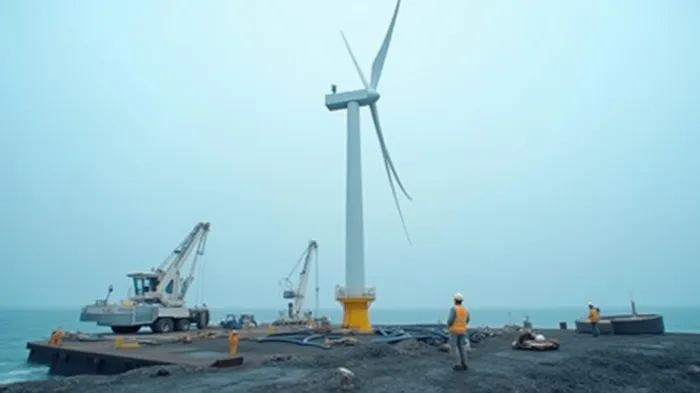
- NextEra Energy (NEE): Its diversified portfolio (wind, solar, storage) and 1.5 GW of 2025 solar projects in tariff-free zones make it a bellwether.
Risks to Avoid:
- European solar firms like EDP Renováveis and Orsted face margin pressure if they can't source panels from Asia without triggering tariffs.
The Regulatory Arbitrage Playbook for 2025
Investors must think beyond tariffs to exploit strategic gaps:
1. Reclassify, Relocate, and Repackage:
- Companies like Tesla and Ford are reclassifying components (e.g., labeling batteries as “U.S.-made” under IRA rules) to qualify for lower tariffs.
2. Geopolitical Diversification:
- Shift exposure to Mexico (for automotive), Brazil (steel scrap), or Vietnam (solar panels) to bypass EU-U.S. crossfire.
3. Leverage the “Zero-for-Zero” Gambit:
- If the EU and U.S. agree to mutual tariff cuts (as France and Italy urge), firms in low-tariff sectors (e.g., green hydrogen) could surge.
Final Call to Action
The clock is ticking. With the June 1 tariff deadline approaching, investors should:
- Buy U.S. reshoring champions (TSLA, NUE, FSLR) before they're fully priced in.
- Short EU automakers and steel exporters exposed to tariff volatility.
- Monitor the IRA's “direct pay” mechanism, which could offset up to 40% of tariff costs for renewables firms.
The U.S.-EU trade war isn't just about tariffs—it's a full-blown reordering of supply chains. Those who act now will secure profits in the new fractured order.
This is a high-conviction moment. The market is pricing in uncertainty; the smart money is pricing in opportunity.







Comentarios
Aún no hay comentarios