
Navigating Trade Turbulence: Why the FTSE 100's Record High Signals a Shift to Strategic Resilience
The FTSE 100's July 2025 surge to an all-time high of 8,953 points defies conventional market logic. While trade wars, tariffs, and geopolitical tensions dominate headlines, investors are pricing in a future shaped by long-term structural trends—not short-term disruptions. This article argues that the FTSE's resilience reflects a fundamental shift toward valuing geopolitical resilience and innovation-driven growth, creating opportunities in defensive sectors and companies positioned to thrive amid global instability.
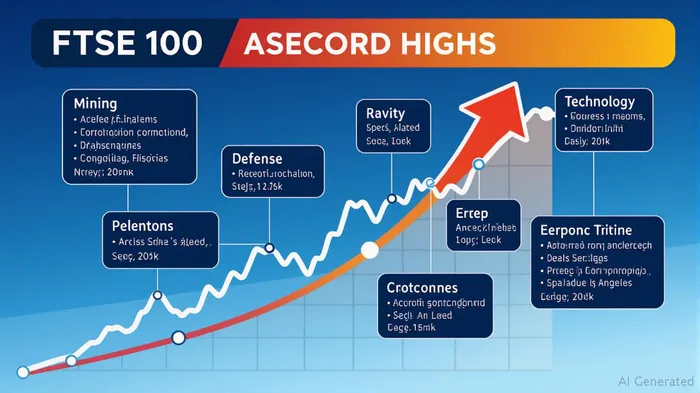
The FTSE 100's All-Time High: A Triumph of Structural Trends Over Trade Noise
The FTSE's record high isn't a fluke. Mining stocks like Anglo American (+4.6%) and Antofagasta (+2.8%) surged as tariffs on copper imports (effective August 2025) tightened global supplies. Yet investors dismissed the threat of trade wars, embracing the “TACO” (Trump Always Chickens Out) mindset. Even as the U.S. imposed 50% tariffs on Brazilian imports and copper, markets shrugged, betting political posturing would soften.
This optimism is misplaced if viewed through a short-term lens. But the FTSE's 9% year-to-date gain and the DAX's parallel record high (24,639 points) suggest a deeper truth: global capital is prioritizing sectors insulated from trade volatility.
Defensive Sectors: The New Safe Havens in an Uncertain World
The real story lies in defensive sectors. Defense firms like Babcock (+117% year-to-date) and BAE Systems (+63% year-to-date) have thrived as geopolitical tensions—particularly the Russia-Ukraine war—drive sustained military spending. Similarly, energy giants like Rolls-Royce (+73% year-to-date) benefit from infrastructure projects and defense contracts, proving that geopolitical risks can fuel profit resilience.
These stocks offer valuational opportunities. While the FTSE's overall P/E ratio sits at 17.5x—moderate by historical standards—defensive sectors trade at discounts relative to their growth potential. Babcock's P/E of 15x, for instance, reflects its undervalued position amid a 200% rise in global defense spending since 2020.
WPP: AI Leadership and the Digital Transformation Play
The FTSE's resilience also hinges on companies redefining their core businesses through innovation. WPP's 2.5% stock jump after appointing Microsoft's Cindy Rose as CEO underscores this shift. Rose's AI expertise positions WPPWPP-- to capitalize on the $12T AI-driven advertising market, a structural trend outpacing trade squabbles.
WPP's valuation at 12x forward earnings offers a compelling entry point. Its acquisition of CCLA Investment Management and strategic pivot toward AI analytics align with a broader theme: companies embedding technology into legacy sectors will dominate post-tariff markets.
The Market's Resilience: Structural Shifts vs. Tariff Theater
Critics argue tariffs will eventually bite. Yet the FTSE's performance reveals a market prioritizing geographic and revenue diversification. Multinational firms with global supply chains (e.g., SAPSAP--, Fresnillo) and companies insulated by demand inelasticity (e.g., utilities) are outperforming. Even as the Fed signals potential rate cuts to offset inflation risks, investors are pricing in long-term inflation hedges like commodities.
Meanwhile, the “TACO” mindset isn't irrational. U.S.-EU trade talks hint at de-escalation, and corporate hedging (e.g., pre-booking copper supplies) mitigates tariff impacts. The result? A market focused on sustainable growth drivers, not quarterly tariff headlines.
Investment Implications: Positioning for Long-Term Resilience
For investors, the FTSE's record high isn't a red flag—it's a green light to rebalance toward defensive and innovation-driven equities. Key plays include:
1. Geopolitical Resilience Stocks:
- Babcock: Defense contracts and infrastructure projects provide a moat against trade volatility.
- Rolls-Royce: Exposure to aerospace and energy sectors with global diversification.
- AI-Driven Transformation:
WPP: A leader in digital advertising, benefiting from AI's disruption of traditional media.
Commodity Plays:
- Fresnillo: Gold and silver prices are rising amid inflation fears, with the stock up 140% year-to-date.
Avoid short-term noise. The FTSE's ascent reflects a market maturing beyond trade squabbles, focusing instead on innovation and resilience. Now is the time to invest in companies that thrive on structural trends—not political theater.
In conclusion, the FTSE's record high isn't a victory for trade optimists—it's a testament to investors' faith in long-term trends. Those who prioritize resilience, innovation, and global diversification will navigate today's turbulence and capitalize on tomorrow's opportunities.







Comentarios
Aún no hay comentarios