
Navigating the Tightrope: Retail Sector Fiscal Strategies in 2025-Balancing Short-Term Gains with Long-Term Risks
Short-Term Wins: Automation, AI, and Margin Optimization
Retailers are leaning heavily on technology to squeeze efficiency from their operations. Artificial intelligence (AI) and automation are no longer buzzwords-they're revenue drivers. For instance, 60% of retail buyers reported enhanced demand forecasting and inventory management in 2024, thanks to AI tools. During peak shopping periods like Black Friday, retailers leveraging AI saw a 15% boost in conversion rates. WalmartWMT--, for example, has weaponized AI across its six-pillar roadmap, including GenAI tools for associates and computer-vision checkout systems. The results? A 22% year-over-year surge in global e-commerce sales and a 50% jump in Walmart Connect ad revenue.
Cost optimization is another short-term priority. Dell TechnologiesDELL-- exemplifies this with its just-in-time inventory system, which slashed inventory levels and accelerated its cash conversion cycle. In Q2 2025, Dell's Infrastructure Solutions Group delivered record revenue of $11.6 billion, a 38% year-over-year increase, driven by efficient working capital management. Such strategies are critical in an inflationary environment where every percentage point of margin matters.
Long-Term Risks: Tariffs, Supply Chains, and Regulatory Headwinds
But short-term gains are a mirage if long-term risks aren't addressed. Tariff hikes, particularly on Chinese imports, loom large. Levi Strauss & Co. has already faced 30% tariffs on China and 10% on other countries, yet it's mitigated the impact through supply chain diversification and price optimization. The company expects tariffs to reduce full-year gross margins by 20–40 basis points in 2025. Meanwhile, KPMG warns that geopolitical instability and high interest rates threaten to disrupt global supply chains, eroding consumer confidence.
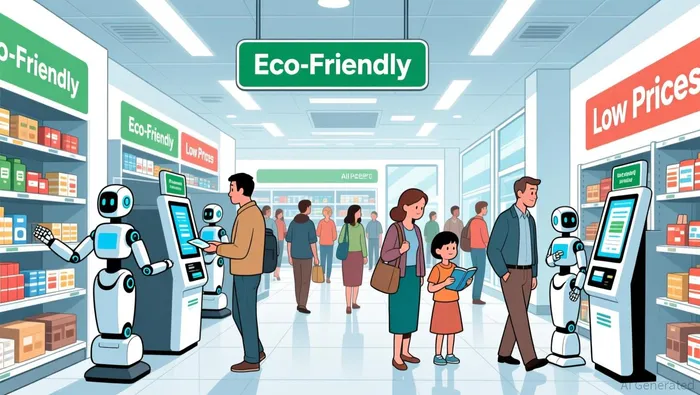
Environmental, social, and governance (ESG) risks are also front and center. Levi's has committed to net-zero emissions by 2050 and has already cut Scope 1 and 2 emissions by 77% since 2016. But ESG isn't just about sustainability-it's about compliance. New regulations, such as the UK Corporate Governance Code's Provision 29, now require boards to formally evaluate internal controls. Retailers that ignore these mandates risk reputational and operational blowback.
The Balancing Act: Case Studies in Dual-Track Success
The most successful retailers are those that harmonize short-term tactics with long-term resilience. Take Walmart: Its store-fulfilled e-commerce network now covers 93% of U.S. households, ensuring immediate customer satisfaction while investing in automation to future-proof its supply chain. Similarly, Levi's has turned its ESG initiatives into a competitive advantage. By reducing freshwater use in high-stress areas by 27% since 2018, the company not only mitigates environmental risks but also appeals to eco-conscious consumers, driving a 9% organic revenue growth in Q2 2025.
Dell's Q2 2025 results further illustrate this balance. While its Client Solutions Group faced a 4% revenue decline, the company's Infrastructure Solutions Group thrived, buoyed by strategic investments in data centers and cloud infrastructure. This duality-cutting costs in underperforming segments while doubling down on high-growth areas-highlights the importance of agile capital allocation.
The Verdict: Agility Meets Resilience
For investors, the key takeaway is clear: Retailers that thrive in 2025 will be those that treat short-term fiscal strategies as stepping stones, not endpoints. Walmart's digital transformation, Dell's working capital wizardry, and Levi's ESG-driven risk mitigation all point to a sector grappling with complexity but finding pathways to growth. However, the risks-tariffs, inflation, and regulatory shifts-remain formidable. As PwC notes, 82% of operations leaders struggle to balance these priorities, underscoring the need for continuous adaptation.
In the end, the retail sector's success hinges on its ability to marry the immediacy of AI-driven efficiency with the foresight to build supply chains and governance models that withstand the next crisis. For now, the data suggests that the best retailers are already ahead of the curve.





Comentarios
Aún no hay comentarios