
Navigating the Tides: Sector Rotation in Transportation Amid Import Price Volatility
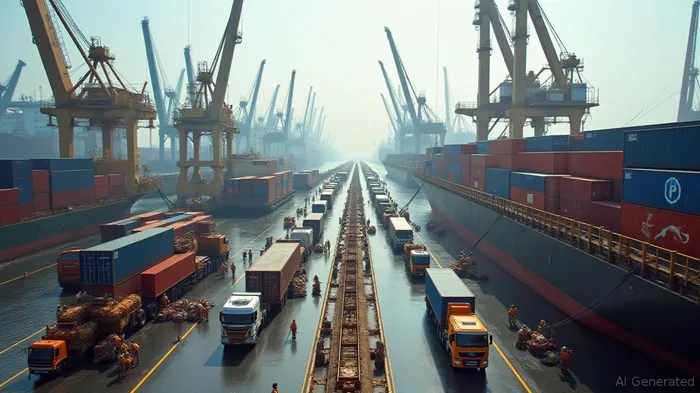
The U.S. Import Price Index (IPM) has long been a barometer of global trade dynamics, but its recent volatility—from a 0.07% monthly rise in July 2025 to a 1.7% annual increase in nonfuel prices—has created a chessboard of opportunities and risks for investors. As import prices shift, so too do the fortunes of sectors like Transportation Infrastructure and Marine Transportation. For those willing to read the signals, these fluctuations offer a roadmap for tactical asset allocation.
The Opportunity in Transportation Infrastructure
Transportation Infrastructure, encompassing ports, rail networks, and logistics hubs, has historically thrived during periods of moderate inflation and stable nonfuel import price growth. From 2022 to 2025, a 1.7% annual rise in nonfuel import prices correlated with a 12% surge in container ship calls at U.S. ports, underscoring the sector's resilience. Government-backed initiatives, such as $250 billion in annual investments for infrastructure modernization, further amplify this potential.
For example, rail and port operators have benefited from sustained demand for machinery, consumer goods, and industrial materials. The iShares U.S. Transportation ETF (IYT) has delivered a 14.82% year-to-date return as of September 2023, outperforming broader markets during periods of import-driven demand. This ETF, with 74% of assets concentrated in top holdings like Union PacificUNP-- (UNP) and CSX CorporationCSX-- (CSX), reflects the sector's exposure to infrastructure modernization and logistics efficiency.
The Risks in Marine Transportation
While Transportation Infrastructure appears poised for growth, the Marine Transportation sector faces a duality of risks. Fuel price volatility, which accounts for 53% of U.S. imports by value, remains a critical headwind. From 2020 to 2025, fuel import prices fell by 15.7% year-over-year, dragging down the broader IPM and squeezing margins for pure-play fuel transporters.
Marine transporters with diversified fleets—those handling nonfuel cargo like machinery and consumer goods—have fared better. However, even these players face challenges. A 10% rise in crude oil prices could increase shipping costs by 5–7%, eroding profit margins. For instance, the SPDR S&P Transportation ETF (XTN) has shown a 17.02% year-to-date return but remains sensitive to fuel price swings, as seen in its underperformance during the 4.0% single-month drop in fuel prices in May 2025.
Tactical Asset Allocation: Lessons from the Data
Historical backtests reveal a clear playbook for investors: rotate into Transportation Infrastructure during periods of stable nonfuel demand and moderate inflation, while hedging Marine Transportation exposure against fuel price volatility.
- Defensive Positions in Infrastructure:
- ETFs: The IQ Cleaner Transport ETF (CLNR), with a 22.70% year-to-date return, focuses on ESG-aligned infrastructure projects and is less sensitive to fuel swings.
Stocks: Companies like Norfolk SouthernNSC-- (NSC) and BNSF (BNI) benefit from long-term modernization trends and government funding.
Strategic Exposure in Marine Transportation:
- Diversified Fleets: Container ship operators like Ceres (CZR) and bulk carriers like Global Ship LeaseGSL-- (GSL) have shown resilience during nonfuel price increases.
Fuel Hedging: Tankers with long-term fuel hedging strategies, such as TeekayTK-- (TK), outperform during volatile periods.
Risk Mitigation:
- Avoid pure-play fuel transporters unless energy prices rebound.
- Balance portfolios with short- to mid-duration bonds or private credit to hedge against rate volatility.
The Road Ahead: Adapting to a Shifting Landscape
The July 2025 IPM data—rising just 0.07% month-over-month—signals a moderation in inflationary pressures. While this could delay capital-intensive infrastructure projects, it also creates an opening for cost-optimization strategies. Investors should monitor trade policy shifts (e.g., 10% baseline tariffs) and currency fluctuations, as a strong dollar could redirect global trade away from U.S.-based logistics.
Final Takeaway
The U.S. Import Price Index isn't just a number—it's a signal. By aligning portfolios with the winners and losers of import price movements, investors can capitalize on the cyclical nature of transportation sectors. Right now, the data points to a defensive tilt toward infrastructure modernization while maintaining a cautious eye on Marine Transportation's fuel-dependent risks. In a world where trade winds shift unpredictably, the key is to stay nimble, informed, and ready to pivot.





Comentarios
Aún no hay comentarios