
Navigating the Tech Divide: How Trade Barriers Are Reshaping Semiconductor and AI Investments
The escalating U.S.-China trade war is no longer just a geopolitical sideshow—it's a seismic force restructuring global tech supply chains. As tariff policies and export controls tighten, investors must reassess semiconductor and AI investments through a lens of strategic resilience. Morgan Stanley's recent forecasts highlight a stark divide: firms with diversified manufacturing and intellectual property (IP) portfolios are poised to thrive, while those overexposed to China's market or production risks face headwinds. This article dissects the opportunities and pitfalls in this new reality.
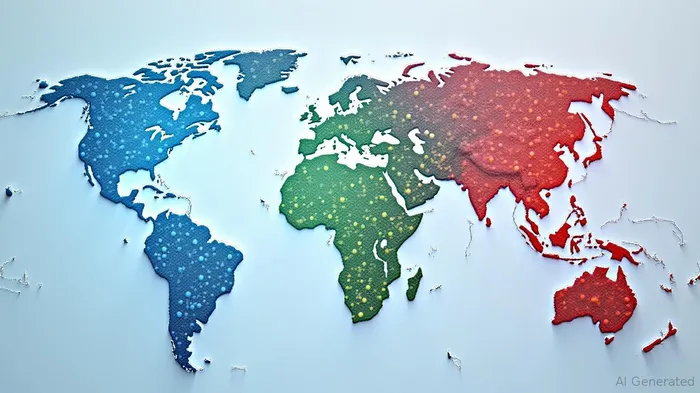
The New Trade Reality
The U.S. and China have imposed over $350 billion in mutual tariffs on tech goods since 2018, with recent moves targeting advanced semiconductors and AI chips. The Commerce Department's June 2025 restrictions on AI chip exports to China exemplify the weaponization of trade policy. For tech firms, this means:
- Supply Chain Fragmentation: Companies reliant on Chinese manufacturing (e.g., legacy semiconductor foundries) face rising costs and delays.
- Decoupling-Resistant Sectors: AI infrastructure, high-end semiconductors, and IP-heavy innovations are insulated from trade pressures due to their strategic value to national security.
Semiconductor Sector: Winners and Losers
U.S. and Taiwan-based firms are emerging as the primary beneficiaries of decoupling, thanks to robust IP and government support.
Long Thesis: Diversified Tech Leaders
- Micron Technology (MU):
- Morgan Stanley raised its target to $135 (up 6% from June 2025), citing AI-driven demand and a weaker dollar boosting multinational profits.
Why Buy?: Micron's DRAM and NAND dominance in AI supply chains, plus its $142B market cap and 30.5x P/E, reflect investor confidence in its IP and global R&D partnerships.
Taiwan Semiconductor Manufacturing (TSM):
- Despite geopolitical risks, TSMTSM-- remains the go-to foundry for advanced AI chips. Its 3nm node technology and U.S.-Taiwan alignment make it a “must-own” for semiconductor bulls.
Short Thesis: Vulnerable Chinese Peers
- SMIC (SMICY.OTC):
- U.S. export controls on lithography tools have stalled SMIC's progress in 7nm and below chips.
- Why Short?: Reliance on outdated tech and sanctions-driven supply chain bottlenecks make SMIC a high-risk play in a world of decoupling.
AI's Role in Redefining Tech Leadership
The AI revolution is amplifying the divide between resilient and fragile tech players.
Opportunity: AI Infrastructure Leaders
- Snowflake (SNOW): Morgan Stanley's $262 price target (up 22% from June 2025) reflects its AI-driven data infrastructure, which caters to enterprises needing scalable solutions.
- Nvidia (NVDA): Its AI chip dominance and partnerships with cloud providers (e.g., Microsoft's Azure) solidify its position as an AI backbone.
Risk: Overhyped AI Hype Plays
- Chinese AI Startups: Firms like SenseTime (0020.HK) face dual challenges: U.S. sanctions limiting access to cutting-edge chips and domestic market saturation.
Investment Strategies for 2025–2026
- Go Long on Diversified Tech Titans:
- Buy MU, TSM, and SNOW for exposure to AI-driven growth and supply chain resilience.
Consider Applied Materials (AMAT) for its role in advanced semiconductor tools, despite near-term cyclicality.
Avoid Overexposure to China:
Short SMICY.OTC and avoid pure-play Chinese semiconductor names.
Hedge with Patents and IP:
Firms like Intel (INTC) and Qualcomm (QCOM) hold vast patent portfolios, shielding them from trade disruptions.
Monitor Geopolitical Triggers:
- A U.S.-China trade deal (unlikely in 2025) could temporarily boost Chinese peers, but structural risks remain.
Conclusion: Position for Decoupling, Not Reconciliation
The U.S.-China tech war is here to stay. Investors ignoring trade dynamics risk obsolescence. Morgan Stanley's forecasts underscore a clear path: favor U.S./Taiwan-based firms with IP-led moats and avoid China-centric bets. The semiconductor and AI sectors will reward those who prioritize geopolitical resilience over short-term gains.
In this new era, the winners are those who adapt to the tech divide, not those who hope it disappears.
Investment advice: Always conduct due diligence and consult a financial advisor before making decisions.





Comentarios
Aún no hay comentarios