
Navigating Tariff Turbulence: Thailand's Trade Gambit and Investor Opportunities
The stakes are high for Thailand as it races to finalize a trade deal with the U.S. to avert punitive tariffs of up to 36% on its exports. With a July 9, 2025 deadline looming, Thailand's diplomatic maneuvering to reduce tariffs to a 10–20% range has created a geopolitical chessboard for investors. This article explores how Thailand's concessions—particularly in agriculture and industry—are reshaping supply chains and unlocking opportunities across sectors, while weighing the risks of prolonged trade tensions.
Geopolitical Strategy: Balancing the Trade Scales
Thailand's approach combines aggressive tariff concessions with strategic purchases of U.S. goods to shrink its $46 billion trade surplus. By committing to buy liquefied natural gas (LNG) from Alaska, BoeingBA-- aircraft, and U.S. ethanol, Thailand aims to demonstrate reciprocity while avoiding the fate of Vietnam, which secured a 20% tariff rate but faces scrutiny over transshipped goods.
The negotiations hinge on two pillars:
1. Market Access Expansion: Thailand has proposed immediate tariff waivers for most U.S. goods, targeting sectors where it lacks domestic production (e.g., agricultural inputs). This aligns with U.S. demands to reduce non-tariff barriers.
2. Rules of Origin Enforcement: Thailand has tightened compliance to prevent Chinese transshipment, a move that could position it as a more reliable partner than Vietnam in U.S. eyes.
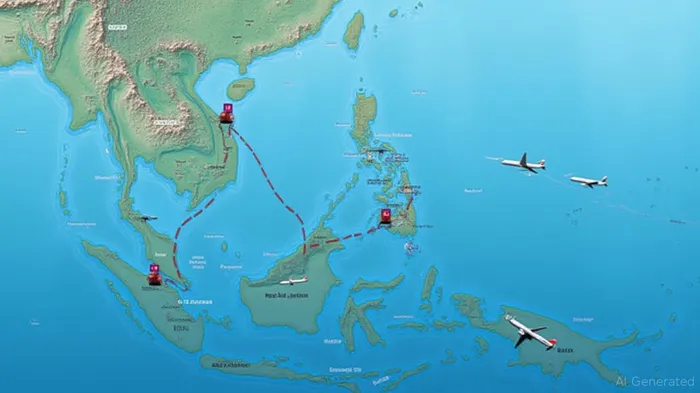
Sector-Specific Investment Opportunities
1. U.S. Agribusiness: Riding Thailand's Import Surge
Thailand's pledge to boost U.S. agricultural imports—such as ethanol and grains—creates a tailwind for American agribusiness. Companies like Archer-Daniels-MidlandADM-- (ADM) and Bunge LimitedBG-- (BG) stand to benefit from increased demand for ethanol used in Thai petrochemicals. Meanwhile, Thai firms like SCG Chemicals and PTT Global Chemical, which have committed to U.S. ethanol imports, offer exposure to this trend.
2. Logistics and Infrastructure: The Middlemen of Trade
Logistics firms poised to capitalize on Thailand's role as a regional trade hub include U.S.-based companies like C.H. Robinson (CHRW) and Maersk (APMCK). Thailand's push to establish U.S. distribution centers and streamline customs processes could also benefit local firms like Bangkok-based  Global Logistic Properties (GLP), which operates warehouses critical to supply chain efficiency.
3. Thai Export-Oriented Industries: Betting on Tariff Relief
Companies exposed to U.S. markets but vulnerable to tariffs—such as automotive parts manufacturers SAE Industries (SAE) and electronics exporter Topy Industries—could see a rebound in share prices if tariffs drop to 10%. However, investors should favor firms with diversified markets or those pivoting to high-value, tariff-resistant niches, like medical devices or EV components.
Risks and Considerations
- Prolonged Tariff Uncertainty: If negotiations fail, Thailand's GDP could shrink by 1%, with automotive and electronics sectors hardest hit. Investors in these sectors should hedge with short positions in Thai equities like Bangchak Petroleum (BCP), which relies on export-driven demand.
- Geopolitical Tensions: Thailand's balancing act between the U.S. and China—a top export partner—adds volatility. A rupture in U.S.-China trade could redirect supply chains away from Thailand.
- Sectoral Overexposure: Overweighting in industries like automotive (which lacks an FTA) could backfire if Thailand's tariff rate exceeds Vietnam's.
Investment Strategy: Positioning for Both Sides
- Aggressive Play: Buy U.S. agribusiness stocks (ADM, BG) and logistics firms (CHRW) while the Thai-U.S. deal is still in play. These sectors benefit regardless of tariff outcomes.
- Defensive Play: Invest in Thai firms with diversified revenue streams, such as Charoen Pokphand Foods (CPF) (exposed to ASEAN and China) or T piya (TPIA), a food conglomerate less reliant on U.S. markets.
- Monitor the Deadline: Track negotiations closely. A failed deal by July 9 could trigger a 36% tariff spike, favoring short-term trades in Thai equities like PTT (PTT), which has LNG exposure but faces higher costs if tariffs on its exports rise.
Conclusion
Thailand's trade concessions are a high-stakes gamble, but they carve out clear paths for investors. While risks persist—particularly in sectors tied to U.S. tariffs—the strategic opening of markets to U.S. goods and infrastructure investments present asymmetric opportunities. Investors who align with Thailand's diplomatic pivot toward the U.S. could capitalize on a reshaped supply chain landscape, but vigilance is key as geopolitical winds shift.
Final thought: In trade wars, the best offense is a diversified portfolio.





Comentarios
Aún no hay comentarios