
Navigating the Tariff Turbulence: How Inventory and Pricing Power Will Decide Consumer Durables Winners and Losers
The 2025 U.S. tariff regime has reshaped consumer durables markets, creating a volatile landscape where inventory management and pricing agility are critical differentiators. As companies raced to stockpile goods ahead of escalating tariffs, the resulting inventory cycles and pricing dynamics have exposed winners and losers in sectors like apparel, automotive, and electronics. This analysis explores how firms' strategic moves—alongside consumer pre-buying behaviors—are dictating market outcomes, offering clues for investors seeking resilience in this high-stakes environment.
The Pre-Tariff Inventory Rush: A Double-Edged Sword
When tariffs on Chinese imports surged to 125% in April 2025, retailers and manufacturers scrambled to lock in lower-cost inventory. Companies like Apple (AAPL), Amazon (AMZN), and Kraft Heinz (KHC) explicitly boosted purchases to buffer against future costs. This rush created a temporary inventory glut, as seen in the $190 billion spike in Q1 U.S. imports (Deutsche Bank).
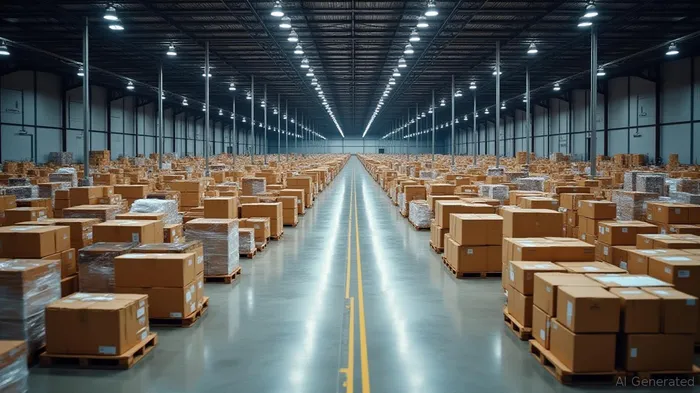
Yet the benefits of this strategy were fleeting. Analysts estimate this inventory buffer provided 1–2 months of runway before tariffs began squeezing margins. For instance, UPS (UPS) reported a surge in inbound freight, but Goldman Sachs noted S&P 500 retailers' inventory-to-sales ratios fell year-over-year, suggesting many struggled to stockpile effectively.
Pricing Power: The Key to Survival
Not all sectors fared equally. Industries with high tariff exposure and limited pricing flexibility—like textiles and home goods—saw stark margin pressures. Apparel prices jumped 17% under full 2025 tariffs, while toaster prices rose 150% due to aluminum tariffs. Companies like Five Below (FIVE), reliant on Chinese-made toys, halted shipments entirely.
Conversely, firms with domestic production or diversified supply chains thrived. Auto manufacturers with U.S.-Mexico-Canada Agreement (USMCA) compliance—such as Ford (F) and General Motors (GM)—avoided the 25% auto tariff, preserving pricing power. Their vehicles saw only a 6.2% long-term price increase, far below the 12.7% short-term spike faced by tariff-hit competitors.
Sector-Specific Winners and Losers
Winners:
- Domestic Manufacturers: Companies like Whirlpool (WHR) and Pella Corporation (PEL) avoided tariff pain by producing appliances and windows within the U.S. Their margins held steady as competitors grappled with 159% tariffs on plastic dishes and metal furniture.
- Tech Innovators with Flexible Supply Chains: Apple (AAPL) shifted some production to Vietnam and India, reducing reliance on Chinese factories. Its ability to absorb costs without drastic price hikes insulated its premium product lines.
- Retailers with Pre-Buys: Costco (COST) and Walmart (WMT) leveraged bulk purchasing power to stockpile essentials like aluminum foil (75% tariff) before prices spiked, maintaining affordability and customer loyalty.
Losers:
- China-Reliant Firms: Basic Fun (BASN), a toy importer, halted U.S. sales after 145% tariffs erased profit margins. Similarly, Framework Computers (FRMW) paused Taiwanese laptop sales under 20% tariffs.
- Low-Margin Retailers: Five Below and Dollar Tree (DLTR) faced margin erosion as tariffs on everyday goods outpaced their ability to raise prices.
- Auto Importers: Foreign automakers like Toyota (TM) and Honda (HMC) saw U.S. sales drop 10% as tariffs drove prices beyond customer tolerance.
The Long Game: Investment Implications
Investors should prioritize firms with geopolitical resilience:
- Diversified Supply Chains: Companies like 3M (MMM) and Stanley Black & Decker (SWK) have shifted production to Mexico and Canada to bypass tariffs.
- Premium Pricing Power: Luxury brands like Swatch Group (UHR.SW) and LVMH (MC.PA) can offset tariffs with brand loyalty and discretionary spending power.
- Middle-Market Firms: Smaller companies focused on niche U.S. markets—such as regional appliance makers or construction suppliers—avoid tariff exposure while serving domestic demand.
Risks Ahead: Tariff Uncertainty and Overstocking
The May 2025 court ruling on China tariffs and the 90-day tariff pause introduced volatility. Companies that overstocked may face markdowns if demand weakens, while those understocked could face shortages. Monitor firms' Q2 inventory turnover ratios and margin guidance closely.
Conclusion: Follow the Inventory and Price Signals
The 2025 tariff storm has created a Darwinian test for consumer durables firms. Investors should favor companies that:
1. Have stockpiled strategically without overextending.
2. Maintain pricing discipline to protect margins.
3. Are geographically agile, leveraging USMCA exemptions or onshoring.
The losers will be those shackled by China-centric supply chains or low-margin business models. As the dust settles, the winners will dominate post-tariff markets—and their stocks should be on every investor's radar.





Comentarios
Aún no hay comentarios