
Navigating Tariff Turbulence: Emerging Market Equities and Commodity Currencies in a Protectionist Era
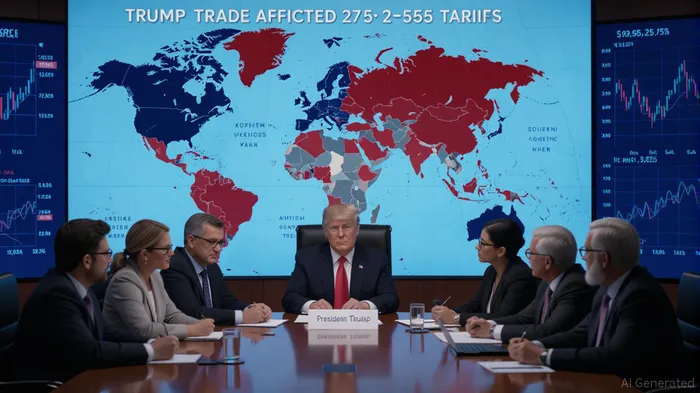
The global economic landscape has been irrevocably reshaped by President Donald Trump's 2025 tariff announcements, which have triggered a seismic shift in trade dynamics. With tariffs ranging from 10% to 41% across 50+ countries, the U.S. has weaponized its economic leverage to enforce reciprocity, reshape supply chains, and pressure allies into renegotiating terms. For emerging markets, the fallout is a mix of short-term pain and long-term opportunity, demanding a recalibration of investment strategies.
Near-Term Volatility: A Tale of Two Markets
Emerging market equities have been thrown into disarray by the new tariff regime. Brazil, hit with a 50% tariff on its exports to the U.S., faces a dual crisis: political instability from the prosecution of former President Jair Bolsonaro and economic uncertainty from reduced demand for its agricultural and manufacturing goods. The Bovespa index has already dropped 12% in a single week post-announcement, reflecting investor fears of a prolonged trade war. Similarly, India's Nifty 50 has dipped 8% as its pharmaceutical and electronics sectors brace for retaliatory measures from the U.S.
Yet, not all emerging markets are equally vulnerable. Japan's Nikkei 225 has rallied 5% following the U.S.-Japan trade deal, which caps tariffs at 15% and eases concerns over semiconductor and automotive exports. This divergence underscores the importance of sectoral resilience. Investors must now dissect which economies are insulated by diversified supply chains and which are exposed to U.S.-centric trade flows.
Sectoral Vulnerabilities: Agriculture, Steel, and the Hidden Winners
The tariffs have exposed stark sectoral weaknesses in emerging markets. Agriculture, a cornerstone of Brazil's economy, is under immediate pressure. A 50% tariff on soybeans and beef could erode Brazil's export revenue by up to 1.5% of GDP, forcing a shift toward domestic consumption or alternative markets. Meanwhile, India's pharmaceutical sector, which exports 80% of its generic drugs to the U.S., faces a 25% tariff that could trigger a 15% decline in sectoral profits.
Conversely, countries with strategic trade agreements are finding opportunities. The U.S.-EU 15% tariff cap has shielded Germany's automotive and machinery sectors, while Vietnam's 20% tariff has spurred investment in electronics manufacturing. These asymmetries highlight the need for investors to prioritize sectors with trade diversification or geopolitical alignment.
Tactical Rebalancing: Diversify, Hedge, and Target Resilience
In this protectionist climate, tactical rebalancing is critical. Here's how to position portfolios:
Diversify into EM Equities with Strong Fundamentals:
While Brazil and India face headwinds, countries like Indonesia and Thailand—whose tariffs are capped at 19%—offer undervalued opportunities. The Jakarta Composite Index (JCI) and SET Index are trading at 12x and 14x P/E ratios, respectively, compared to the S&P 500's 28x. These valuations, coupled with domestic consumption-driven growth, make them compelling long-term bets.Hedge Currency Risks with Commodity Currencies:
The depreciation of the U.S. dollar under the new tariff regime has lifted the yuan (CNY) and rupee (INR) by 1.6% and 0.8% against the dollar since March 2025. However, volatility remains high. Investors should use currency forwards or hedge funds to mitigate exposure, particularly in markets like India, where inflationary pressures could erode gains.Target Energy and Infrastructure Sectors:
Tariff-driven inflation has pushed copper prices to $9,350 per tonne, a 20% increase from Q1 2025. Emerging markets with energy infrastructure—such as Mexico's oil reserves and Brazil's renewable energy projects—offer a hedge against this volatility. Mexico's CFE (Comisión Federal de Electricidad) and Brazil's Eletrobras are prime candidates for long-term exposure.Leverage Trade Diversion Opportunities:
Countries like Vietnam and Thailand, which have avoided the highest tariffs, are set to gain market share in U.S. supply chains. The MSCIMSCI-- EM Index shows these markets have outperformed peers by 8% since the tariff announcement, driven by manufacturing sector resilience.
Conclusion: Balancing Risk and Reward in a Fractured World
Trump's 2025 tariffs have created a fragmented global trade environment, but they also present a rare opportunity for discerning investors. By focusing on sectoral resilience, currency dynamics, and strategic diversification, portfolios can weather near-term volatility while capitalizing on long-term growth. Emerging markets, despite their risks, offer compelling valuations and untapped potential in a world increasingly defined by protectionism.
In this new era of economic nationalism, the key to success lies not in resisting the tide but in navigating it with agility and insight.







Comentarios
Aún no hay comentarios