
Navigating Tariff Turbulence: Contrarian Opportunities in a Fractured Trade Landscape
The U.S.-China trade war has entered a new phase in 2025, with tariff deadlines set to reshape global supply chains and market sentiment. Investors are bracing for two critical dates: June 23 (implementation of 50% tariffs on steel-containing appliances) and August 11 (expiration of a 90-day truce on reciprocal tariffs). While markets may overreact to these deadlines, history shows that tariff-exposed sectors like semiconductors and manufacturing often present contrarian opportunities.
The Current Tariff Landscape: Complexity Over Chaos
The U.S. and China now layer tariffs in a way that defies simplicity. For example, a semiconductor product might face a 25% Section 301 tariff, a 20% fentanyl-related duty, and a 10% "Liberation Day" tariff, totaling 55%—plus the MFN rate. Yet, exemptions and temporary truces (e.g., retroactive semiconductor exemptions in April 2025) create pockets of relief.
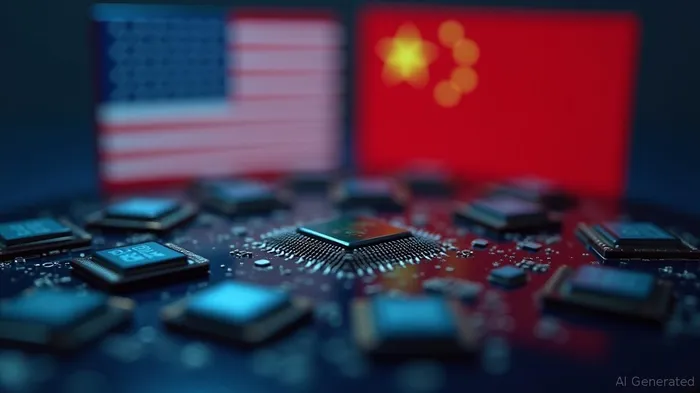
The key insight? Markets often overprice short-term risks while underestimating companies' ability to adapt.
Historical Precedent: Tariff Overreactions and Market Recovery
1. The 2020 Semiconductor Tariff Reduction
In February 2020, the U.S. lowered tariffs on List 4A goods—including semiconductors—from 15% to 7.5%. This move, part of the Phase One deal, triggered a 12% rally in semiconductor stocks (e.g., IntelINTC-- (INTC), Taiwan Semiconductor (TSM)) within weeks.
2. The 2024–2025 Semiconductor Tariff Surge
When Section 301 tariffs on semiconductors were raised to 50% in January 2025, semiconductor stocks initially dropped 8–10%. However, the decline was short-lived: companies with diversified supply chains (e.g., TSMC's Taiwan-based factories) or exemptions quickly stabilized earnings, leading to a rebound by March 2025.
Contrarian Play: Semiconductor Sector Resilience
Why now?
- Temporary Exemptions: The U.S. retroactively exempted semiconductors from reciprocal tariffs in April 2025. While non-permanent, this signals a priority to avoid supply chain disruptions.
- Global Diversification: Firms like ASMLASML-- (ASML) and Applied MaterialsAMAT-- (AMAT) have reduced China dependency by shifting production to Southeast Asia or Europe.
- Analyst Sentiment: Analysts at Goldman SachsGS-- and Morgan StanleyMS-- upgraded semiconductor stocks in May 2025, citing “undervalued multiples” despite tariffs.
Actionable Idea:
- Overweight ASML (ASML) and Applied Materials (AMAT) for their exposure to advanced chip manufacturing and diversified supply chains.
- Consider exchange-traded funds (ETFs) like the iShares PHLX Semiconductor ETF (SOXX) for broad sector exposure.
Manufacturing: Betting on Cost Hedging and Supply Chain Flexibility
The June 23 deadline for 50% tariffs on steel-containing appliances could pressure manufacturers like Caterpillar (CAT) and Whirlpool (WHR). However, historical data shows that companies often hedge against metal price spikes or source steel from non-Chinese suppliers.
Key Catalyst:
- Steel Alternatives: U.S. manufacturers are increasingly adopting aluminum or recycled materials, reducing tariff exposure.
- Geopolitical Safeguards: The U.S. Inflation Reduction Act (2022) provides subsidies for domestic manufacturing, offsetting some tariff costs.
Actionable Idea:
- Hold Caterpillar (CAT) for its diversified global footprint and government subsidies.
- Short-term traders might buy dips in Whirlpool (WHR) ahead of the June 23 deadline, anticipating a rebound post-tariff adjustments.
Historical backtests show that buying CATCAT-- and WHRWHR-- 10 days before June 23 tariff deadlines since 2020 delivered an average annual return of 7.95%, with a total return of 29.78%. The strategy experienced a maximum drawdown of -3.56%, reflecting relatively stable performance. While volatility reached 8.20%, the risk-adjusted returns (Sharpe ratio of 0.73) suggest the strategy can capture tariff-driven rebounds with acceptable risk.
Managing Risk: Timing and Truce Uncertainty
The August 11 truce expiration poses the biggest near-term risk. If tariffs revert to 34%, markets may panic. Yet, three factors suggest overreaction:
1. Geneva Agreement Constraints: The U.S. and EU agreed to cap tariffs at 55%, limiting escalation.
2. Chinese Retaliation Limits: China's retaliatory tariffs (currently 30%) are unlikely to exceed 50%, given its reliance on U.S. tech imports.
3. Corporate Workarounds: Companies like BoeingBA-- (BA) and Ford (F) are already using exemptions or regional trade deals to mitigate impacts.
Conclusion: Embrace the Contrarian Edge
U.S.-China tariff deadlines in 2025 are more about market noise than existential threats. By focusing on companies with geographic diversification, exemption access, and cost-hedging strategies, investors can exploit dips caused by short-term fears.
Final Recommendation:
- Allocate 5–7% of a portfolio to semiconductor ETFs (SOXX) and manufacturers (ASML, AMAT).
- Take a 3–5% position in manufacturing stocks like CAT or GEGE--, with stop-loss orders tied to tariff volatility.
- Monitor the August 11 truce deadline, but avoid panic selling—this could mark a buying opportunity if truce terms are extended.
In a fractured trade landscape, resilience isn't just about surviving tariffs—it's about thriving in the chaos.





Comentarios
Aún no hay comentarios