
Navigating the Tariff Tightrope: Why U.S. Manufacturing's Supply Chain Struggles Signal Strategic Investment Shifts
The U.S. manufacturing sector is teetering on a high-wire act of its own making. As tariff policies lurch between temporary truces and punitive escalations, supply chains—already stretched by geopolitical tensions—are buckling under the weight of systemic delays and rising costs. For investors, this is no mere headwind; it's a seismic shift in risk dynamics demanding immediate attention. The stakes are clear: companies unable to pivot toward resilience will falter, while those with foresight stand to dominate. Let's dissect how this landscape reshapes equity opportunities—and why now is the moment to act.
The Tariff Tightrope: A Sector in Flux
The past six months have seen a whirlwind of policy changes, from the temporary reduction of tariffs on Chinese goods to China's retaliatory hikes on U.S. exports. Key sectors—semiconductors, automotive, steel—are bearing the brunt. The suspension of deDE-- minimis exemptions for China and Hong Kong imports has forced businesses to navigate costly formal customs processes, while retaliatory tariffs from Beijing have stifled two-way trade. Meanwhile, U.S. manufacturers reliant on Mexican or Canadian inputs face 25% tariffs unless they meet stringent USMCA rules of origin—a hurdle few are fully prepared to clear.
The result? A cascading effect of delays and inflation. 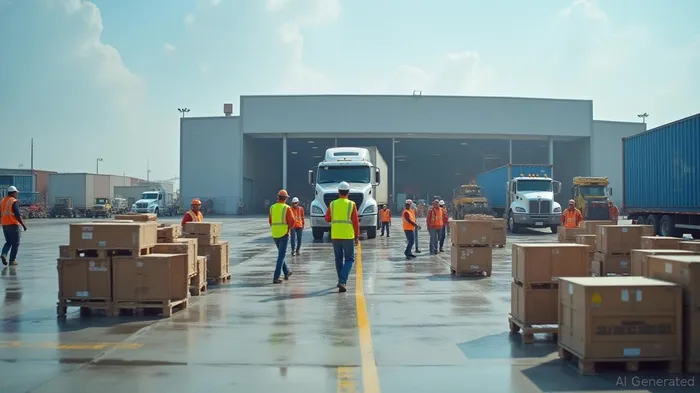 . Automakers, for instance, now face a 25% duty on imported vehicles and parts, squeezing margins as they scramble to source locally or reengineer supply chains. reveal how these sectors are already pricing in volatility, with aluminum surging 18% since January.
Supply Chain Vulnerabilities: A Mirror for Equity Risks
The vulnerabilities are systemic. Companies with rigid, single-source supply chains—think traditional industrial giants—are now exposed to crippling cost spikes and delivery bottlenecks. Take Caterpillar: its Q1 earnings miss was partly blamed on tariff-driven delays in sourcing critical components. . The contrast is stark: while the broader market has risen steadily, Caterpillar's shares have flatlined, reflecting investor skepticism about its ability to navigate this new reality.
Conversely, firms with diversified sourcing or domestic manufacturing capabilities are gaining traction. Boeing, despite its own challenges, has insulated itself by leaning on U.S. suppliers for critical aerospace parts—a move that shielded it from recent steel tariff shocks. The lesson is clear: supply chain agility is no longer optional—it's a survival imperative.
Three Investment Themes for Navigating the Tariff Maze
Short the Vulnerable Industrials:
Tariff-sensitive sectors like automotive and machinery are ripe for shorting. Companies with high exposure to tariff-affected inputs—such as 3M (reliant on Chinese adhesives) or Harley-Davidson (burdened by Mexican engine imports)—face margin erosion. . As margins compress, these stocks will underperform.Overweight Logistics and Tech Enablers:
The scramble to reengineer supply chains is a goldmine for logistics and tech firms. UPS and FedEx are already capitalizing by offering Foreign Trade Zone services to help businesses avoid tariffs. . Meanwhile, software companies like SAP and Oracle, which provide real-time supply chain analytics, are seeing surging demand as firms seek to digitize their operations.Hedge with Commodities:
Tariff volatility is a double-edged sword for commodities. While steel and aluminum prices may rise due to restricted imports, energy and precious metals offer asymmetric protection. Natural gas, for example, could surge if domestic manufacturers pivot to U.S. energy sources to avoid tariffs—a scenario already playing out in the petrochemical sector. .
Conclusion: The Time to Adapt Is Now
The U.S. manufacturing sector's tariff-induced turbulence isn't a temporary blip—it's the new normal. Investors who cling to outdated assumptions about globalized supply chains will be left behind. The winners will be those who position themselves in sectors and companies that thrive on resilience: diversified logistics, tech-driven efficiency, and commodity hedges. The data is clear—the market is pricing in this shift. For those willing to act decisively, the rewards are within reach.
The question isn't whether tariffs will disrupt the status quo—it's whether you're ready to profit from the chaos.







Comentarios
Aún no hay comentarios