
Navigating Tariff-Induced Inflation: Finding Resilience in Consumer Discretionary Stocks
The U.S. tariffs reimposed in 2025 have created a complex inflationary landscape, with producer prices surging while consumer-facing inflation remains subdued—temporarily. This lag between tariffs and their full impact on consumer prices has created an opportunity to identify consumer discretionary stocks resilient to cost pressures, particularly in retail, apparel, and durable goods. While the market may be underreacting to short-term data, companies with pricing power, diversified supply chains, or strong inventory management are well-positioned to outperform once inflation stabilizes.
The Tariff-Price Lag: Why Now is the Time to Act
The Federal Reserve's Q2 2025 inflation data reveals a stark divergence: Producer Price Index (PPI) rose 2.6% year-over-year, driven by steep cost increases in steel (7.1%) and aluminum. Meanwhile, the Consumer Price Index (CPI) grew just 2.4%, with durable goods prices dipping in May due to high pre-tariff inventories. This mismatch suggests that businesses are absorbing costs temporarily but will eventually pass them to consumers.
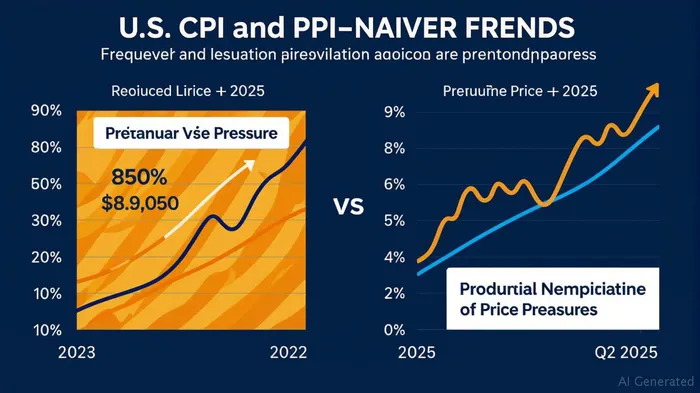
Investors should focus on companies that can mitigate these pressures through pricing discipline, vertical integration, or geographic diversification.
Apparel: High Tariff Exposure, But Winners Exist
The apparel sector faces some of the steepest tariff-driven inflation, with pre-substitution prices for shoes and apparel spiking 37% and 35% in the short run. However, long-term adjustments (18% and 17% increases) suggest select companies are absorbing costs or passing them strategically.
Contrarian picks:
- VF Corporation (VFC): Owns brands like Vans and The North Face, which command premium pricing. Its vertical integration in production and focus on higher-margin casual wear buffer against cost pressures.
- Ralph Lauren (RHT): Targets affluent consumers less sensitive to price hikes. Its brand equity allows gradual price increases without sacrificing volume.
Retail: Scale and Diversification Win
Big-box retailers like Walmart (WMT) and Target (TGT) have scale to negotiate terms with suppliers and diversified global supply chains to avoid overreliance on tariff-hit regions. Their private-label strategies (e.g., Walmart's “Equate” brand) also give them control over margins.
Why now?
Despite Q2's muted inflation, inventory levels are already declining. Walmart's Q2 inventory turnover ratio improved by 8% compared to 2024, signaling better cost management. Investors should prioritize retailers with strong balance sheets and exposure to essentials, which remain in demand even during inflationary periods.
Durable Goods: Look for Domestic Production and Pricing Power
Automotive and home improvement sectors face headwinds from tariffs on steel and aluminum, but companies with domestic manufacturing or ability to pass costs to consumers will thrive.
Key plays:
- Caterpillar (CAT): Sources 60% of steel domestically, reducing tariff exposure. Its pricing power in heavy machinery (e.g., construction equipment) allows gradual cost pass-through without losing market share.
- Lowe's (LOW): Benefits from U.S. housing demand and a focus on high-margin services like installation, which are less tied to raw material costs.
Defensive Plays: Focus on Cost Absorption Metrics
Investors should prioritize companies with:
1. High gross margins: Indicates pricing power (e.g., Coca-Cola (KO) in beverages, though it's a staple, offers lessons in brand-driven resilience).
2. Low inventory turnover: Suggests they're not overstocked and can adjust sourcing quickly (e.g., Home Depot (HD)).
3. Geographic diversification: Exposure to regions unaffected by U.S. tariffs (e.g., Nordstrom (JWN)'s focus on luxury markets less reliant on tariff-heavy imports).
Conclusion: The Clock is Ticking on Tariff-Induced Inflation
While the market may still be pricing in the delayed effects of tariffs, Q2's data is a false comfort: PPI trends signal that consumer prices will rise as inventories deplete. The contrarian strategy is to buy resilient consumer discretionary stocks now—those with pricing power, diversified supply chains, or domestic production—before the full inflationary impact hits.
The Fed's caution and the risk of a 60% recession probability in 2025 add urgency. Investors should overweight companies like VF, CaterpillarCAT--, and WalmartWMT-- while shortening bond durations and hedging with commodities. The window to act is narrowing—but the payoff when inflation stabilizes will be substantial.
Final Note: Monitor CPI data closely. If June's readings show a jump above 2.5%, expect a market reevaluation—and a surge in resilient stocks.





Comentarios
Aún no hay comentarios