
Navigating the Tariff Crossroads: US-Southeast Asia Trade Talks and Market Implications
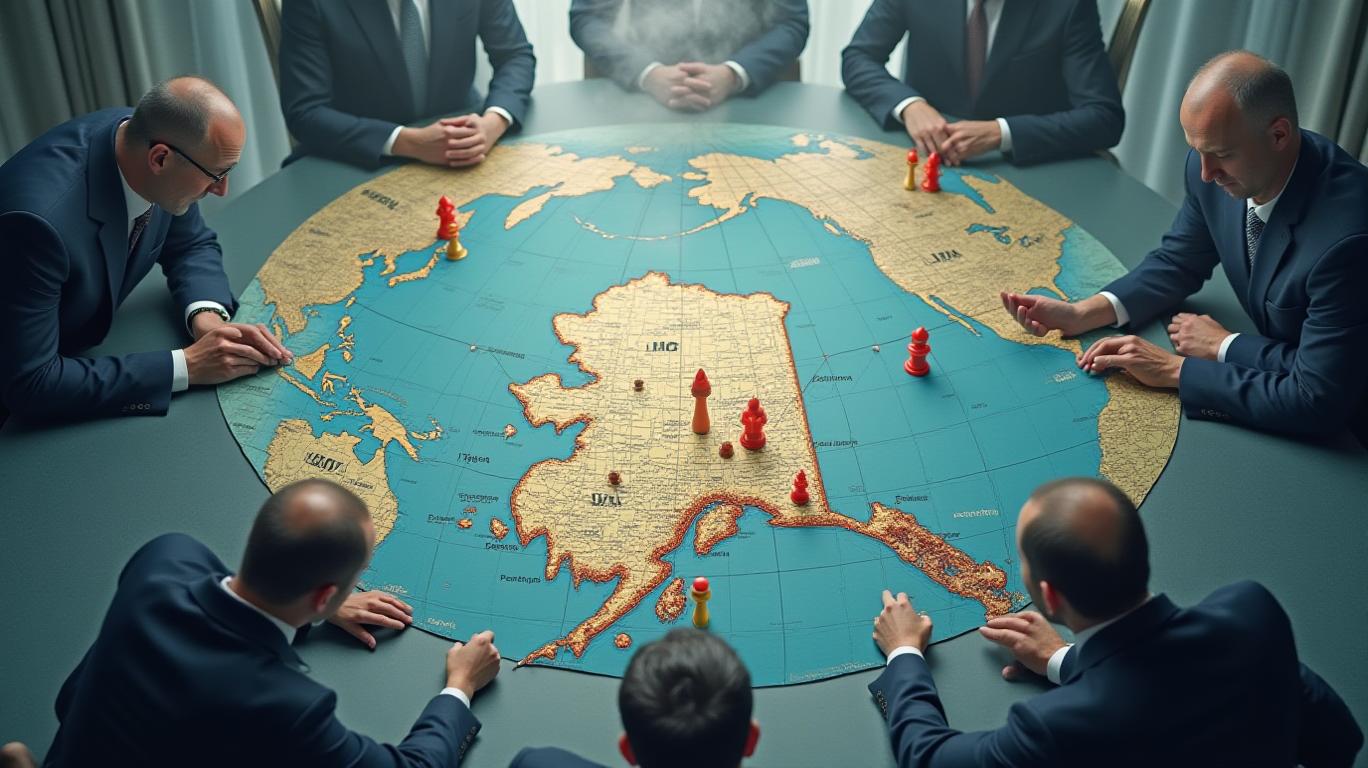
The sudden pivot in U.S. trade policy toward South Korea, Japan, and India has sent shockwaves through global markets, as Acting President Han Duck-soo’s April 14 announcement revealed U.S. President Donald Trump’s push for immediate tariff negotiations. With reciprocal tariffs now in play—and a 90-day "pause" offering a lifeline to Seoul, Tokyo, and New Delhi—investors must dissect the risks and opportunities in this high-stakes economic chess game.
The Negotiation Landscape: A 90-Day Window of Uncertainty
Trump’s imposition of 25% tariffs on South Korea, 24% on Japan, and 20% on the EU, followed by a conditional reduction to 10% for negotiating partners, underscores a calculated gamble. U.S. Treasury Secretary Scott Bessent framed these tariffs as “maximum levels open to negotiation,” signaling flexibility for countries willing to reciprocate. South Korea’s immediate reaction was stark: the Kospi index (KS11) plummeted over 5.5% on tariff fears, while Japan’s Nikkei (N225) and India’s Sensex (BSESN) also dipped, though less severely.
The U.S. has tied these talks to broader economic security goals, including a proposed Alaska LNG project. Han’s pledge to fast-track a videoconference with U.S. officials highlights Seoul’s urgency to secure favorable terms, leveraging energy cooperation as a bargaining chip. For investors, this suggests a dual focus: tracking tariff negotiations while monitoring LNG-related infrastructure stocks like Cheniere EnergyLNG-- (LNG).
Trump’s Trade Strategy: Punishing “Bad Actors,” Rewarding Allies
Trump’s simultaneous escalation against China—raising tariffs to 125%—reveals a two-pronged approach: isolate Beijing while incentivizing allies to reduce trade barriers. Bessent’s criticism of China as the “most imbalanced economy” aligns with U.S. efforts to redirect supply chains toward “friendly” nations. This creates a paradox for Southeast Asian exporters: comply with U.S. demands or risk exclusion from critical markets.
The stakes are immense. South Korea’s automotive and tech sectors—represented by Hyundai (HYMTF) and Samsung (SSNLF)—face immediate pressure, while Japan’s Toyota (TM) and India’s Tata Motors (TTM) also brace for ripple effects. A would reveal how each market is pricing in tariff risks.
Investor Playbook: Sector-Specific Opportunities and Risks
- Automotive & Manufacturing: U.S. tariffs target steel, aluminum, and vehicle components. Companies with diversified supply chains, like Toyota or Hyundai, may fare better than those over-reliant on U.S. exports.
- Semiconductors & Tech: Samsung (SSNLF) and Taiwan Semiconductor (TSM) could see demand shifts if U.S. tech firms seek non-Chinese suppliers.
- Energy & Infrastructure: Alaska LNG projects offer a potential win-win, but require long-term investment. U.S. firms like ExxonMobil (XOM) and South Korea’s POSCO Energy may lead here.
- Currency Markets: The South Korean won and Japanese yen could weaken if exports stall, creating hedging opportunities for forex traders.
Risks Beyond Tariffs: Geopolitical Volatility and Market Sentiment
While tariff negotiations dominate headlines, South Korea’s domestic instability—military tensions with North Korea and ex-President Yoon’s legal battles—adds volatility. A would illustrate how political risk impacts markets. Meanwhile, India’s push to attract U.S. manufacturing investments may buffer its economy, but its tech sector remains exposed to U.S.-China tech cold war dynamics.
Conclusion: A Volatile Quarter with Strategic Opportunities
The 90-day tariff pause offers a critical window for investors to position for both downside protection and upside plays. Key data points reinforce this outlook:- Kospi’s 5.5% drop highlights market sensitivity to trade policy shifts.- South Korea’s $162B automotive exports to the U.S. (2024 data) emphasize sector vulnerability.- Alaska LNG’s potential $30B investment underscores energy’s role as a negotiation lever.
Investors should prioritize defensive sectors (e.g., healthcare, utilities) while selectively deploying capital in resilient exporters and infrastructure plays. The U.S.-Korea-Japan-India axis, if successfully navigated, could redefine global trade dynamics—potentially rewarding those who bet on collaboration over conflict. But as Bessent warned, “retaliation is a losing game.” For now, the markets will dance to the tariff negotiation tango, with every step carrying the potential for profit—or peril.







Comentarios
Aún no hay comentarios