
Navigating the Tariff Crossroads: How to Position Portfolios Amidst Trade-War Turbulence
The clock is ticking. With President Trump's unilateral tariff decisions now set to escalate by August 1—and China's deadline extended until August 12—the market faces a perfect storm of uncertainty. Stocks like ToyotaTM-- and HondaHMC-- have already tumbled on fears of higher auto tariffs, while semiconductor manufacturers brace for ripple effects across global supply chains. Investors are left to grapple with a question that defines this volatile era: How do you protect—and even profit from—a trade war that shows no signs of resolution?
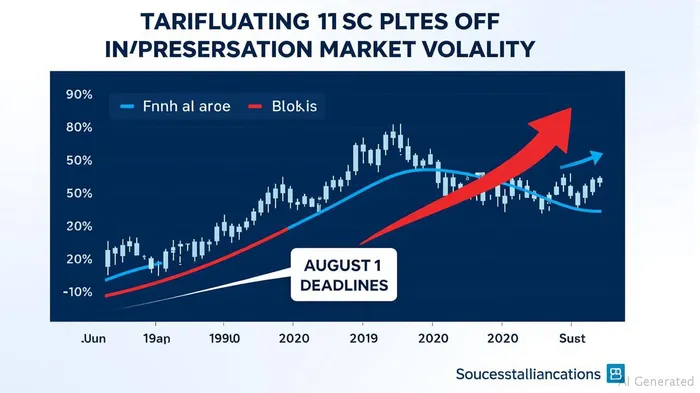
The Sectoral Fallout: Autos, Tech, and Semiconductors in the Crosshairs
The auto sector is ground zero. A 25% tariff on non-USMCA-compliant vehicles has already hit Japanese and South Korean automakers, with Toyota shares down 4% and Honda falling 3.86% this month. The pain isn't confined to foreign brands: U.S. manufacturers reliant on imported parts (like steel taxed at 50%) face rising production costs. The reveal a company insulated by its domestic supply chain, but even it isn't immune to broader market sentiment.
Tech and semiconductors are next. U.S. imports of semiconductors from Malaysia—worth $18 billion annually—are now subject to tariffs, with additional levies under consideration. This threatens companies like AppleAAPL-- and IntelINTC--, which rely on Southeast Asian manufacturing hubs. The shows a widening gap as fears mount. Meanwhile, Vietnam's lower-than-threatened 20% tariff has drawn manufacturers fleeing China, creating an unintended boon for Vietnamese firms—and a potential investment angle.
The Legal Wildcard and Market Sentiment
Legal battles complicate the outlook. A court ruling struck down tariffs imposed under the International Emergency Economic Powers Act (IEEPA), but they remain in effect pending appeal. If upheld, Trump's tariff authority could be restricted to sector-specific laws like Section 232—a shift that might ease volatility. For now, though, uncertainty reigns: the Dow's 422-point plunge this week underscores how markets punish ambiguity.
Hedging Strategies for a Volatile Landscape
- Defensive Plays: Consumer staples and utilities—sectors less tied to trade flows—offer shelter. Consider defensive giants like Procter & Gamble or NextEra EnergyNEE--, which have shown resilience in prior downturns.
- Commodities: Tariffs on critical minerals (like those in China's retaliatory measures) could boost platinum and palladium prices. South African platinum exporters, such as Implats, may benefit, while gold's safe-haven status remains intact.
- Currency Plays: The yen and euro could strengthen if tariffs disrupt trade balances. Investors might short the dollar or use currency ETFs like FXE (Euro) to hedge.
- Sector Rotation: Shift capital toward companies with diversified supply chains or those benefiting from reshoring. Texas InstrumentsTXN--, which sources semiconductors domestically, is one example.
The Bottom Line: Act Before the Clock Expires
With August 1 looming, the window to adjust portfolios is narrowing. The $30 billion in tariff revenue collected in June—passed directly to consumers and businesses—proves that costs are already embedded in prices. Investors who wait risk being blindsided by sudden swings in stock prices or currency fluctuations.
This isn't just about avoiding losses. The trade war has created asymmetric opportunities: firms in Vietnam, South Africa, or the U.S. heartland with insulated supply chains could thrive as global players scramble to adapt. But time is short. The next 30 days will test every investor's resolve—and their ability to navigate the tariff crossroads.
Final Call to Action: Diversify geographically, favor defensive sectors, and keep an eye on geopolitical headlines. The trade war isn't over—it's just entering its most dangerous phase.





Comentarios
Aún no hay comentarios