
Navigating the Tariff Crossroads: How US-China Trade Talks Reshape Global Markets
The ongoing US-China trade negotiations, now entering a critical phase, have positioned tariffs as both a sword and a shield in the economic rivalry between the world’s two largest economies. As Washington contemplates slashing tariffs on Chinese imports—from the current stratospheric 145% down to a proposed range of 50-65%—the stakes for global markets, corporate profitability, and geopolitical stability have never been higher.
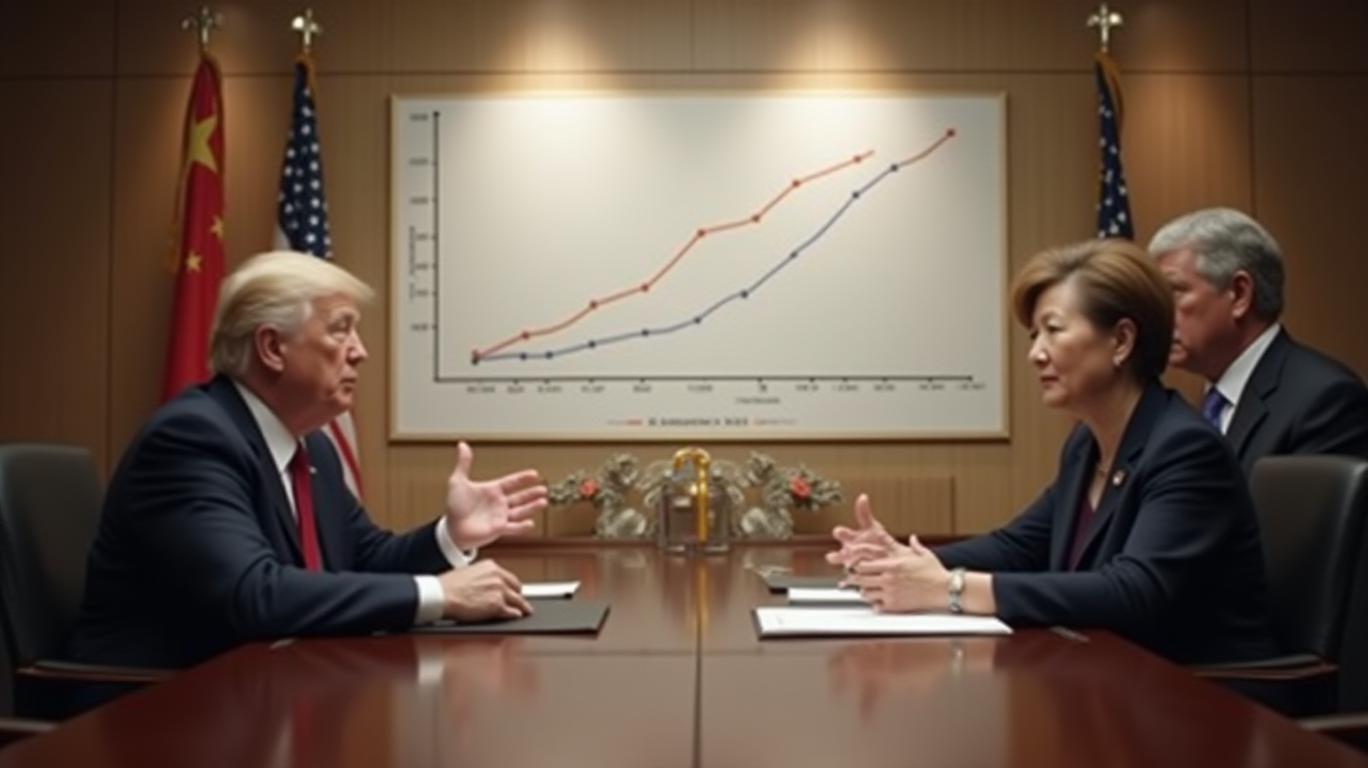
The Tariff Tightrope: Current Dynamics and Proposed Shifts
The White House’s proposed reductions reflect a pragmatic recalibration of trade policy, acknowledging the unsustainable economic toll of current tariffs. Treasury Secretary Scott Bessent’s warnings about the “unsustainable” status quo underscore a recognition that the 145% rate—a relic of past escalation—has begun to backfire. Meanwhile, China’s retaliatory 125% tariffs on US goods have further strained bilateral trade, with data showing 30% of US-bound shipments from China via Hapag-Lloyd canceled in early 2025.
The House of Representatives’ tiered proposal—a 35% tariff on non-security-related goods and 100% on strategic items—adds complexity. This framework, if adopted, would bifurcate the trade relationship, shielding critical industries while penalizing others. For investors, this means sector-specific outcomes: semiconductors or aerospace might face higher levies, while consumer goods could see relief.
Market Reactions and Economic Indicators
Financial markets have responded cautiously to tariff-cut rumors. The S&P 500’s 3% surge in anticipation of de-escalation highlights investor optimism about reduced trade friction. However, the International Monetary Fund’s stark warning—that existing tariffs could slash US GDP growth to 1.8% in 2025—reveals the fragility of this optimism.
The data paints a dual narrative: short-term market buoyancy contrasts with long-term structural risks. The IMF’s projection, coupled with the canceled shipments, suggests that tariffs are already stifling trade volumes and dampening confidence. For equities, this creates a “taper tantrum” dynamic: markets rally on de-escalation hopes but falter if negotiations stall.
Broader Trade Strategies and Global Risks
The US’s broader trade agenda—adding a 10% blanket tariff on other imports, hiking duties on steel and autos, and threatening levies on pharmaceuticals and semiconductors—compounds uncertainty. These measures, though framed as “strategic,” risk triggering a global trade war.
Semiconductor firms like IntelINTC--, for instance, face a precarious balance: tariff cuts on Chinese imports could lower input costs, but new levies on their own exports to China could offset gains. Meanwhile, the lack of progress on fentanyl negotiations—a separate but intertwined issue—adds geopolitical tension, reminding investors that trade talks are not siloed.
Conclusion: A Fragile Equilibrium
The path forward hinges on two critical variables: the scope of tariff reductions and China’s willingness to reciprocate. If the proposed 50-65% rate becomes reality, markets could see a sustained rally—particularly in sectors like consumer goods and logistics. However, the IMF’s 1.8% GDP growth forecast for the US underlines the cost of prolonged friction.
Investors should prioritize flexibility. Sectors poised to benefit from reduced trade barriers—such as automotive (e.g., Ford, F) or electronics—deserve attention, but hedging remains prudent. The tiered tariff proposal suggests strategic assets (e.g., defense contractors) may thrive, while cyclical stocks tied to global growth could underperform if recession risks materialize.
In the end, the US-China tariff calculus is a high-stakes gamble. With negotiations unresolved and markets teetering between hope and fear, the only certainty is that the next six months will test the resilience of both economies—and the portfolios built to weather their turbulence.
This analysis synthesizes geopolitical strategy, macroeconomic data, and sector-specific trends to underscore the precarious balance between optimism and risk in the current trade environment.







Comentarios
Aún no hay comentarios